
Last updated November 15, 2026
 Wrought iron
 Wood & steel frame
 Farm & ranch
 Sliding driveway gates
 LiftMaster operators
Free on-site gate assessment - hinges, posts, and your LiftMaster or Nice gate operator checked before anything is quoted
The assessment is free and the quote is the invoice.
Get your free estimateGate Repair Troubleshooting in Tracy: Common Problems and How to Fix Them
Here’s the counterintuitive part: most gate failures don’t start at the motor. They start upstream, at a wire terminal, a power feed, or a sensor lens, and the operator gets blamed for all of it. A gate that stops mid-travel and a gate that won’t start at all look identical from the driveway, but they’re wired to different failure points. Swapping parts on the wrong one costs real money. In this guide you’ll learn to sort your gate into one of five fault categories using only what you can see and hear, decode brand-specific light patterns on operators like Viking, Ghost Controls, and DoorKing, and know exactly what not to touch before you call. This is the diagnostic walkthrough we’d run ourselves on a gate in Tracy.
Quick Answer
Most gate failures come down to one of five fault categories: power supply, control board, limit switch, motor, or obstruction sensor. You can narrow yours down before a technician arrives by checking power at the source, listening to whether the motor runs at all, and testing the manual release. That alone tells you whether you’re dealing with a mechanical problem or an electrical one, and it’s the single biggest time-saver in gate repair in Tracy.
Styles & brands we work with
- Wrought iron
- Wood & steel frame
- Farm & ranch
- Sliding driveway gates
- LiftMaster operators
Table of Contents
- The Five Fault Categories
- 1. Power Supply Failures
- 2. Control Board Faults
- 3. Limit Switch Problems
- 4. Motor Failures
- 5. Obstruction and Safety Sensor Failures
- The Manual Release Test
- Tracy Environmental Factors
- When DIY Makes It Worse
The Five Fault Categories
Every failed gate you’ll encounter belongs to one of five categories. Sorting your gate into the right one is the entire skill. Sound and movement give you almost all of it.
- Motor runs, gate doesn’t move. Your failure is mechanical downstream of the motor: a worn rack, a slipped chain, a broken roller, or an arm that’s come off its mount. The operator is doing its job.
- No sound at all, no lights. Power supply. Start at the breaker and the transformer before you blame anything inside the control box.
- Operator lights up, motor won’t turn. Usually a control board, a tripped overload, or a limit that’s told the board the gate is already at the end of its travel.
- Gate stops at the same spot every cycle. Limit switch or encoder, not a motor problem. Cyclical stops are almost never motor wear.
- Gate reverses or refuses to close. Safety sensor or loop detector. Anything that reverses on its own has decided something is in the way.
Once you know which bucket you’re in, the diagnosis narrows fast. A gate that stops at the same point every time and a gate that bumps and bounces are entirely different repairs, and they’re both common in Tracy’s gate population. Sorting the category before you pick up a wrench is the one step that saves the most money.
1. Power Supply Failures
If the operator is completely dead when you look at it, the failure is upstream: the breaker, the service disconnect, the low-voltage transformer, or a fuse on the control board. Gate operators draw serious current, and their dedicated circuits trip far more often than people expect. When a gate works one day and is completely dark the next, we check the electrical supply before anything else.
Visual check first:
- Look at the control box. Any LED lit at all? A lit board means the operator has power and the problem is downstream. A dark box means no power at all.
- Check the breaker feeding the operator circuit. Reset it once. If it trips again immediately, stop. That’s a short, and it needs a professional. A repeated trip is a danger sign, not a nuisance.
- Look at the transformer and low-voltage wiring for scorched terminals, loose spade connectors, or wire pulled out of a wire nut. A vibration-loose wire causes a dark gate that recovers when you jostle it, which is a strong clue.
- Confirm any battery backup is actually connected and holding charge. A residential operator on a failing battery can behave like a board fault.
A gate that’s dead one moment and alive the next gives you the answer on its own: that is an intermittent connection. Write down what makes it recover. That note will save your technician real time. Electrical wiring and panel work are not a homeowner job. If anything involving the supply panel or the feeder wiring looks wrong, call an electrician or a gate specialist and leave it alone.
2. Control Board Faults
The control board is the brain of the operator, and it carries specific fault signals that differ from brand to brand. This is where generic advice fails and brand familiarity matters. We work on electric gate repair daily, and the flashing-light code is the first thing we read on any operator. Your board is likely at fault if the gate starts, stops, and reverses unpredictably, or if it behaves differently on the same cycle every time.
Read the light pattern as a code:
- Viking operator: board-mounted fault LEDs blink a specific number of times per cycle. Count the blinks and note whether the motor runs during the fault. A board that blinks but won’t power the motor usually has a logic or overload fault, not an encoder fault.
- Ghost Controls: the control panel’s diagnostic indicator gives you the fault, and this brand is common on the DIY residential gates we see around Tracy. A repeated blink pattern with no motor movement almost always points to limit or sensor wiring, sometimes a single loose connector.
- DoorKing: commercial-grade units display a fault code in a readable sequence. That sequence tells you whether the fault is a limit, an obstruction sensor, or an internal logic problem, and it’s worth writing down before you touch anything.
- Elite and LiftMaster: a board that flashes but never engages the motor is a board-level fault far more often than an operator fault.
A board with a burnt trace, a popped capacitor, or a scorched terminal is not repairable in the field. The question becomes repair or replace, and we’ll tell you which one makes sense. Never swap a board on a guess. A control board is the most expensive part in the box, and a wrong diagnosis means paying twice.
3. Limit Switch Problems
If the gate opens fine but won’t close, or closes fine but won’t fully open, that’s a limit switch or encoder fault. The board is being told the gate has already reached the end of its travel, so it refuses to go further. The gate isn’t broken. It’s confused about where it is. This is one of the most common faults we see in Tracy, and it’s often a simple reset or an out-of-position switch rather than a failed part.
What you can safely check:
- Run the gate to full open by hand (using the manual release, below). Does it move freely? If it fights you, the fault is mechanical, not electrical, and the limit switch is innocent.
- Look at the switch itself. Is it loose, cracked, or out of its mount? A limit switch knocked out of position by a strike or a vibration will cause the gate to stop in the same spot every cycle.
- Watch the operator lights when the gate reaches its stop point. A board that registers “limit reached” on a gate that hasn’t reached it is reading a false limit, which is a switch or magnet problem, not a motor problem.
- Note the exact spot where it stops. Consistent position equals limit. Wandering stopping points equal board or sensor.
What you should not do is force the gate past the stop or manually turn the limit cam on a geared operator. The cam position is precise, and once you’ve rotated it you’ve lost your reference. Limit adjustments are a technician job, and on swing and slide systems the board also uses the limit to time the deceleration, so a misadjusted limit causes wear on the mechanism over time. If a limit reset fixes it once and it comes back within a few days, the real fault is looser than a misadjusted cam and needs a site visit.
4. Motor Failures
A motor failure has one unmistakable symptom: the gate moves hard or won’t finish, but the motor gets hot and sometimes starts to smell. The motor is turning and straining. Something downstream is fighting it. Before you call a motor failure, confirm the gate itself moves freely, because we’ve seen plenty of “bad motors” that were actually a bent roller or a dry hinge.
Tell a motor fault from a mechanical one:
- Use the manual release (below) and move the gate by hand. Smooth travel means the mechanism is fine and the motor is worth suspecting. Grinding, tight spots, or a gate that binds in one area means the motor is fine and the mechanism needs attention.
- Listen for the motor turning with no gate movement. That’s a coupling, chain, or rack failure, not a motor.
- Check the gate’s roller track and hinges. Inland valley heat is hard on aluminum gate frames. Over time, aluminum tracks warp, hinges dry out, and a gate that used to swing freely starts to bind in the afternoon sun. A binding gate overloads the motor, and the operator trips its thermal overload before anything burns out.
- Feel the operator housing after a failed cycle. Very hot housing on a final-travel stop is normal. Very hot housing on a cycle that stalled halfway is a mechanical bind or an overload.
An operator wiring or power problem inside the control box is not a homeowner fix. A strained motor on a binding gate is how operators fail early, so don’t just let it strain. If the motor runs, heats, and stops early, the gate is too heavy for what the motor is being asked to do. That needs a mechanic’s eye on the mechanism and a specialist’s eye on the operator.
5. Obstruction and Safety Sensor Failures
If the gate reverses on its own, refuses to close, or stops partway and opens again, the operator thinks something is in the way. The obstruction sensor or loop detector is doing its job, and it’s usually telling you that its beam is interrupted or its loop has been damaged. These are the most misdiagnosed faults in gate repair because the operator looks broken when it’s actually being obedient.
Check these in order:
- Clear the beam path. Look for anything between the photo-eye lenses: a leaf, a spiderweb, a cracked lens, a gate that closes onto the lens housing. Clear it and retry once.
- Check the lenses. A dirty or fogged low-voltage photo-eye lens can’t see its partner. Wipe both and retry.
- Look at the loop detector. If you have an in-ground loop for vehicle detection, check whether a recent driveway or irrigation repair cut the loop wire. A damaged loop makes the detector think a car is parked over it, and the gate holds open.
- Check the exit wand and safety edge. A stuck safety edge or a damaged wand pad reads as continuous obstruction. Look for physical damage to the pad or the wiring run.
- Note whether the gate reverses at the same spot. Consistent reversing at one point is a sensor, an edge, or a loop, depending on the installation. Reversing at random points means the sensor is being startled by something: a moving shadow, a low sun angle, a loose lens.
Never bypass or disconnect an obstruction sensor to “get the gate working.” Those devices exist to keep the gate from closing on a person, a pet, or a vehicle. If a sensor is genuinely failing, it needs replacement, not defeat. And this is the one fault where leaving it alone overnight is the right call. A gate stuck open is a nuisance. A gate that closes on something is a serious problem.
The Manual Release Test
The manual release is usually described as an emergency workaround. It’s actually the most useful diagnostic tool you have. It separates every gate problem cleanly in half: mechanical failure versus electrical failure. On most residential operators the release is a key or lever on the operator housing that disengages the drive. Once the gate is released, move it by hand the full length of its travel.
How to read the result:
- Gate moves freely by hand. The mechanism and track are sound. Your fault is in the operator, the board, the limits, or the power. Focus entirely on the electrical side.
- Gate is stiff but moves. Mechanical resistance is your problem. Worn rollers, dry hinges, a binding track, an off-level gate. The operator is being asked to do too much work, which eventually overheats it.
- Gate binds in one spot. A localized mechanical problem: a bent section, a damaged roller, a foreign object in the track. The operator is not the fault.
- Gate won’t move at all. Either the release isn’t fully engaged or the mechanism is locked. Don’t force it. A gate that won’t move by hand with the operator released needs eyes on it.
Important: when you finish the test, re-engage the release exactly as the operator manual instructs before you run power. Running an operator with the release engaged misaligns the drive and can damper or damage the mechanism. If you’re not sure the release went back correctly, stop and call a technician instead of guessing. For more on the fault categories themselves, see our gate repair overview. If the release test shows a free gate but a dead operator, the problem is electrical, and an electric gate specialist is the right next call.
Tracy Environmental Factors
Gates in Tracy fail in ways that gates in cooler coastal climates don’t, and a few local conditions show up on our service calls repeatedly. Understanding them helps you spot what’s causing your gate to misbehave before a wrench comes out.
Valley heat and aluminum. Summer heat in the San Joaquin Valley is famous for a reason. Aluminum gate frames and tracks expand and warp under sustained heat, and long gates on exposed driveways are the most affected. A gate that swings smoothly in the morning and binds by mid-afternoon is telling you the heat is warping a track or frame. The tell is a seasonality to the problem: if it only happens on hot days, it’s geometry, not electronics.
Irrigation overspray and corroded terminals. Irrigation systems that overshoot onto gate posts and operator housings are common in Tracy’s residential neighborhoods, and that steady moisture reaches low-voltage wiring terminals. Corroded terminals cause intermittent faults: a gate that fails for a while and then works again. Look for green or white corrosion on the terminal block and a dull film on the operator’s wiring. Wipe and inspect, and if the wiring is green, that’s your fault category.
Dust and pollen. Dry valley conditions coat photo-eye lenses and limit switches with dust and fine debris. A dusty lens reads as an obstruction. A dusty limit gets stuck. Simple cleaning resolves a surprising amount of “broken” gate behavior. This is one maintenance item any homeowner can safely do: clean the lenses and inspect the terminals after a long dry stretch.
Knowing which local condition lines up with your symptom shrinks the diagnostic window before anyone arrives. Gates across Tracy deal with these conditions in different concentrations depending on wind and irrigation, but they’re the recurring ones.
When DIY Makes It Worse
Some gate resets are genuinely DIY-safe: clearing a photo-eye lens, wiping down a terminal, checking a breaker once. Others aren’t, and there are two specific cases where the wrong reset turns a cheap repair into an expensive one. Stop before you hit these.
Control board memory wipes. Many boards store the limit reference, deceleration profile, and sometimes the number of cycles in nonvolatile memory. A hard power cycle, a holding of the reset button, or a specific button combination can wipe that reference. Once the memory is cleared, the board no longer knows where the gate’s limits are, and it may refuse to run or run the gate into a hard stop on the first cycle. A board in a safe fault state that you reset into a lost-configuration state is a worse problem than the one you started with. If the operator is under a warranty or you’re not sure what reset sequence your brand uses, don’t guess.
Loop detector recalibration. Loop detectors in vehicle-sensing applications are tuned to the electrical environment of their loop. Reset them or change their sensitivity without understanding the loop, and the detector can learn the wrong baseline and hold the gate open permanently or ignore a vehicle. A loop detector recalibration done badly makes a gate fail in the opposite direction from before. It sounds simple. It isn’t.
If your gate is one of those two systems and you’re not certain what the correct sequence is, stop. Our technicians have up to 15 years of experience with these boards. A five-minute call to (844) 834-1771 will tell you whether to reset or step back, and the estimate is free.
Common Mistakes to Avoid
- Replacing the motor when the gate is binding. When the gate strains or stops short, the motor gets blamed. Nine times out of ten in Tracy, we find a warped track, a dry hinge, or a bent roller. Check that the gate moves freely by hand before you spend money on the operator.
- Bypassing the obstruction sensor to “make it work.” A gate that reverses or won’t close is telling you a sensor or loop reads an obstruction. Defeating the sensor makes the gate close on things. It’s a safety device, not an annoyance.
- Hard-resetting the control board on a guess. A board memory wipe can leave you with a gate that won’t run at all. That’s a worse spot than the intermittent fault you had five seconds before.
- Assuming a light pattern means the same thing across brands. The blink sequence on a Viking has a different meaning than it does on a DoorKing. Reading a code without knowing the brand is how people buy the wrong part.
- Forcing the gate by hand with the operator engaged. It feels like a shortcut, and it isn’t. You’re fighting the drive, loading the gears, and possibly misaligning the limits. Release the operator first, or don’t move the gate.
- Ignoring irrigation overspray and dry-season dust. In Tracy, corroded low-voltage terminals and dust-caked photo-eyes cause intermittent faults that get misread as board failures. A loose wire and a failed board do not look the same, but they do confuse people.
- Letting a strained operator run hot for months. A gate that stalls and gets hot is an overload story. The gate will fail harder the longer you run it against the bind. Address the mechanical cause before it takes the motor with it.
See the difference
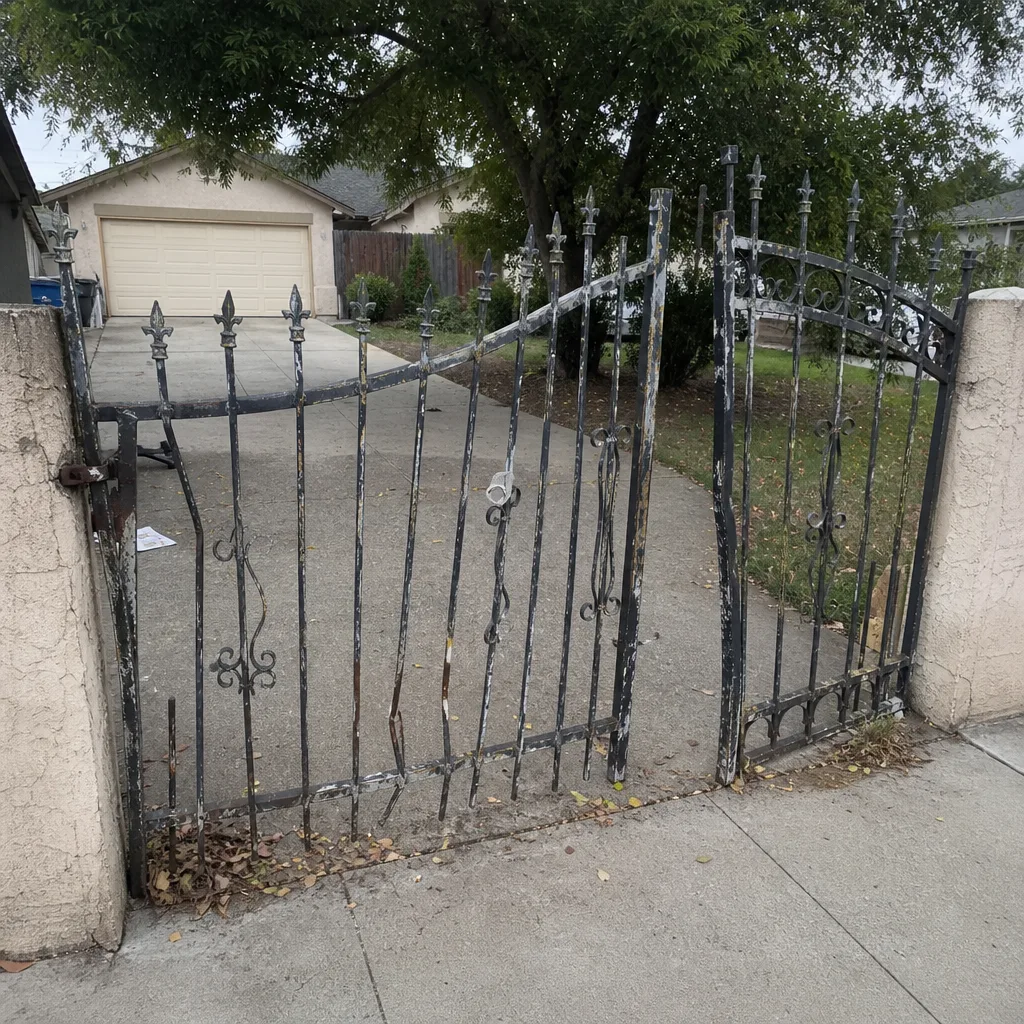 Before
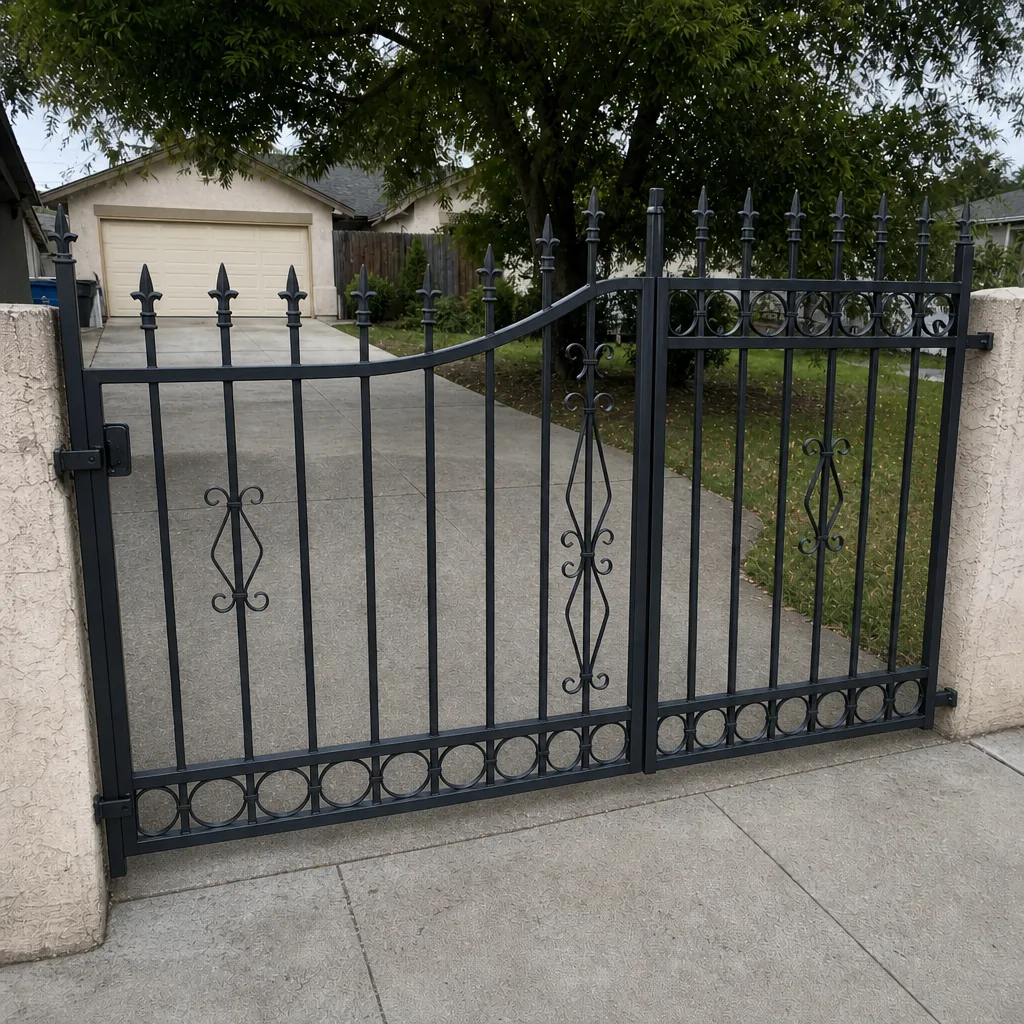 After
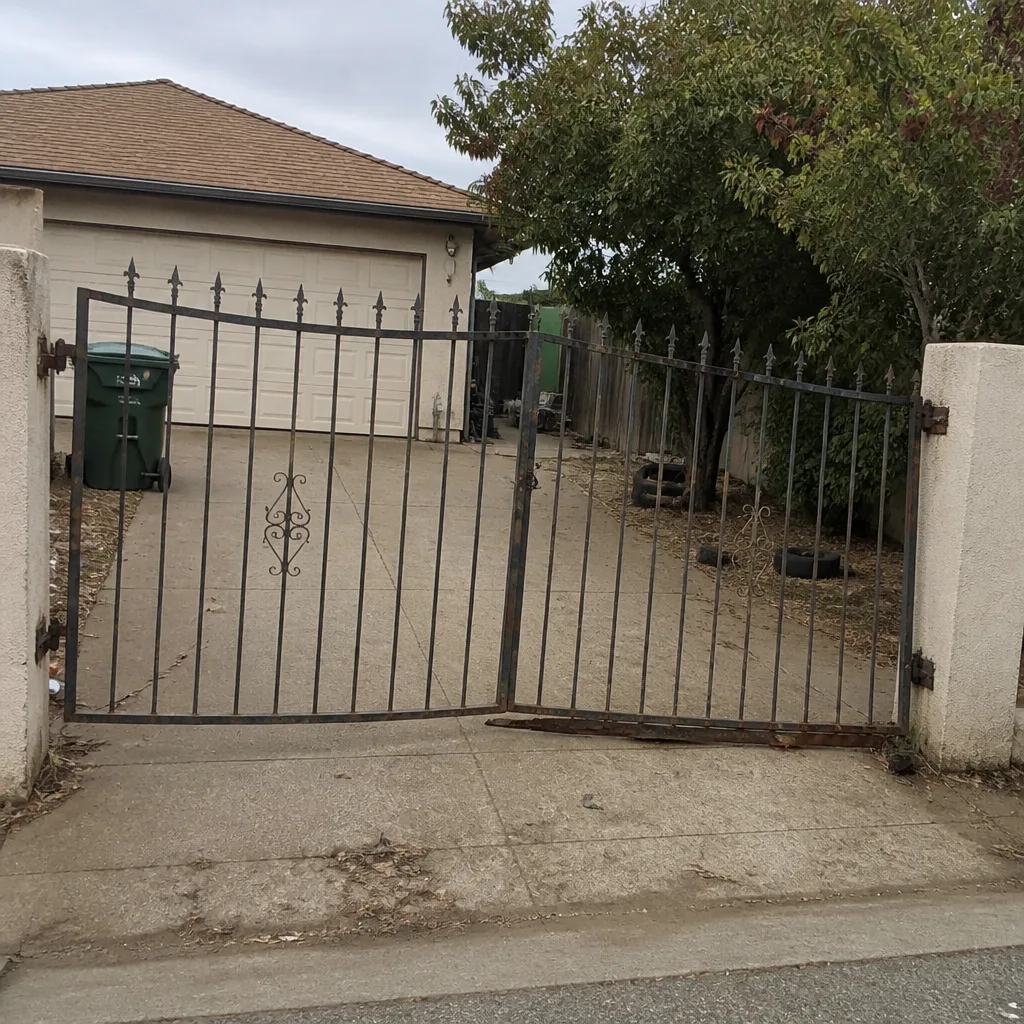 Before
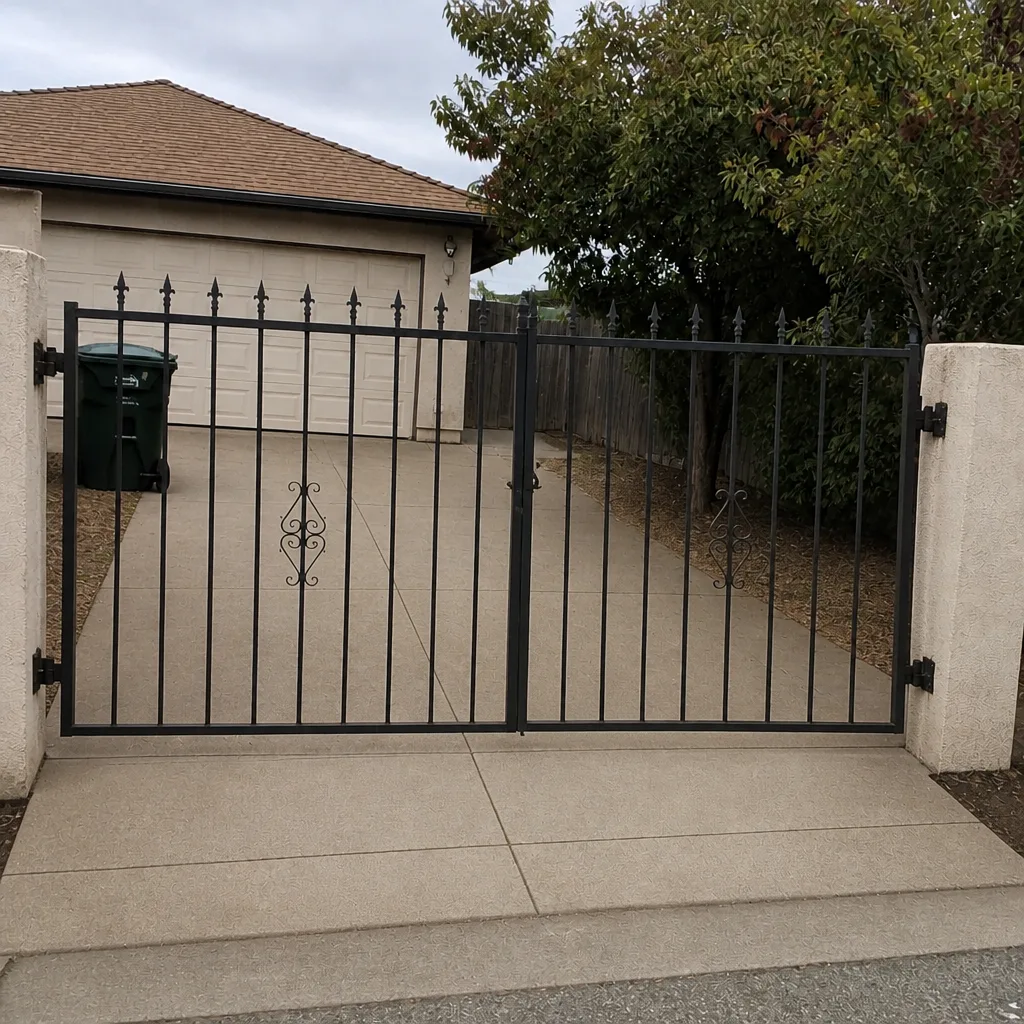 After
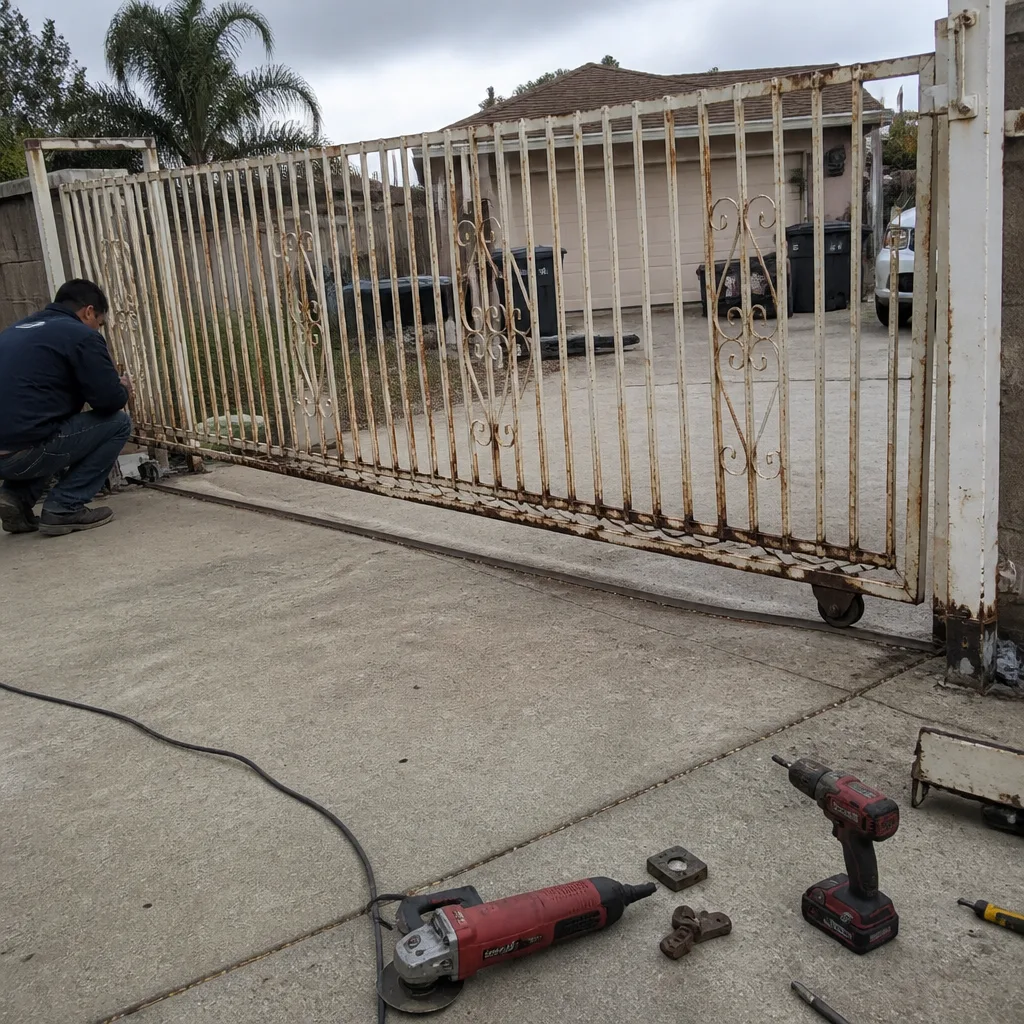 Before
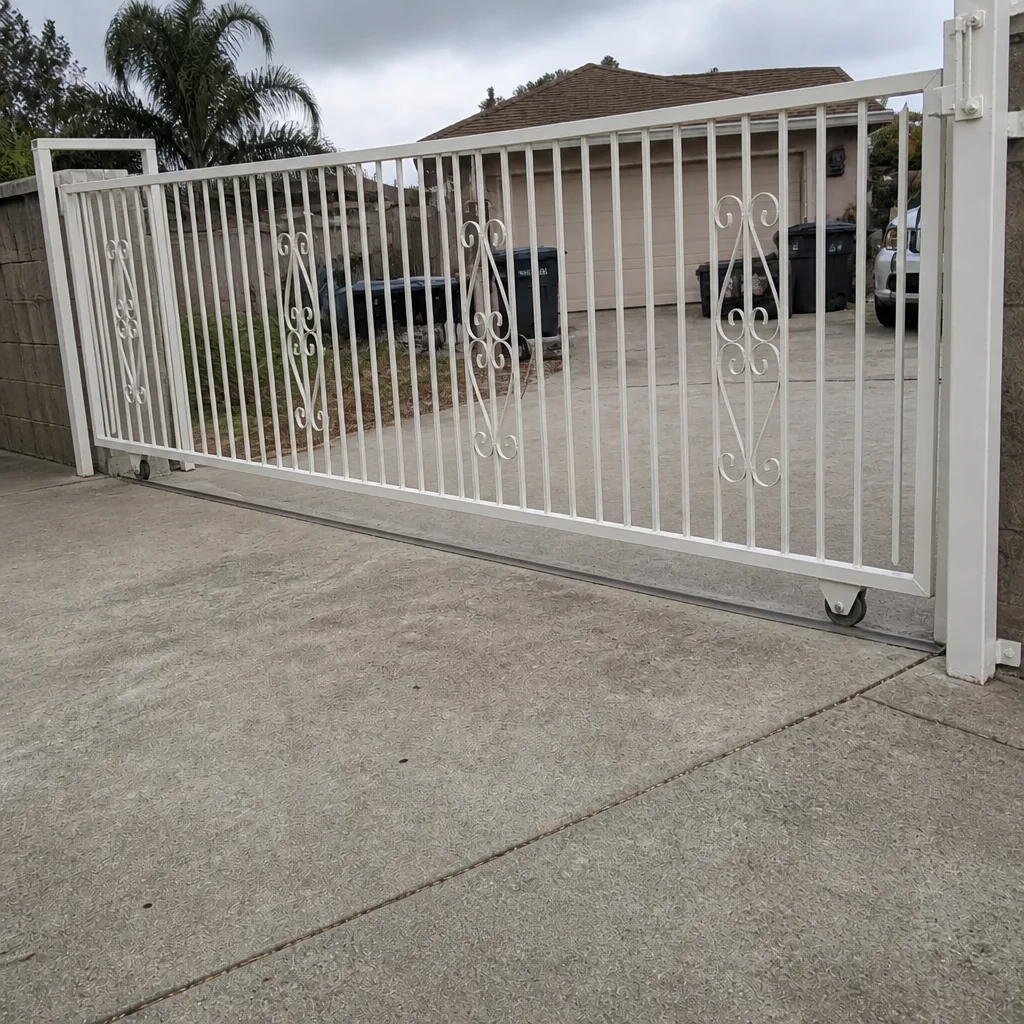 After
When to Call a Professional
Call a technician when the fault involves the control board, the supply wiring, a loop detector or a limit switch you can’t reset safely. Call before you bypass a safety sensor or force a gate that refuses to move. If your gate reverses unpredictably, stops at the same point every cycle, or won’t finish a cycle after you’ve checked power and cleared the sensor path, that’s a fault category we can pin down quickly. And if a manual release test scares you or the gate won’t move by hand with the operator released, stop there and call. The diagnostic categories this page walks through are where a trained eye shortcuts the process. A few minutes of someone familiar with your operator’s fault codes beats a weekend of guessing, and every estimate we give is set before any work starts, so there are no surprises on the invoice.
Frequently Asked Questions
No. A gate that stops at the same point every cycle is a limit switch or encoder fault, not a motor failure. The board is being told the gate has reached the end of its travel. The motor usually needs the gate to move freely and finish the cycle, so an aligned stop point points away from the motor and toward the limit. Note the exact position and call us; it narrows the diagnosis immediately.
Yes, and the brand matters more than the flash. Many boards blink a fault sequence, but the sequence maps to a different condition on a Viking, Ghost Controls, or DoorKing unit. That’s why we ask you for the brand first. Count the blinks, note whether the motor tries to run, and we’ll read the code with you. Call (844) 834-1771 for an exact diagnosis; estimates are free.
Yes, and you should. Release the operator and push the gate through its full travel by hand. Free travel means the mechanism is sound and the fault is electrical. Resistance or a bind means the problem is mechanical. That single test cuts the diagnosis in half, and it’s the cheapest tool in gate repair in Tracy. Re-engage the release carefully before running power.
Because aluminum warps and expands under valley heat, and a gate that’s slightly out of true in cool weather can bind in direct sun. If the problem is seasonal, expect a mechanical cause like a warped track or a dry hinge. Gates in Tracy on long exposed driveways see this most. The test is the same: check how freely the gate moves by hand in the heat of the afternoon.
Usually not. A wrong control board reset can wipe the limit reference and leave the gate stuck in a fault state, and loop detector recalibration can make the gate fail in the opposite direction. If you’re not certain of the exact sequence for your operator brand, don’t guess. One call to (844) 834-1771, with the estimate free, is cheaper than a replaced board.
Corroded low-voltage terminals from irrigation overspray. The gate goes dead, then works again later, and the operator gets blamed. Check for green or white corrosion on the terminal block and a dull film on the wiring before assuming the operator failed. Cleaning the photo-eye lenses and inspecting terminals is the safe seasonal check every gate owner can do.
The Bottom Line
Most gate failures are diagnosable before a technician pulls into the driveway. Sort the symptom into one of the five categories: power supply, control board, limit switch, motor, or obstruction sensor. Use the manual release to split mechanical from electrical. Read the light pattern by brand, not by guess. And leave the control board resets and loop recalibrations to someone who knows the sequence. That order of operations is what we use on every call, and it saves gate owners real money. If your gate is misbehaving and you’ve narrowed it as far as you safely can, the next step is a specialist’s eye, not another guess. For gate repair in Tracy, our team is ready.
Call (844) 834-1771 for a free estimate. We answer 24/7. Fast dispatch from 7am to 7pm, Sunday through Friday. Whether you’re facing a dead operator, a reversing gate, or a board that’s lost its limits, we’ll tell you what’s actually wrong and what it takes to get your gate moving again. Gate Repair Tracy handles repair, electric gate repair, and full gate installation, and the price is set by the written estimate before any work starts.
Written by the team at Gate Repair Tracy.