
Last updated November 15, 2026
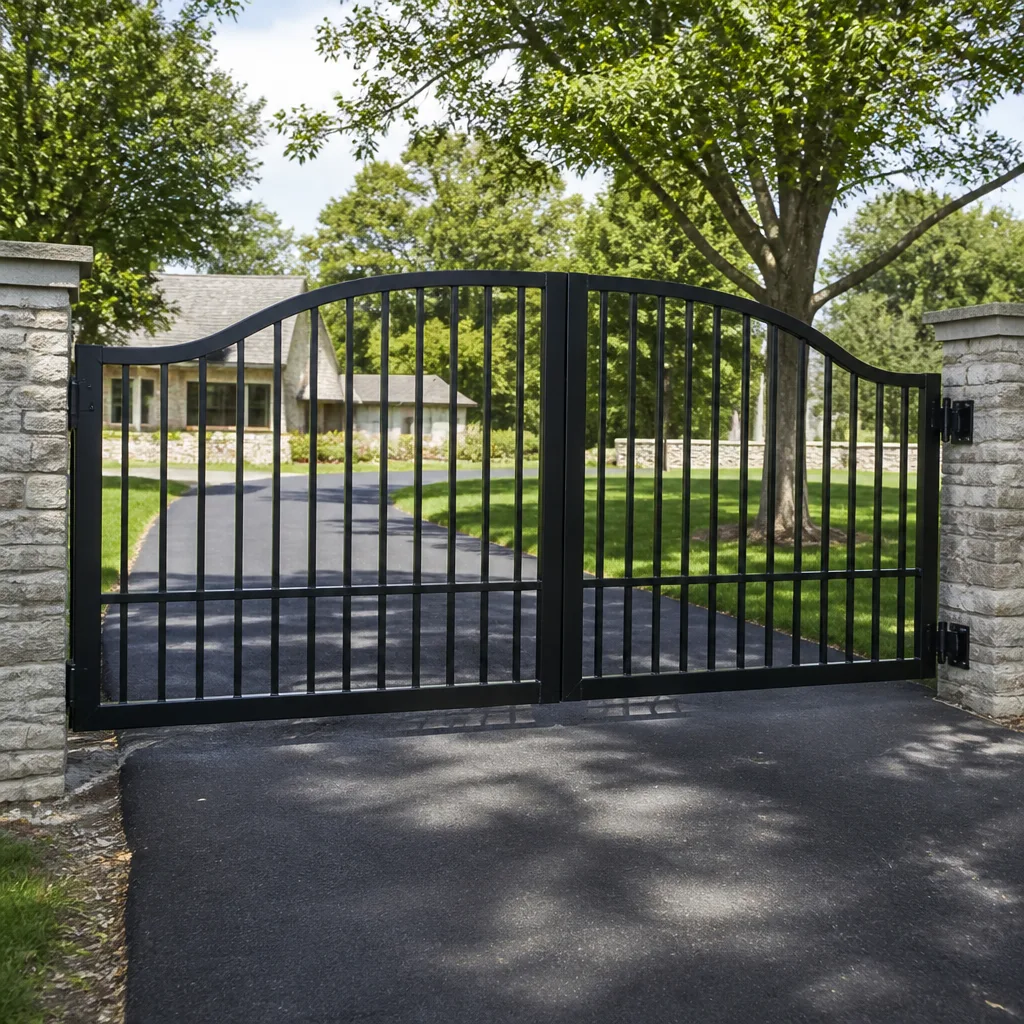
 Wrought iron
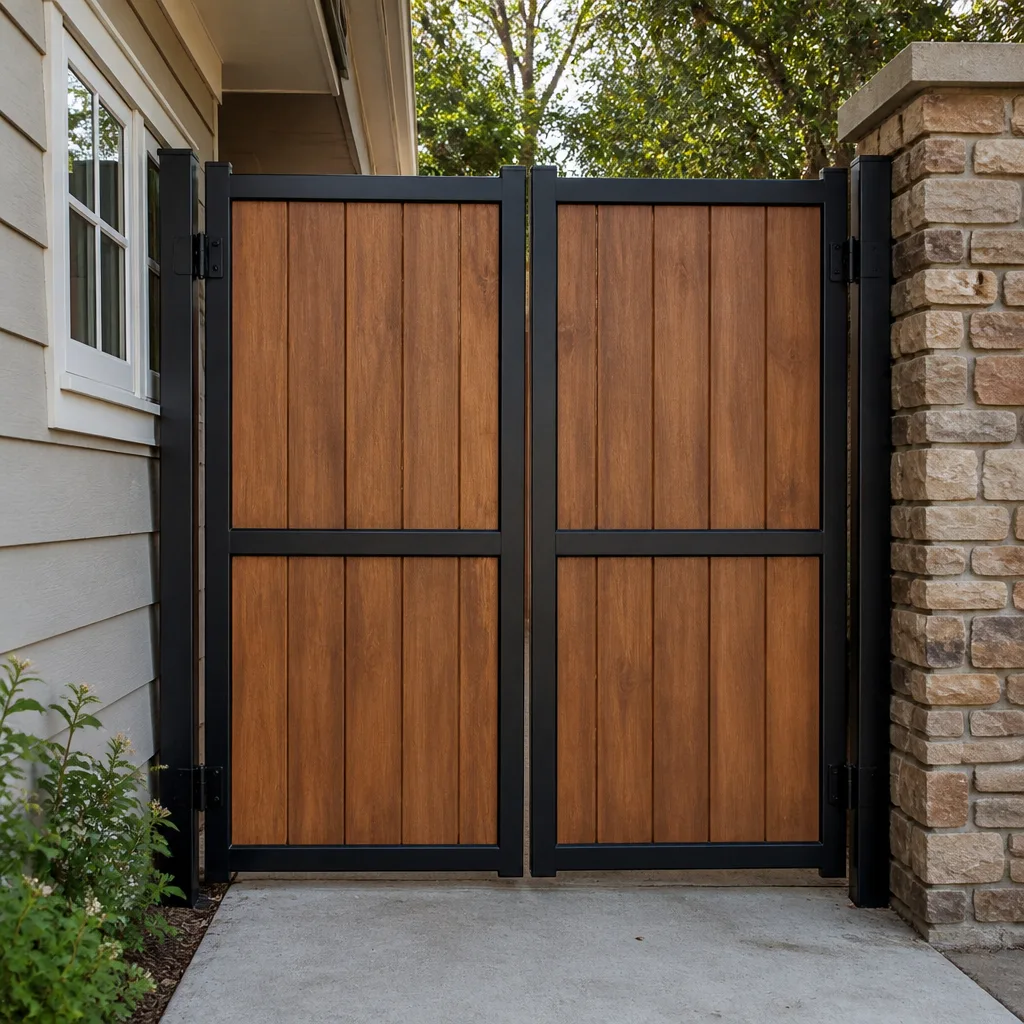 Wood & steel frame
 Farm & ranch
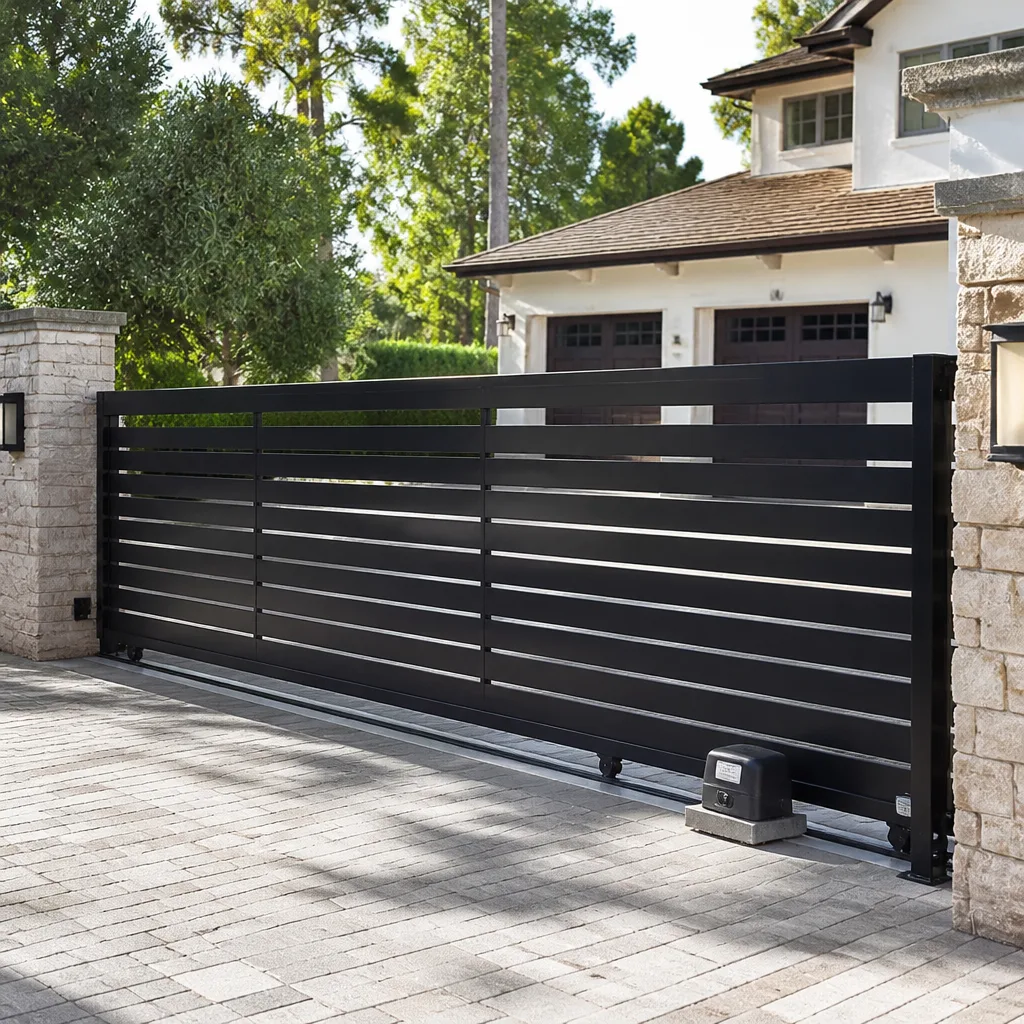 Sliding driveway gates
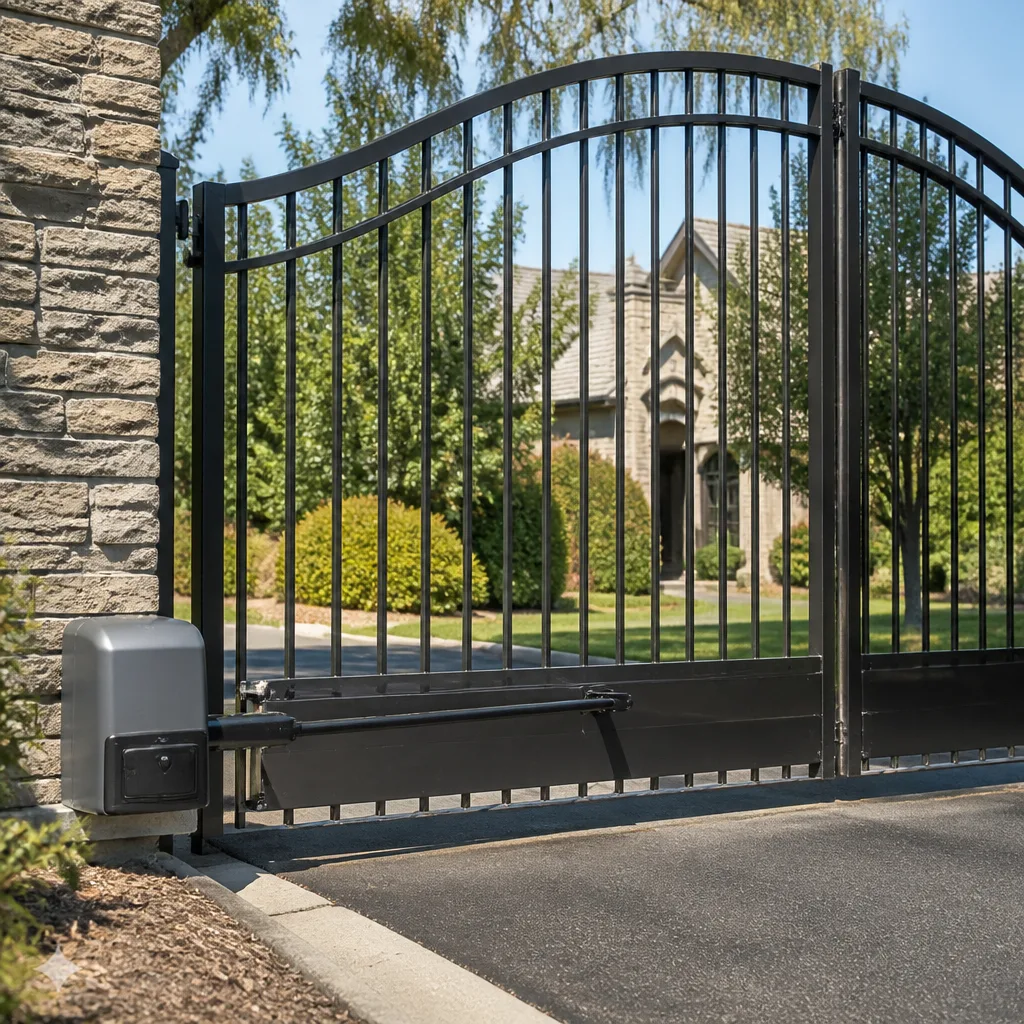 LiftMaster operators
Free on-site gate assessment - hinges, posts, and your LiftMaster or Nice gate operator checked before anything is quoted
The assessment is free and the quote is the invoice.
Get your free estimateGate Repair Warning Signs: A Tracy Homeowner’s Reference Guide
Most gate failures announce themselves long before the gate stops moving. The problem is that homeowners watch the gate, and the gate is the last part of the system to show stress. The operator is where the story starts: the motor, the control board, the gears, the limit switches. A gate that hesitates for half a second before it swings is not “almost fine.” In our experience, that half-second is an operator running well past its intended load, and it’s usually a few weeks from a burned motor or a stripped gear. This guide teaches you to read those signals in order, from sound to cycle time to the specific ways gates fail in Tracy’s hot, dry summers and cool, damp winters. You’ll learn what each warning sign means, how it maps to brand-specific fault codes, and when it’s time to call.
Quick Answer
Gate repair warning signs in Tracy fall into four categories: unusual sounds from the operator (grinding, clicking, humming without movement, relay chatter), cycle time drift (the gate taking noticeably longer to open than it used to), intermittent operation (a gate that “fixes itself” and works again), and visual indicators like rust bloom, footing heave, and weatherstripping failure. Any one of these is a reason to have the operator inspected before the gate stops entirely. The earlier you catch the pattern, the smaller the repair.
Styles & brands we work with
- Wrought iron
- Wood & steel frame
- Farm & ranch
- Sliding driveway gates
- LiftMaster operators
Table of Contents
- Audio Diagnostics: What Your Gate Is Telling You
- Cycle Time Drift: The Signal Most Homeowners Miss
- Intermittent Operation: Why “It Fixed Itself” Is Worse
- Visual Warning Signs in Tracy’s Climate
- Mapping Warning Signs to Fault Codes by Brand
- Safety Systems and Warning Signs You Should Never Ignore
- A Practical Triage: What to Check and What to Leave Alone
Audio Diagnostics: What Your Gate Is Telling You
Sound is the fastest diagnostic tool you have, and it’s free. Stand near the operator housing while the gate runs and listen. Different operators make different sounds, but the categories of noise are consistent across brands. Here’s how to translate what you hear.
- Grinding during travel: On a screw-drive or worm-gear operator, grinding almost always points to worn gears or a lack of lubrication on the drive mechanism. On a chain-drive system, it can mean a misaligned chain, a stretched chain, or a sprocket that’s worn unevenly. Grinding does not fix itself and it gets more expensive every week it’s ignored.
- Clicking without movement: A single click followed by nothing is usually a control board trying to send a signal to the motor and failing. This can be a relay failure on the board, a dead start capacitor, or a limit switch telling the board the gate is already at the end of its travel. On Viking and Linear operators, this pattern is common when the board is failing.
- Humming but not moving: The motor is receiving power, but the gate isn’t moving. This is either a mechanical bind (gate off track, obstruction, footing heave) or a capacitor that no longer delivers enough starting torque. Stop cycling the gate immediately. A motor that hums without moving overheats fast.
- Relay chatter: Rapid clicking from inside the operator housing is the sound of a relay or control board cycling on and off. It’s often caused by a low-voltage wiring fault, a bad safety sensor, or water intrusion in the control box. On BFT and FAAC operators, relay chatter often traces back to a failed or water-damaged control board.
- A motor that suddenly sounds louder: Increased motor noise with normal travel can indicate bearing wear or a slipping drive. It’s the slowest-moving warning sign on this list, but it’s a reliable one.
You don’t need to diagnose the exact failure to act on a sound. If the operator sounds different this month than it did last month, something has changed. That’s your signal to call.
Cycle Time Drift: The Signal Most Homeowners Miss
A gate that opens in eight seconds instead of six is not being polite. It’s telling you the operator is working harder to do the same job, and it’s the single most underappreciated warning sign in gate repair. Cycle time drift is the gap between what the gate used to do and what it does now. It arrives so gradually that homeowners rarely notice it, especially when the gate still opens every time.
Cycle time drift has predictable causes. Here’s what’s behind a gate that’s getting slower:
- Increased mechanical resistance. The gate’s rollers, hinges, and track are wearing. Dust and grit from Tracy’s dry summers build up in tracks and roller assemblies, and the operator has to push harder to overcome the friction.
- Operator load creep. A gate that has sagged on its hinges, or that has gained weight from a warped panel, forces the motor to work harder. A motor working harder is a motor running hotter, and heat is what kills motors and control boards.
- Voltage drop on the power run. Long runs of low-voltage wiring from the control box to the operator can lose voltage over time, especially if connections are loose or corroded. The operator compensates by drawing more current, which accelerates wear.
- A self-adjusting operator nearing the edge of its adjustment range. Many modern operators (Ghost Controls and LiftMaster units among them) learn the gate’s travel and adjust automatically. When the operator hits the limit of what it can adjust, it slows down. That slowdown is the operator telling you the mechanical issue has exceeded its compensation range.
The practical test: time your gate. Note how long a full open cycle takes today. If it’s noticeably longer than it was a year ago, the operator is under extra load, and the repair will be cheaper before the motor starts to fail. In our experience, cycle time drift is the warning sign most homeowners catch too late because they never measured it in the first place.
Intermittent Operation: Why “It Fixed Itself” Is Worse
This is the counterintuitive one. A gate that fails every time is a clear problem, easy to diagnose. A gate that fails once, then works for a week, then fails again, is harder, and in our experience more concerning. Intermittent failures are usually a sign that one part of the system is drifting out of spec – not failed yet, but failing. That means the fault is present even when the gate is working.
Intermittent operation points to a limited set of causes:
- Loose or corroded connections. A control board terminal, a photo-eye wire, or a limit switch connection that is barely making contact will work in dry weather and fail after a cool, damp Tracy morning.
- Failing capacitor or relay. These parts degrade gradually. They work until they don’t, and the “don’t” gets more frequent as the part moves toward failure.
- Thermal shutdown on the operator. A motor that is running hot from cycle time drift will trip its thermal cutout on hot afternoons and cool off overnight. The gate “works again” the next morning. That pattern is not recovery, it’s the motor warning you before it fails permanently.
- A misaligned safety sensor. Photo-eyes that are slightly out of alignment can trip on dust, insects, or low-angle sun and then recover. That intermittent stop in the middle of a cycle is a sensor issue, not a motor issue, and it needs to be corrected before the gate crushes something.
If the gate “fixed itself,” write down when it failed and what the weather was that day. That pattern is the diagnostic clue we need when we arrive.
Visual Warning Signs in Tracy’s Climate
Tracy’s weather shapes gate failure in specific ways. Hot, dry summers push operators and their motors toward thermal limits, and cool, damp winters stress wiring, control boards, and metal. The visual warning signs that matter most here are the ones tied to that climate, and they’re often more reliable than the sounds.
- Rust bloom patterns. Rust that appears on the bottom edge of a gate panel or around welds isn’t just cosmetic. It’s the entry point for water into the metal, and water into the metal means the gate’s weight and flex are changing. That added flex shows up at the hinges and rollers, and the operator starts working harder. In Tracy, rust bloom shows up first on the side of the gate that faces the sun and gets the most morning dew.
- Footing heave and gate sag. Even without freeze-thaw to contend with, Tracy’s wet winters soften soil and the gate’s posts can settle. A gate that’s dropped even a quarter of an inch on one post will walk its rollers out of the track, and it changes how the gate closes against its stops. Look for a gap that has grown at one end, or a gate that sits lower than it did last year.
- Weatherstripping and seal failure. On operators with gaskets and seals (control boxes, motor housings), dry summers crack the seals and the first wet winter lets water in. Water intrusion in a control box is the leading cause of board failure we see, and it’s a warning sign long before the board actually fails.
- Sun-bleached and cracking plastic covers. Operator covers, sensor housings, and keypads that have gone brittle from sun exposure break at the worst time. A cracked photo-eye housing in Tracy’s summer sun can let water in during the first rain, and that’s when the intermittent failures begin.
- Track wear and debris loading. Dry, dusty summers load the gate track with grit. Look at the track itself; if it looks sandy or the rollers are worn unevenly, the track needs cleaning and the rollers likely need replacing.
These signs matter because they are the ones that point to a load problem the operator is already compensating for. Rust bloom on the bottom of the gate isn’t a painting job. It’s the first chapter of a story that ends with a stripped gear or a burned motor.
Mapping Warning Signs to Fault Codes by Brand
Your gate’s control board already knows something is wrong. Most modern operators log fault codes, and many display them on a small LED or flash a sequence on the board itself. You don’t need to interpret the code yourself to get value from it. Writing down the code before you call saves diagnostic time and gets you an accurate answer faster.
Here’s how to find the fault code on the operator brands we work on:
- Open the operator housing. On most residential operators (Mighty Mule, Ghost Controls, Linear residential units), the control board is under a snap-off cover on the housing, or inside the housing at the top of the unit. Do this only with the power off.
- Look for the diagnostic LED. On BFT and FAAC operators, the board typically has a diagnostic LED that flashes a pattern. Counting the flashes or reading the label next to the LED gives you the fault category. On Viking and Linear operators, the board usually has labeled terminals and a small display or a blink pattern for faults.
- Write the pattern down exactly. Number of flashes, whether the LED is solid or blinking, and any two-digit code. A photograph of the board with the label visible is even better.
- Look up the fault category in the brand’s install manual. Every brand you’ll find on a gate in Tracy (LiftMaster, DoorKing, Elite, and the brands above) publishes its fault codes in the installation manual. The manual is probably in the plastic document sleeve inside the operator housing or clipped to the inside of the control box.
- Correlate the code to what you heard. A code for “obstruction” plus a gate that hums without moving points to a track or footing issue. A code for “limit switch” plus a gate that stops short points to a limit switch that has drifted. The code plus the sound plus the cycle time is the full diagnosis.
If you can’t find the manual, take a photo of the operator’s model plate and call us. We work on LiftMaster, FAAC, BFT, Linear, Viking, Ghost Controls, DoorKing, Elite, and Mighty Mule systems regularly, and we can usually tell what the fault is from the code and the behavior without a second visit.
Safety Systems and Warning Signs You Should Never Ignore
Some warning signs are about the gate’s operation. Others are about safety, and those override everything in this guide. A gate has heavy moving panels, an electric operator with line voltage wiring, and safety sensors that prevent the gate from closing on a person, a child, or a vehicle. If any of these are compromised, stop using the gate until a trained technician checks it.
- A gate that closes on a person or vehicle, even once. This is not a nuisance. The photo-eye safety sensors, the safety edge, or the operator’s reverse-on-obstruction feature has failed. Call us before the gate cycles again.
- Sparks, burning smells, or a hot-to-the-touch operator housing. This points to an electrical issue in the power run or the control board. Stop the gate immediately. Do not open the housing if you don’t have electrical training, and do not attempt to diagnose the wiring yourself.
- A gate that moves on its own. Spontaneous movement (no command, no keypad press) means a command source is failing, a battery backup has gone rogue, or a control board is malfunctioning. Disconnect power and call.
- A slide gate that has jumped its track or is off its rollers. Slide gates are heavy and can tip or come off the track entirely. Do not try to lift one back into position by hand.
- Frayed or exposed wiring. An operator’s power wiring is line voltage. Even after the breaker is off, a capacitor can hold a charge. Treat any exposed wiring at the operator as dangerous.
We say this in every guide because it’s true: the fastest way to turn a repair into a hospital visit is to try to lift a heavy gate back onto its track or to open a control box you don’t know. If the safety system is failing, stop and call us. We’ll come look and give you a written estimate before any work begins.
A Practical Triage: What to Check and What to Leave Alone
Not every warning sign requires a service visit. Some of them are simple maintenance you can handle, and some of them are genuine repair jobs. Here’s how our technicians think about the difference, starting with what’s safe to check yourself.
What you can safely check:
- Listen to the operator through a full open and close cycle, and write down what you hear.
- Time a full cycle with a stopwatch, and compare it to the last time you timed it.
- Look for rust bloom on the gate’s bottom edge and around welds.
- Check the track and rollers for visible grit, debris, and uneven wear.
- Look for a gap that has grown between the gate and its stops.
- Locate the operator’s model plate and take a photo of it.
- Check that the photo-eye safety sensors are clean and unobstructed, and that nothing is blocking them.
What you should leave to a technician:
- Opening the operator’s control box if you aren’t comfortable working around line voltage.
- Adjusting limit switches, force settings, or travel limits on the control board.
- Any diagnosis that requires tracing wiring through the gate footing or the low-voltage run.
- Replacing or adjusting a control board, capacitor, or motor.
- Any issue with a slide gate that has come off its track.
- Any sign of sparks, burning smells, or a hot operator.
If what you can check turns up a warning sign, that’s when you call. The signal doesn’t need to be a failure yet. It just needs to be a change from what used to be normal.
Common Mistakes to Avoid
- Circling the gate until it stops. This is the most common mistake we see. A gate that hesitates or cycles slowly is already in the failure cycle, and every additional cycle adds wear. If you’ve noticed a warning sign, drive on manual and call before the operator burns out.
- Greasing everything to “quiet it down.” The wrong lubricant on the wrong part (chain vs. screw drive vs. track rollers) can attract grit and make grinding worse. Greasing the wrong part in Tracy’s dusty summers turns a tracked roller into a lump.
- Assuming the control box is watertight. A control box that has been in the sun for years has cracked seals. If you find water inside the control box, don’t screw it closed and hope. Water intrusion on a control board is the most expensive repair on this list.
- Adjusting the force setting to keep the gate working. A control board with a force setting cranked to maximum will wear out the motor and might close a gate on a person. Force settings exist for a reason, and they’re a technician’s job.
- Ignoring intermittent failures because the gate “works now.” The failure is present even when the gate is working. An intermittent failure treated as “fixed” is a repair that will one day happen at the worst possible time, in the middle of a workday, with the car on the wrong side.
- Chalking footing heave up to age. A gate that’s sagging on one post is putting uneven load on the operator every time it moves. The post is a structural issue, not a cosmetic one.
- Calling for a repair without noting what you heard or saw. A note of “grinding on close, code 4 flashes on the board, cycle time from 6 to 9 seconds” gets you a better answer on the phone and a faster diagnosis on-site.
See the difference
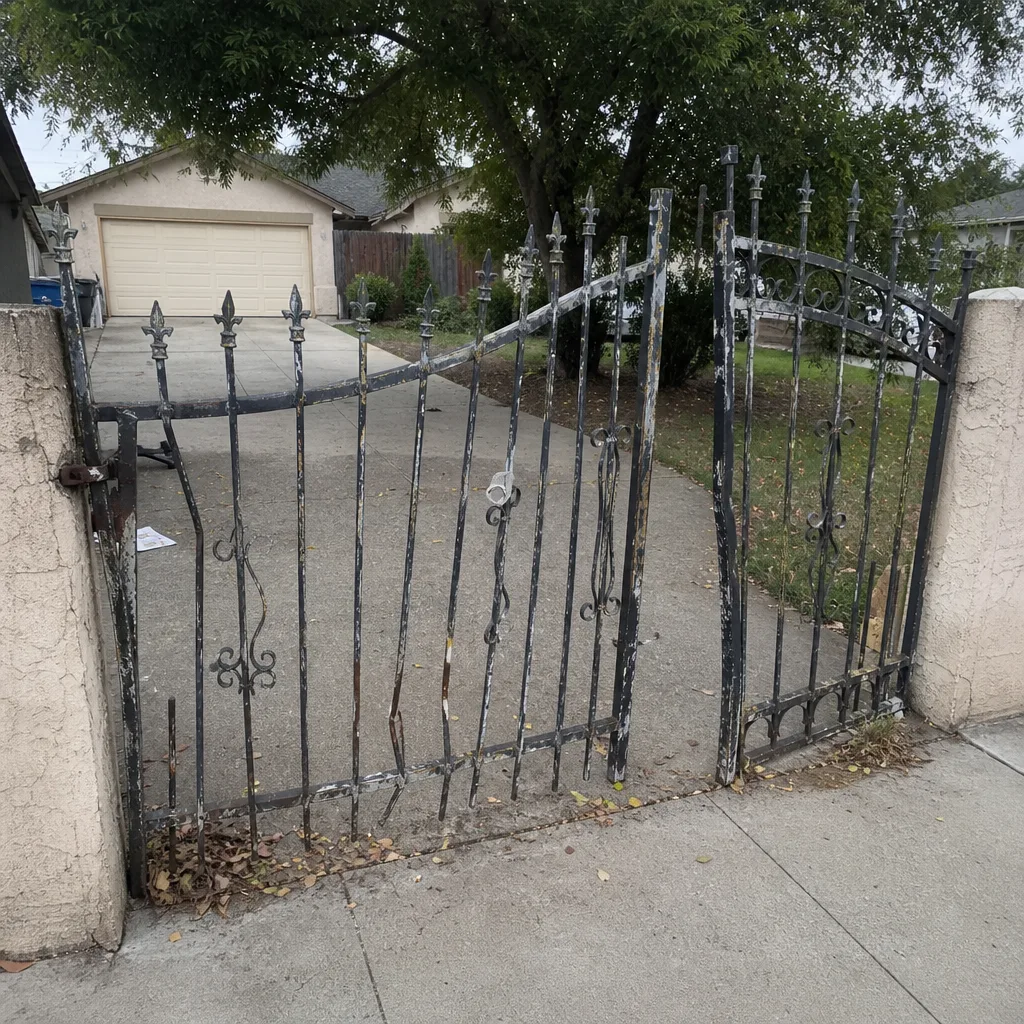 Before
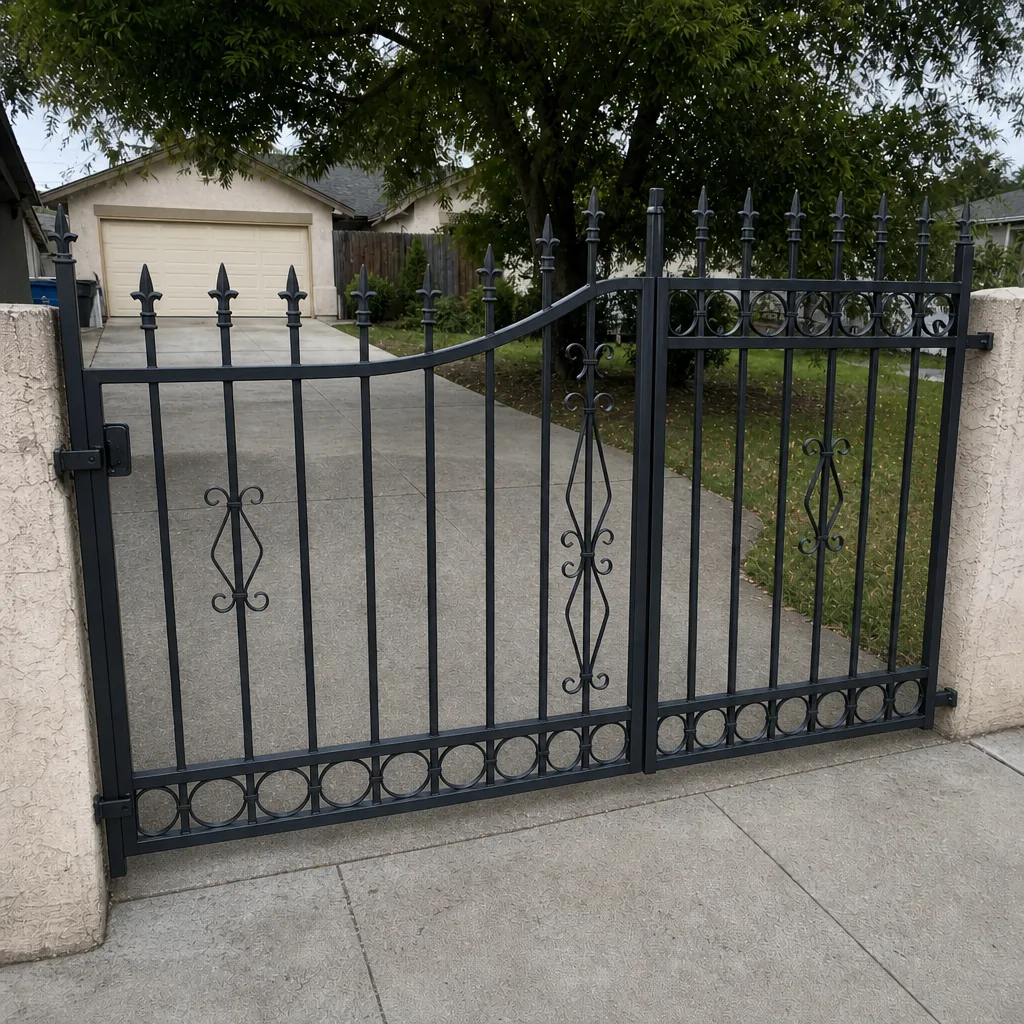 After
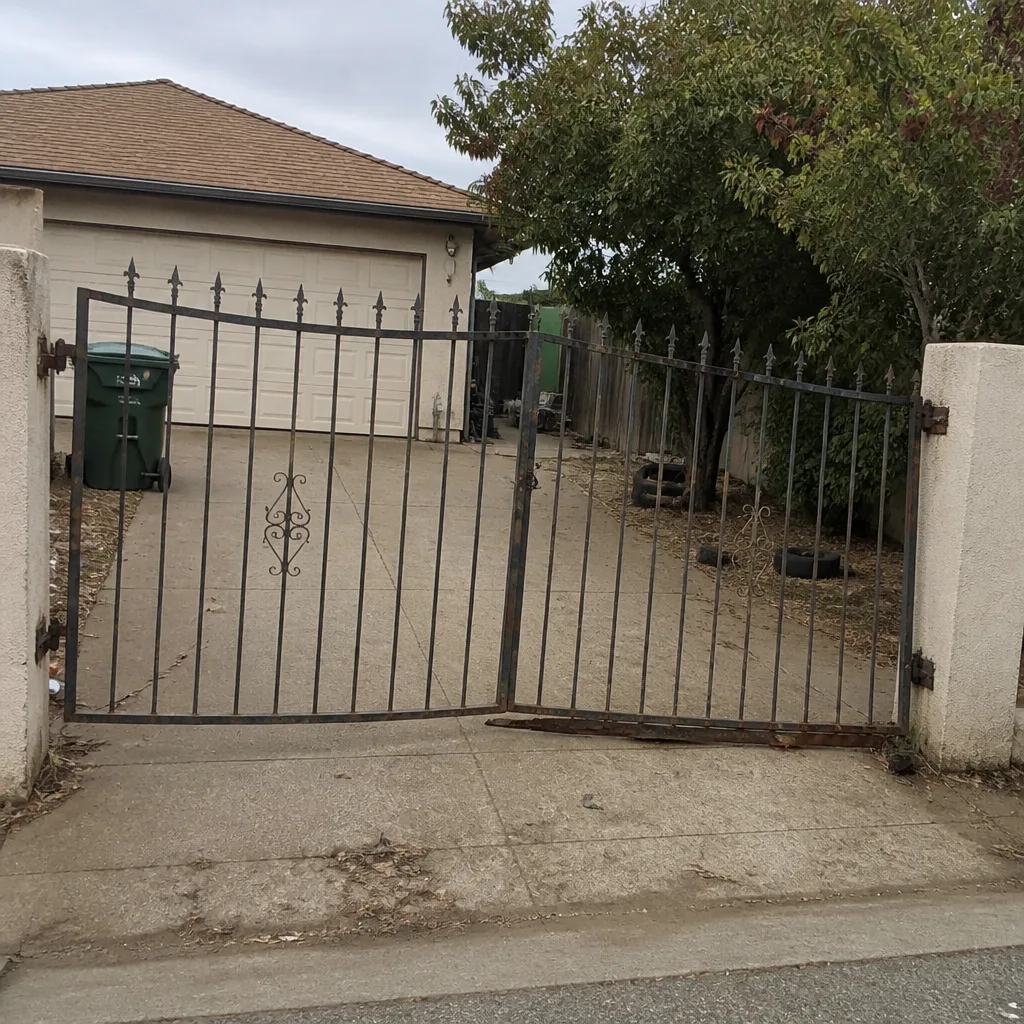 Before
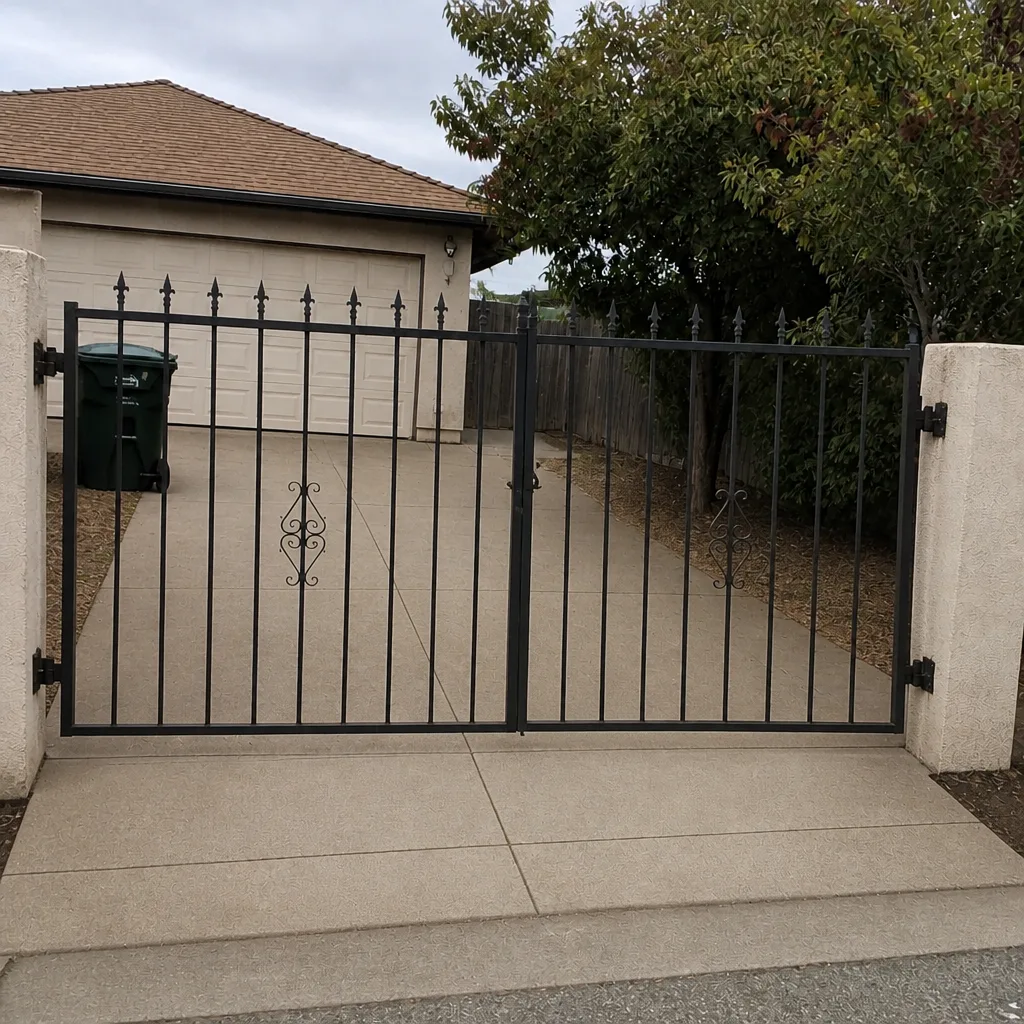 After
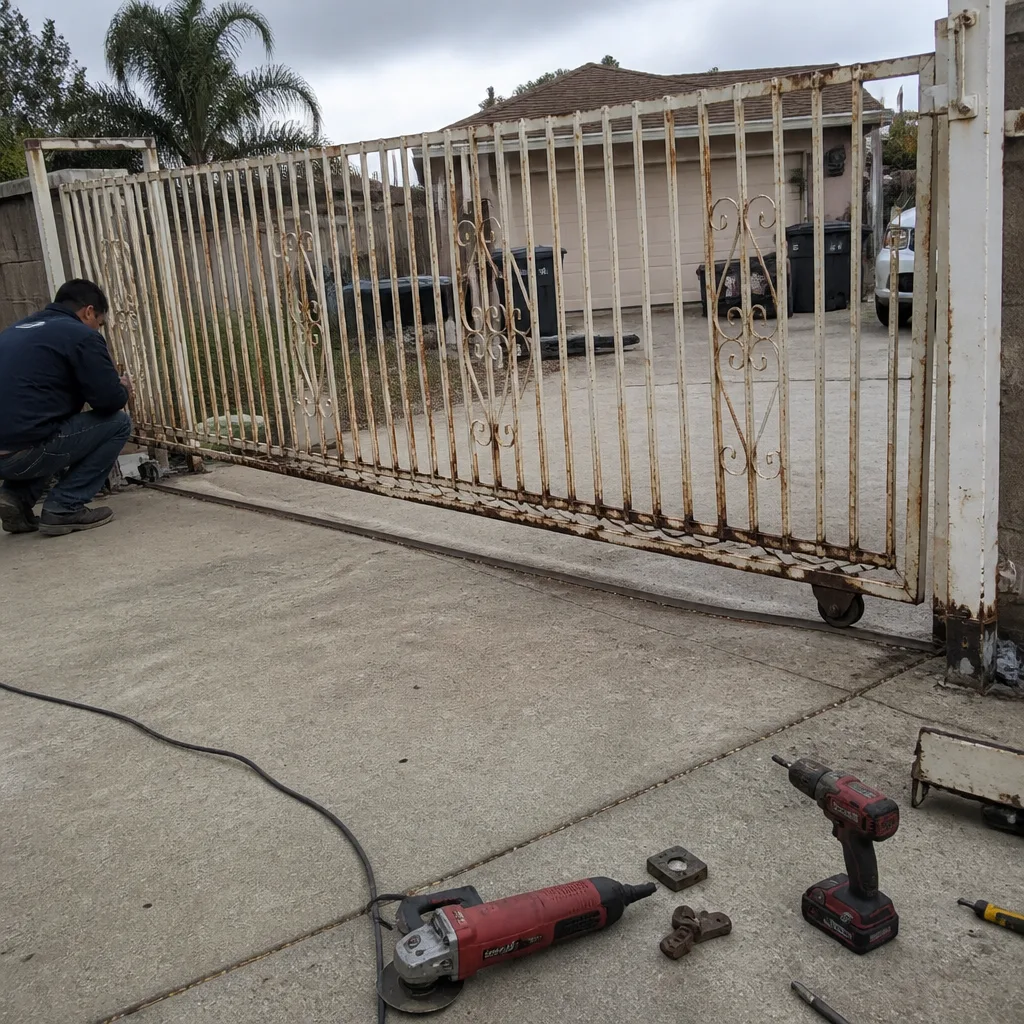 Before
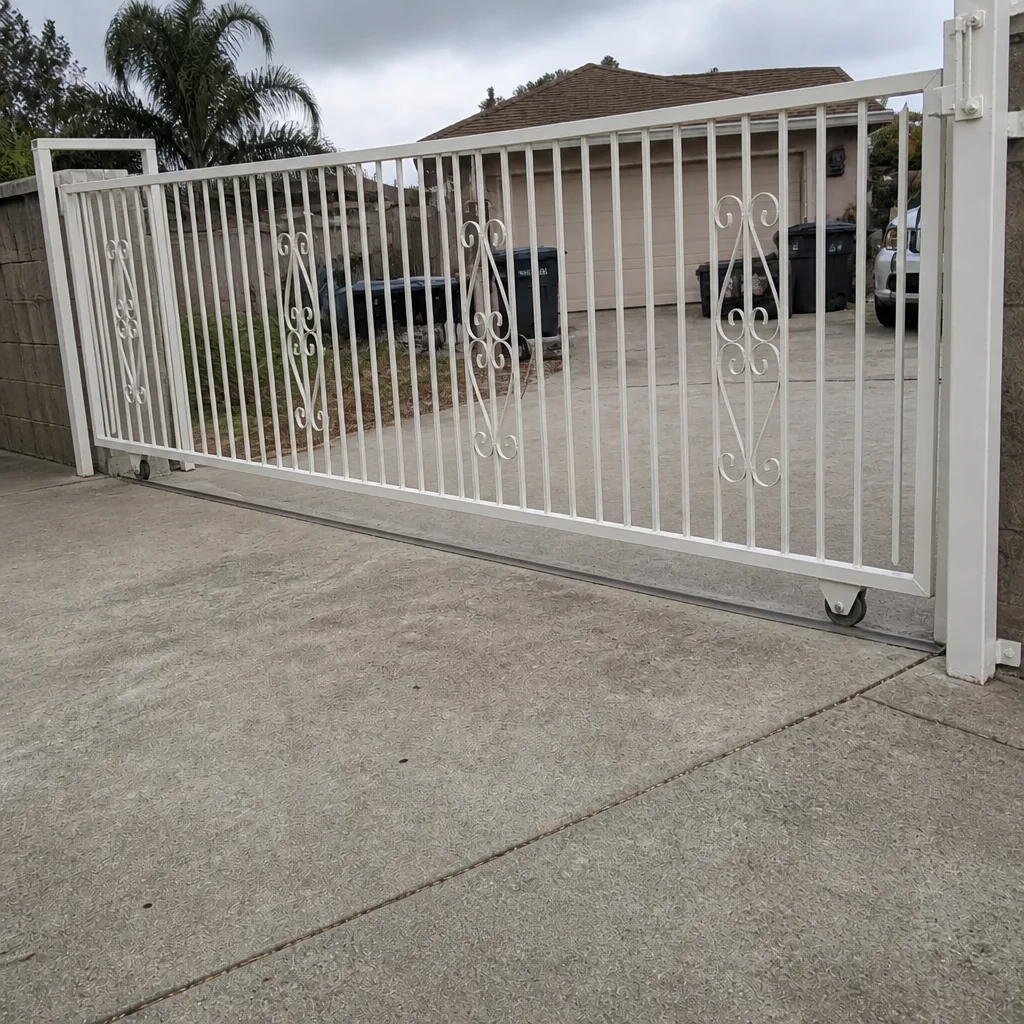 After
When to Call a Professional
Call a gate technician when you hear grinding, clicking, humming without movement, or relay chatter; when your cycle time has drifted noticeably longer than it used to be; when the gate fails intermittently and “fixes itself”; or when you see rust bloom, gate sag, seal failure, or track debris that keeps coming back. Call immediately when the gate moves on its own, fails a safety test, or shows signs of electrical damage. Electric gate repair is what we focus on, and the operator, control board, and wiring are our daily work, not something we treat as an upsell. Gate repair for the mechanical side (hinges, tracks, footing, gate sag) starts with a look at the gate itself. Gate Repair Tracy offers free estimates in Tracy – call (844) 834-1771. We answer 24/7, and fast dispatch is available from 7am to 7pm, Sunday through Friday.
Frequently Asked Questions
The most common warning sign is a change in sound from the operator – grinding, clicking, or a louder motor. Sound is the earliest feedback the system gives you, and it usually shows up weeks before the gate actually stops moving. If you notice the operator sounds different than it did last month, that’s the signal. Call (844) 834-1771 for an exact quote – estimates are free.
Yes. An intermittent failure is present even when the gate is working, and in our experience it’s more concerning than a gate that stays broken. The pattern usually traces to a loose connection, a failing capacitor or relay, thermal shutdown from cycle time drift, or a misaligned safety sensor. Call before the failure repeats at a worse moment.
Listen to the operator and watch the gate. If the operator is making normal sound but the gate moves unevenly, binds, or sags, the issue is mechanical (hinges, track, footing). If the operator is making abnormal noise, humming without moving, or clicking without movement, the issue is electrical or in the operator. A control board fault code plus the sound is the most reliable diagnosis, and we can usually identify it from a photo of the model plate and the fault code.
Yes, different operator types fail in different ways. BFT and FAAC operators often show relay chatter or board issues when water intrudes. Ghost Controls and Mighty Mule residential DIY-installed systems frequently show capacitor or limit-switch issues. Linear and Viking operators tend to show force-setting drift as the gate ages. LiftMaster, DoorKing, and Elite systems on commercial-grade gates show wear on the drive mechanism before the control board fails. Our technicians have up to 15 years of experience working across all nine brands, and we can tell from the behavior what’s likely wrong.
Yes. On most operators, the control board has a diagnostic LED or a small display, and the brand’s install manual lists the fault codes. Open the housing with the power off, note the flash pattern or code exactly, and take a photo of the model plate. When you call, tell us the code and what you heard. That combination lets us plan the visit instead of spending the first hour finding out what the gate is doing.
In almost every case, yes. A warning sign is usually an early-stage problem. Grinding from a worn gear becomes stripped gear teeth. A capacitor that hesitates becomes a burned motor. Cycle time drift becomes a board failure. The written estimate sets the final price, and the earlier you schedule the visit, the smaller that estimate is likely to be. Call (844) 834-1771 for a free estimate.
The Bottom Line
Gate failure rarely happens without warning. The warning signs are in the sound of the operator, the time it takes to open, the pattern of intermittent failures, and the physical changes you can see on the gate itself: rust bloom, footing heave, weatherstripping failure, and track wear. Read them in that order. Sound first, cycle time second, weather and visual signs third. Map what you find to the operator’s fault code before you call, and you’ll get a faster, cheaper repair. If you’re in Tracy and you’ve noticed any of these signs, call us. We’re an electric gate specialist, and we work on your gate, moving again.
Whether you’re a homeowner, landlord, or property manager, the goal is the same: catch the warning sign while it’s still a warning. If you’d like to learn more about our work in the area, start with Gate Repair Tracy. For context on the neighborhoods and climate we serve, see our overview of Tracy. Call (844) 834-1771 for a free estimate on any warning sign you’ve noticed. We answer 24/7. Fast dispatch, 7am-7pm, Sunday through Friday.
Written by the team at Gate Repair Tracy.