
Last updated November 15, 2026
 Wrought iron
 Wood & steel frame
 Farm & ranch
 Sliding driveway gates
 LiftMaster operators
Free on-site gate assessment - hinges, posts, and your LiftMaster or Nice gate operator checked before anything is quoted
The assessment is free and the quote is the invoice.
Get your free estimateGate Repair Maintenance Schedule: What to Do and When
The part that causes the most gate failures in a Tracy summer never shows up on the annual checklist most homeowners download. It’s the thermal cutout inside the motor housing. When the Central Valley heat pushes an operator past its limit, that cutout trips, the gate stops, and then a few hours later it resets itself and works again. No noise, no warning light you’d notice, no visible sign of stress. By the time the gate finally quits for good, the damage started weeks earlier. Real gate maintenance isn’t one spring walk-around. It’s a tiered schedule with different intervals for mechanical wear, electrical connections, and operator logic. This guide lays out exactly what to check and when, from a 30-day walk-around to the pre-rainy-season prep most checklists skip entirely.
Quick Answer
A working gate maintenance schedule runs on four tiers: a 30-day visual and safety check, a 90-day mechanical lubrication and hardware pass, a bi-annual electrical and operator inspection, and an annual full-system service. Mechanical tasks need the shortest intervals because metal-on-metal wear is constant. Electrical work runs semi-annually because corrosion builds slowly. Operator firmware and logic sit on their own manufacturer-driven cycle. In Tracy, the summer heat cycle and the wet winter months each demand their own seasonal additions on top of that base calendar.
Styles & brands we work with
- Wrought iron
- Wood & steel frame
- Farm & ranch
- Sliding driveway gates
- LiftMaster operators
Table of Contents
- Why a Tiered Schedule Beats One Annual Checklist
- The 30-Day Tier: Visual and Safety Walk-Around
- The 90-Day Tier: Mechanical Wear and Lubrication
- Lubrication Mapping by Gate Type
- The Bi-Annual Electrical Inspection Protocol
- Cycle Counts and When to Compress the Schedule
- The Pre-Rainy-Season Checklist for Tracy
- The Annual Full-System Service
Why a Tiered Schedule Beats One Annual Checklist
Most gate maintenance advice online collapses everything into a single spring list. Grease the hinges, check the battery, test the remote, done. That list fails because the components on a gate age at completely different speeds. A hinge pin under daily load wears continuously. An electrical terminal corrodes over months, not days. An operator’s control board logic drifts only across a long span of use. Treat them all the same and you’ll either over-service some parts or let the fast-wearing ones fail between annual visits.
A tiered schedule fixes that mismatch. Mechanical items get short intervals because they’re the first to fail and the easiest to catch early. Electrical inspection lands on a semi-annual cycle because that’s roughly how long it takes corrosion and resistance buildup to reach the danger point in a hot, dry climate. Operator logic and firmware checks follow the manufacturer’s own guidance, which varies by brand and model.
If it helps to anchor the concept, think of it the way medical checkups work. Some things you check constantly. Some once a year. Nobody checks everything on the same day, because different systems fail on different timelines. Your gate works the same way.
That’s the framework. The rest of this guide fills in each tier with the specific tasks, the reason each interval exists, and the local conditions in Tracy that shift the calendar. If you’d rather have a specialist run the whole schedule, that’s the core of what we do at gate repair, and it’s why we’ve built internal routines around these exact intervals.
The 30-Day Tier: Visual and Safety Walk-Around
The 30-day check is the fastest and the one most people skip. It takes minutes and catches the failures that show up as visible damage before they become structural. You’re not greasing anything or opening a panel here. You’re looking and listening.
- Walk both sides of the gate path. Look for anything in the travel path – debris, a raised paver, a sprinkler head that shifted. A slide gate hitting an obstruction stresses the operator, and a swing gate hitting one flexes the hinges.
- Check the gate’s swing or glide. Open and close it by hand if the operator allows a manual release. A gate that binds or drags when pushed by hand is telling you something mechanical is already wearing.
- Look at the gate panels and posts. Cracks at weld points, sagging at the hinge side, or a post that looks out of plumb. Heavy panels are a real crushing hazard if a hinge fails mid-cycle, so any looseness gets attention fast.
- Test the safety devices. If you have a photo-eye or safety edge, break the beam or press the edge with the gate moving. It should stop or reverse immediately. Safety devices on a moving gate are not optional.
- Listen to the operator. A motor that sounds different – louder, grinding, slower at one end of travel – is signaling wear before it fails.
- Look at the ground under the operator. Fresh staining, water pooling, or loose conduit are all worth noting.
Do this the same day each month so it stays a habit. If anything on the list looks off, note it and get it looked at early rather than waiting for the next tier. A small mechanical binding this month becomes a broken hinge three months from now.
The 90-Day Tier: Mechanical Wear and Lubrication
The 90-day tier is where mechanical maintenance actually happens. By this interval, a gate in Tracy has opened and closed enough times for wear to be measurable. The tasks here are hands-on, and they’re the ones that most extend the life of the hardware.
- Lubricate all moving points (see the mapping section below for what goes where).
- Check and tighten all fasteners – hinge bolts, bracket bolts, and the operator’s mounting hardware. Vibration loosens them over a quarter of daily use.
- Inspect the gate’s track or hinge alignment. A slide gate should track straight without lift. A swing gate should be square in its frame.
- Check the operator’s chain or drive mechanism where it has one. Look for slack, wear on the sprocket, or a chain that’s jumped.
- Examine hinges and pivot bearings for play. A hinge with play is one step from failing.
- Inspect the roller track or guide on sliding gates for wear, debris, and missing rollers.
Ninety days is also the right interval for the gate legs, panel attachments, and any decorative hardware to be inspected for metal fatigue. In a swing gate the gate leg and hinge carry significant weight, and the top hinge takes more load than most people realize. A quarterly pass on those attachment points is cheaper than a hinge replacement that comes with a falling panel.
This tier is where specialists and generalists split. If you’ve been searching for a specialist who actually handles the mechanical side correctly, Gate Repair Tracy is the page that describes our full-service scope. A generalist who also does gates tends to skip the wear analysis and only fixes what’s already broken. We handle the swing gate and slide gate hardware as daily work, not as an occasional call. Our technicians have up to 15 years of experience, and our single-trade focus means the person who arrives understands the wear patterns specific to swing and slide gate systems rather than guessing at them.
Lubrication Mapping by Gate Type
This is where most home maintenance advice gets the gate wrong. The lubricant that’s right for a swing gate hinge is not the one for a slide gate’s rack and pinion, and neither is the right one for a vertical pivot’s bearings. Put the wrong lubricant on the wrong part and you don’t just waste the product – you accelerate wear.
Here’s the mapping by gate type:
Swing gate: The hinges, gate leg, and pivot points want a heavier, water-resistant grease. These parts carry load under constant motion, so a grease that stays put is the right call. Avoid thin spray lubricants on hinge pins – they run off and leave the joint dry. The operator’s arm or linkage connection also needs lubrication at the pin points.
Slide gate: The rack and pinion (the geared rail and the gear on the operator) needs a lighter grease applied sparingly. Over-greasing a rack and pinion attracts grit, and grit turns the gear teeth into a grinding paste. The rollers and guide track want a dry or dry-film lubricant because sticky grease on a roller track collects debris. The chain, if the slide gate is chain-driven, wants a chain-specific lubricant, not a general grease.
Vertical pivot gate: The pivot bearings want a bearing-grade grease applied to the bearing races, not to the housing. The top pivot often gets forgotten because it’s harder to reach, but it’s the one that takes the load during opening and closing. Skip it and the bearing fails first.
The common thread: match the lubricant to the load and the exposure. Heavy loaded joints want staying grease. Exposed geared surfaces want a thin film, not a thick coat. Track and roller surfaces want dry or dry-film so they don’t create a grit trap. Lubricate on the 90-day tier, and check the application each time – if a hinge looks dry already, the interval is too long for that gate.
A gate that opens dozens of times a day on a commercial property will wear its lubricated joints faster than a home gate opening a few times a day. The interval compresses – every 60 days instead of 90 – which connects directly to the cycle-count section below.
The Bi-Annual Electrical Inspection Protocol
Electrical connections on a gate are where small problems turn into expensive ones. Over a hot summer in the Central Valley, terminals corrode and resistance builds. Resistance builds heat. Heat eventually burns a board. The bi-annual electrical inspection is designed to catch that buildup halfway through the year, before it does real damage.
Which terminal points corrode first? In this climate, the connections exposed to temperature swings and any moisture – the terminals at the operator, the power connections at the control board, and the wire nuts or splices in any exterior junction box – go first. The internal board terminals are somewhat protected, but the board itself runs hot in summer weather, and corroded terminals at the incoming power feed are a common failure point.
The inspection protocol runs like this:
- Power down safely. Isolate the operator at its disconnect before touching anything electrical. This is where a trained professional does the work. There’s live mains current inside a gate operator, and the wrong move can cause a serious shock or damage the board beyond repair. Do not open the operator housing unless you’re qualified.
- Visually inspect every terminal. Look for corrosion, discoloration, heat damage, or a terminal screw that’s worked loose. Discoloration around a screw is the classic sign of resistance buildup.
- Check the wire termination points closely – the incoming power, the motor leads, and the control wiring. These are the highest-load points.
- Look at the ground connection and any exterior splices.
- Inspect the control board for burn marks, bulging capacitors, or damaged traces. A board on its way out often shows physical signs before it fails.
- Test the safety device wiring – photo-eyes and safety edges have low-voltage wiring that can corrode like anything else.
- Confirm the operator’s internal diagnostics are reading normal on the board’s display or diagnostic LEDs, if it has them.
Do this twice a year. In Tracy’s climate, spring and fall are natural checkpoints, and the fall check lines up nicely with the pre-rainy-season prep discussed below. If you find heat damage or a board that’s failing, that’s exactly the kind of repair we handle as a core service. Electric gate repair means electric gate repair handled by specialists, and it’s a named core service for us, not an upsell. We’re familiar with the control boards on LiftMaster and FAAC systems among others, and we’ve done enough board-level work to tell when a repair makes sense versus a replacement. If we ever recommend a replacement you didn’t expect, ask why – a specialist should explain the wear and give you a real comparison, not just quote a new board.
Cycle Counts and When to Compress the Schedule
Many modern operators track their own cycle count internally. That number is the single most useful maintenance signal you have, and almost nobody uses it. A cycle count is simply the number of times the gate has opened and closed. It tells you exactly how much wear the gate has accumulated, regardless of how much calendar time has passed.
Why it matters: two identical gates with the same install date can have wildly different wear. A home gate opening four times a day and a commercial gate at an industrial entry opening a hundred times a day will not last the same lifespan before their mechanical parts need attention. The calendar doesn’t know that. The cycle count does.
If your operator displays or logs its cycle count, record it on the 90-day tier. Compare it to the previous reading. That tells you your actual usage rate, and that rate decides when the mechanical tier should be compressed from 90 days to 60, or when the bi-annual electrical check should become quarterly.
In our experience working around Tracy’s industrial zones, commercial entries there rack up cycle counts far faster than a residential swing gate in a neighborhood. Those operators usually need their mechanical tier on a compressed schedule – usually around the 60-day mark – and their electrical inspections on a quarterly basis. A commercial slide gate at an industrial entry running dozens of cycles a day is the classic case where copying a home maintenance calendar leads to premature failure.
For residential gates around Tracy, the base intervals usually hold up. But if you find a residential gate that’s running 30 cycles a day (a busy household, a shared driveway, a rental property), compress the mechanical tier. Cycle count doesn’t care whether it’s a home or a commercial system.
You can find your operator’s cycle count in its diagnostics menu if it has one. If you’re not sure, ask a specialist to read it during a service call. Getting the number and logging it is worth doing – it turns maintenance from a guess into a diagnostic.
The Pre-Rainy-Season Checklist for Tracy
Tracy’s wet months arrive with a specific set of risks for a gate, and most general guides skip this entirely. A gate that’s fine in July can fail in January because of conditions that settled in during the dry months. Run this checklist once before the wet season arrives, and again after the worst storm if there’s been any flooding.
- Drainage clearance. Clear the ground around the operator, the gate path, and the post footings of any debris, dirt buildup, or leaves that will trap water. Water pooling around the operator’s base is the leading cause of moisture getting into the housing.
- Ground loop detector depth checks. A ground loop detector is buried in the pavement to sense a vehicle and open the gate. If it’s not detecting vehicles during the wet months, the loop may have been disturbed, cut, or has a failed splice. Check the detection distance – a gate that hesitates or fails to open for a vehicle is usually a loop issue, not a motor issue.
- Weather seal integrity. Check the seals around the operator housing and any exterior junction boxes. A worn seal lets moisture into a control board, and moisture on a board is a direct path to component failure.
- Post footing check. Posts sit at proper footing depth, but soil movement from a wet season can shift a post. Check that posts are still plumb and that no gate post has pulled away from its setting.
- Wiring and conduit. Inspect any exposed conduit and connections for cracks or gaps. Water intrusion into a low-voltage line is a common cause of intermittent faults that show up as a gate that opens “when it feels like it.”
- Gutter and downspout review. Make sure nearby roof drainage isn’t emptying into the gate path or onto the operator.
- Photo-eye alignment and safety edge. Verify the safety devices still work after any ground shift. A photo-eye knocked a fraction out of alignment is a common rainy-season fault.
This pre-rainy-season pass is where local knowledge pays off. A general handyman may not think to check the ground loop detection depth, and a schedule copied from a dry-climate blog won’t include drainage clearance at all. If the wet season catches your gate off-guard and it fails, reach out and we can get a technician out to assess it – we’re set up for that kind of call.
The Annual Full-System Service
Once a year, the whole system gets a comprehensive pass that pulls together everything the smaller tiers have flagged. This is the deep service where we look at the things a monthly walk-around can’t touch and the quarterly tier only samples.
- Full mechanical teardown of the wear points – hinge inspection, bearing wear, track and roller wear, chain or drive wear.
- Operator motor inspection – including the thermal cutout behavior and any signs of overheating. For a LiftMaster or a Mighty Mule residential operator, that means checking that the unit isn’t tripping its thermal protection regularly, which is a sign of excessive load or a motor nearing end of life.
- Full electrical audit – every terminal, ground, and board check from the bi-annual protocol, plus a resistance check on the safety device wiring.
- Safety device functional test – photo-eyes, safety edges, and any other obstruction detection, tested to confirm they stop and reverse as designed.
- Access system review – if the gate uses a keypad, a card reader, or an intercom, verify each entry point still functions and its wiring is sound. Access hardware is daily work for us, not an occasional call.
- Post, footing, and structural check – the gate’s grip on the ground is part of the system.
- Operator firmware and settings review – confirm the operator’s software is current for its model and that its force settings, timing, and safety behavior match the actual gate weight and travel.
- Written summary – what got serviced, what was flagged, and any recommendation for repair or replacement that came up.
Firmware and settings are the item people forget. Firmware doesn’t wear out, but settings drift and versions age. This one gets its own cycle driven by the manufacturer’s guidance and the specific operator model, not by the calendar. Some operators don’t need a firmware touch for years. Others get a settings review every annual service. Ask what applies to your operator.
The annual service is also where the “repair or replace” question sits. Some gates are near the end of their mechanical life, and a specialist should tell you honestly whether repair or replacement makes financial sense. That’s a diagnostic call we make all the time – we’ll tell you which one makes sense for your specific gate rather than defaulting to replacement. If you’re working through a first-time install question rather than maintenance, we handle new gate installation as well, so the same company stays with the system from assessment through a working gate. For a broader view of the neighborhoods and areas we support in and around Tracy, Tracy is the page to start with.
Common Mistakes to Avoid
- Treating the annual checklist as the whole schedule. The single spring list misses the quarterly mechanical wear and the bi-annual electrical inspection, which are where the failures are actually prevented. If your schedule is one page long, it’s missing tiers.
- Using the wrong lubricant. Thin sprays on loaded hinge pins, thick grease on a roller track, and general grease on a rack and pinion all cause problems. The wrong lubricant attracts grit or runs off under load, and both accelerate wear.
- Ignoring the thermal cutout warning signs. A gate that stops and then “fixes itself” after a hot afternoon in Tracy is a gate whose motor is overheating. It resets and hides the problem, which is why it never makes it onto a generic checklist. If your gate has done this, get it inspected.
- Skipping the pre-rainy-season prep. Drainage clearance, ground loop detection, and weather seals only matter before the wet months arrive. Waiting until the gate fails mid-winter means a longer repair window.
- Never checking cycle counts. If your operator logs its cycles and you don’t look, you’re running a fixed calendar schedule on a variable-usage gate. A commercial entry in an industrial zone will fail far earlier than the calendar predicts.
- Opening the operator housing to “just have a look.” The mains current inside is dangerous. Check safety devices at the outside trigger, watch the motor, and leave the housing to a trained professional. A dropped screwdriver on a live board is a serious risk.
- Calling a generalist for the electrical side. A general handyman who also does gates will fix the mechanical side and miss the resistance buildup on the board. Electric gate repair is specialized work, and the board-level diagnostics reward a specialist.
See the difference
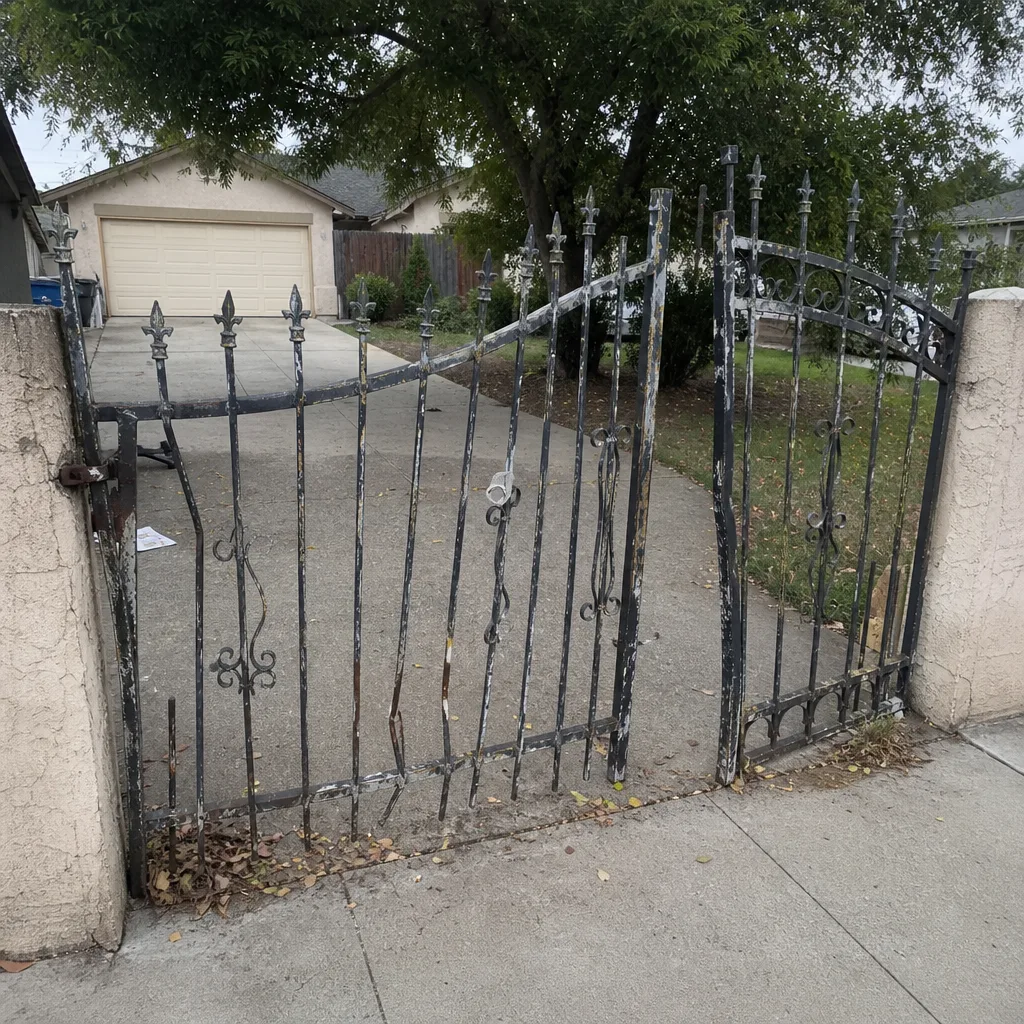 Before
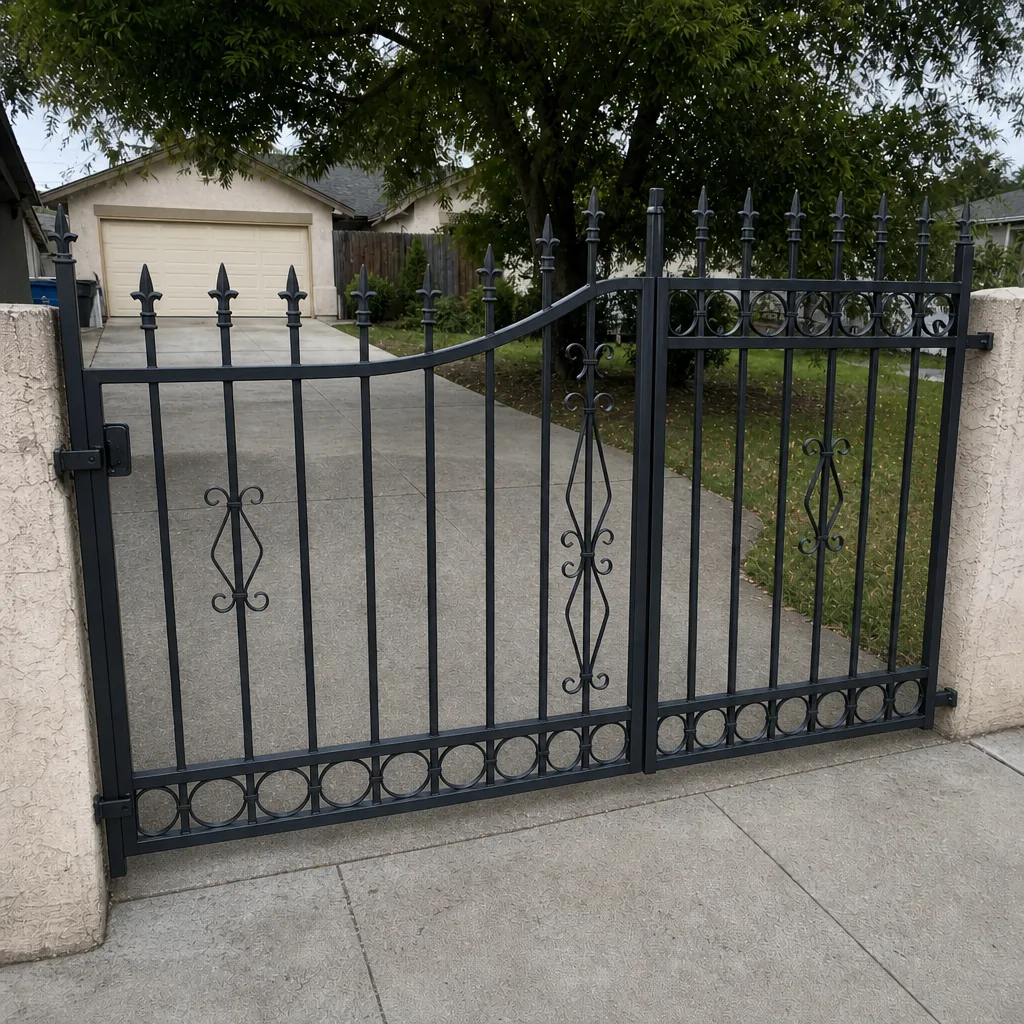 After
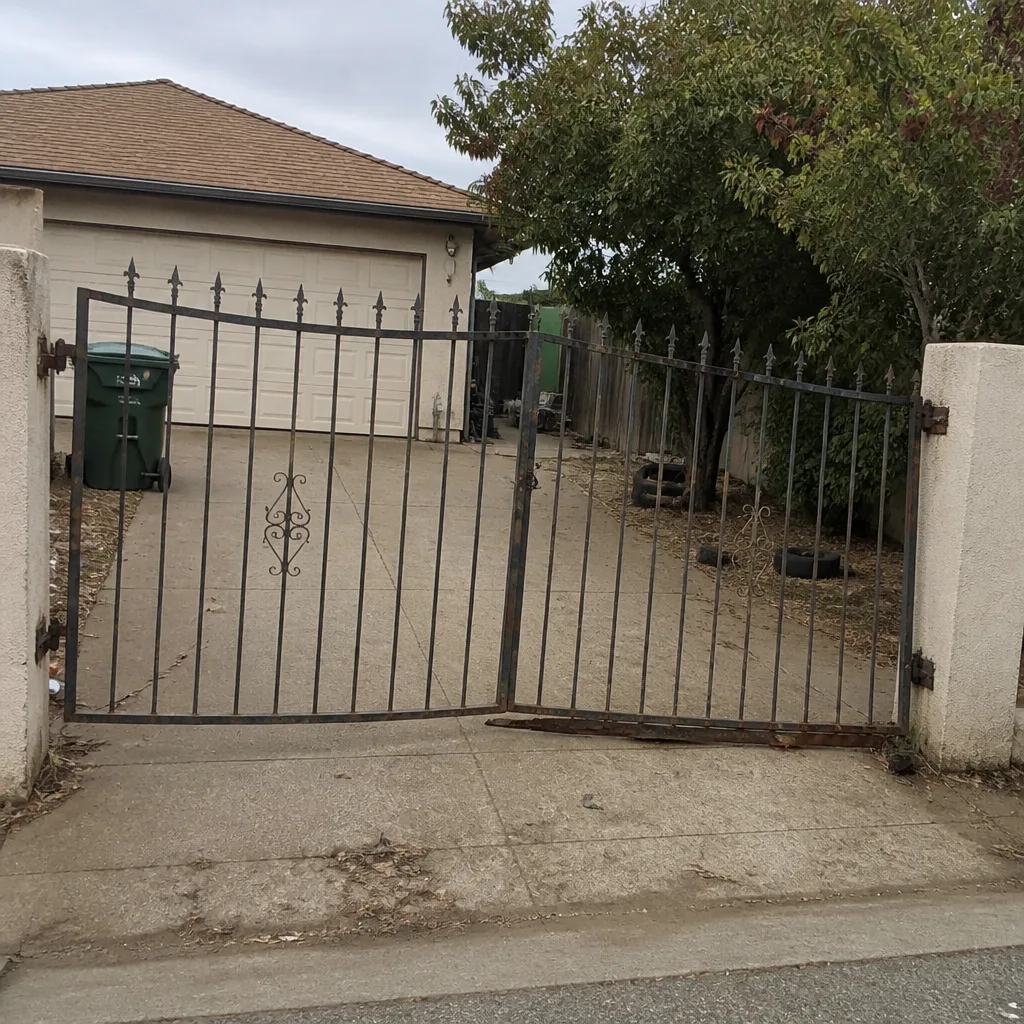 Before
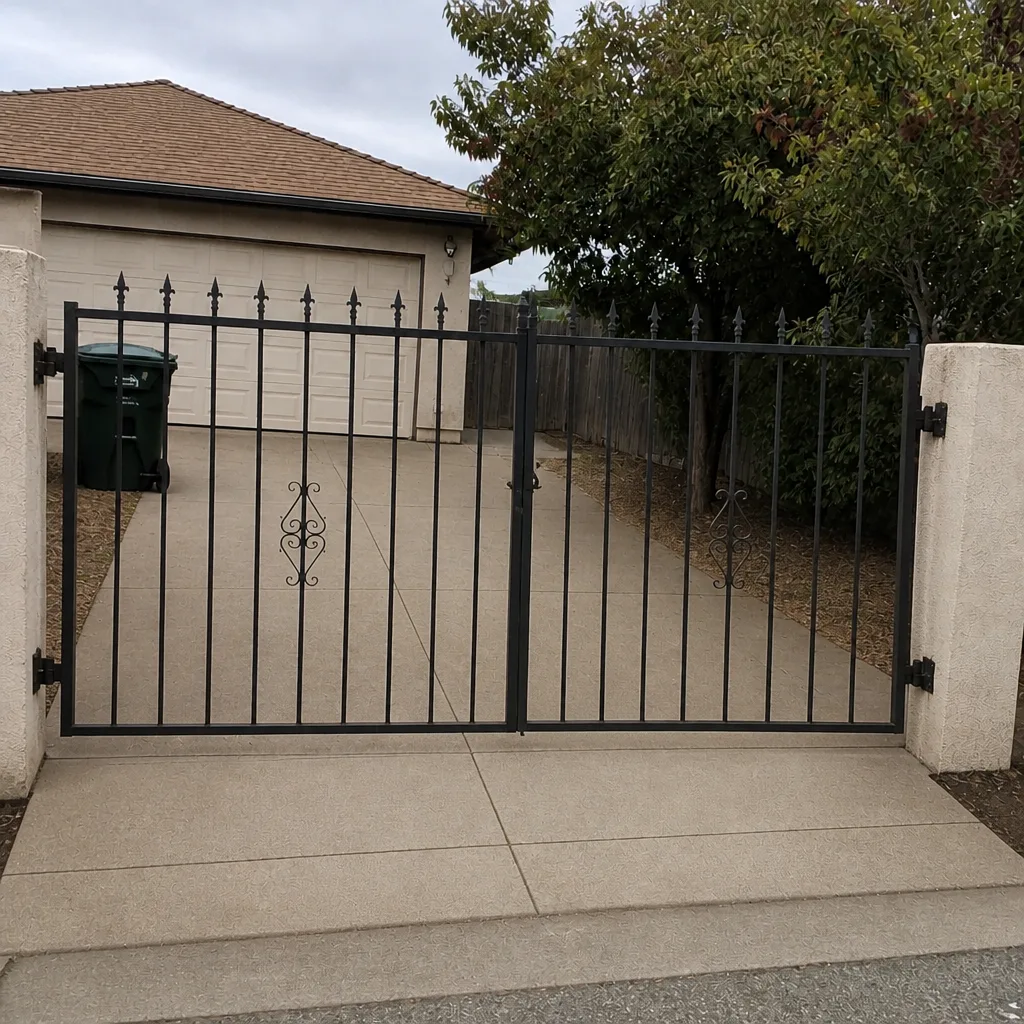 After
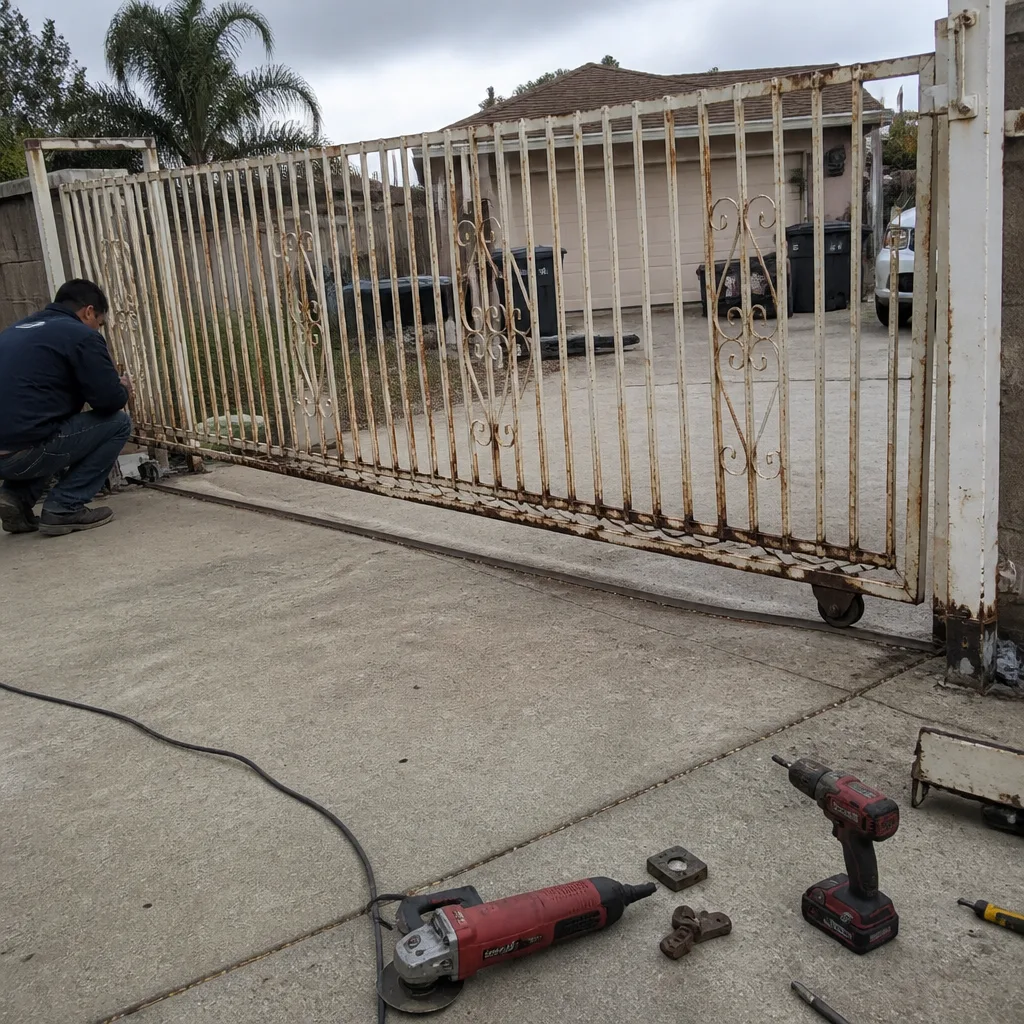 Before
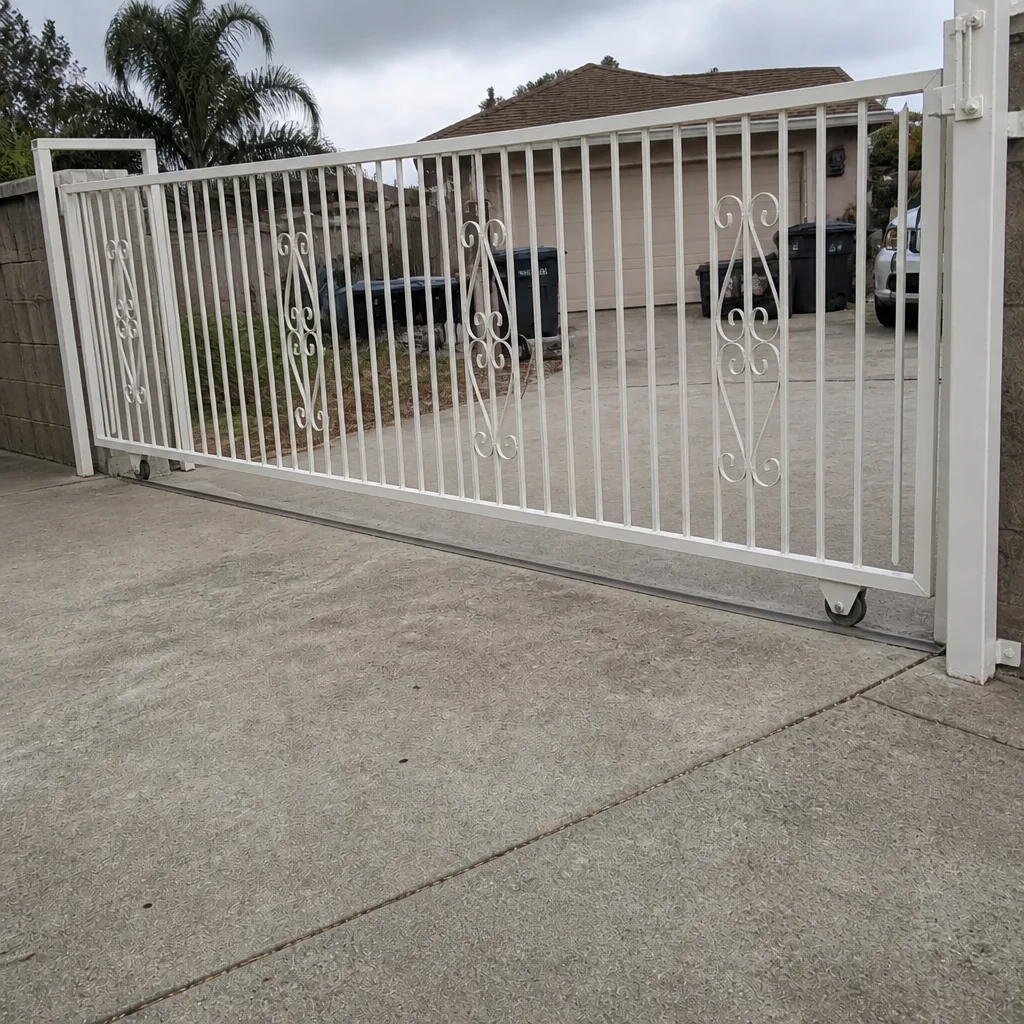 After
When to Call a Professional
Some maintenance tasks you can handle yourself safely: the 30-day visual walk-around, keeping the path clear, and noting changes. But specific signals should send you to a specialist right away. If the gate has tripped its thermal protection more than once, the motor or the load is off. If the gate reverses unpredictably or the safety edge fails to stop it, the safety system is compromised and it’s a hazard. If you see heat discoloration or burn marks on any terminal, stop and get a professional in. If a post has shifted, a hinge has play, or a panel has loosened, don’t wait. And any electrical work inside the operator housing should go to someone qualified.
Gate Repair Tracy offers free estimates in Tracy – call (844) 834-1771. We answer 24/7. Fast dispatch, 7am-7pm, Sunday through Friday. Our technicians have up to 15 years of experience, and we work on nine major systems from Mighty Mule to FAAC, BFT, and LiftMaster, so whatever operator you have we’ve seen its wear patterns before.
Frequently Asked Questions
A four-tier schedule works best: a 30-day visual safety check, a 90-day mechanical and lubrication pass, a bi-annual electrical inspection, and an annual full-system service. In Tracy’s summer heat, the thermal cutout check and the electrical terminal inspection are the two most important recurring tasks because heat drives resistance buildup. Commercial gates in industrial zones need a compressed schedule, often 60-day mechanical intervals. Call (844) 834-1771 for a free estimate on a full annual service.
Swing gate hinges, gate legs, and pivot points want a heavier, water-resistant grease that stays under load. Slide gate rack and pinion wants a thin film of grease applied sparingly, and slide gate rollers want a dry or dry-film lubricant so they don’t trap grit. Vertical pivot gate bearings want a bearing-grade grease on the races. Using the wrong one accelerates wear. If you’re not sure, call us and we’ll tell you exactly what your gate takes – estimates are free.
A gate that stops after running a while in the heat and then works again hours later has almost certainly tripped its thermal cutout. The cutout is a safety device inside the motor that protects it from overheating, and it resets on its own, so the gate appears to “fix itself.” It’s a sign the motor is running hotter than it should, which points to excess load, worn mechanical parts, or a failing motor. Get it inspected – call (844) 834-1771.
Clear drainage around the operator, path, and post footings so water can’t pool. Check the ground loop detector’s detection depth so it still senses vehicles reliably. Inspect the weather seals around the operator housing and any exterior junction boxes. Confirm posts are still plumb, wiring and conduit are intact, and photo-eyes are aligned. These are specific to Tracy’s wet months and worth a dedicated pass before the first rain. Call us for a professional pre-season check – estimates are free.
A cycle count is the number of times the gate has opened and closed, and many modern operators log it internally. It matters because two gates installed the same month can have wildly different wear depending on how many cycles they’ve run. A commercial entry in an industrial zone here in Tracy racks up cycles far faster than a home gate. If your operator logs its count, read it on the 90-day tier and use the usage rate to decide whether your mechanical interval should compress. Call (844) 834-1771 if you want a specialist to read it and set your schedule.
No – not for a routine check, and not to look inside. There’s live mains current inside a gate operator, and a shock there can be serious or fatal. The wrong move can also fry the control board. Test the safety devices from the outside trigger, watch the motor through the housing if it has a window, and leave anything inside the housing to a qualified technician. For electric gate repair and diagnosis we can work with your operator safely – call (844) 834-1771.
The Bottom Line
Gate maintenance isn’t one annual checklist. It’s a tiered schedule: 30-day visual safety checks, 90-day mechanical and lubrication work, bi-annual electrical inspection, and an annual full-system service. Mechanical wear runs on the shortest interval because it’s fastest. Electrical work runs semi-annually because corrosion builds slowly. Firmware and logic follow the manufacturer’s own cycle. In Tracy, add two seasonal layers – a summer check on the thermal cutout and heat-driven resistance, and a pre-rainy-season checklist covering drainage, ground loop detection, and weather seals. Log your cycle counts and compress the schedule if your gate runs high-traffic. Follow the tiers, keep the safety devices tested, and never open the operator housing. When something’s beyond a visual check, call a specialist.
If you’d rather have the whole schedule handled by people who do gates and only gates, give us a call. Reach Gate Repair Tracy at (844) 834-1771 for a free estimate. We answer 24/7. Fast dispatch, 7am-7pm, Sunday through Friday. Whether you’re on a Mighty Mule residential system or a BFT or FAAC commercial operator, we’ll tell you what needs attention, when, and whether repair or replacement makes sense.
Written by the team at Gate Repair Tracy.