
Last updated November 15, 2026
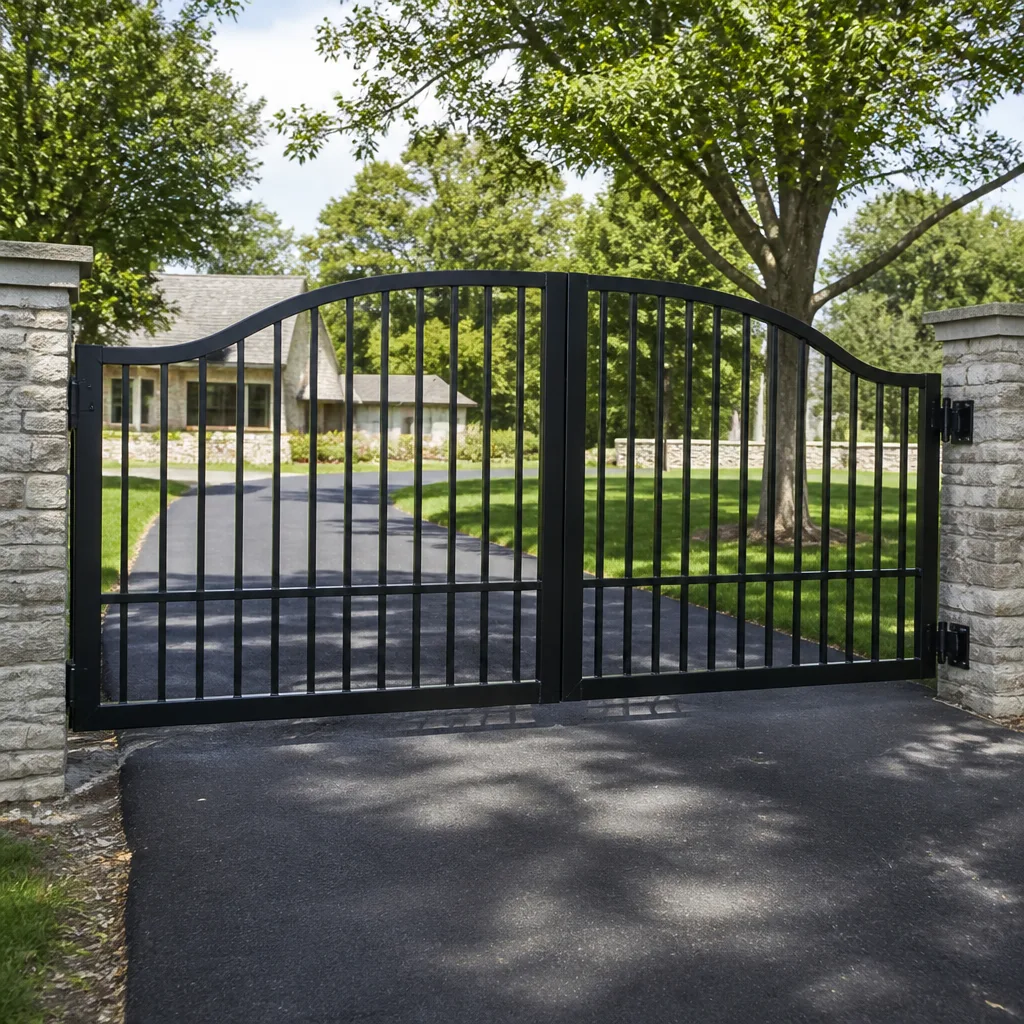
 Wrought iron
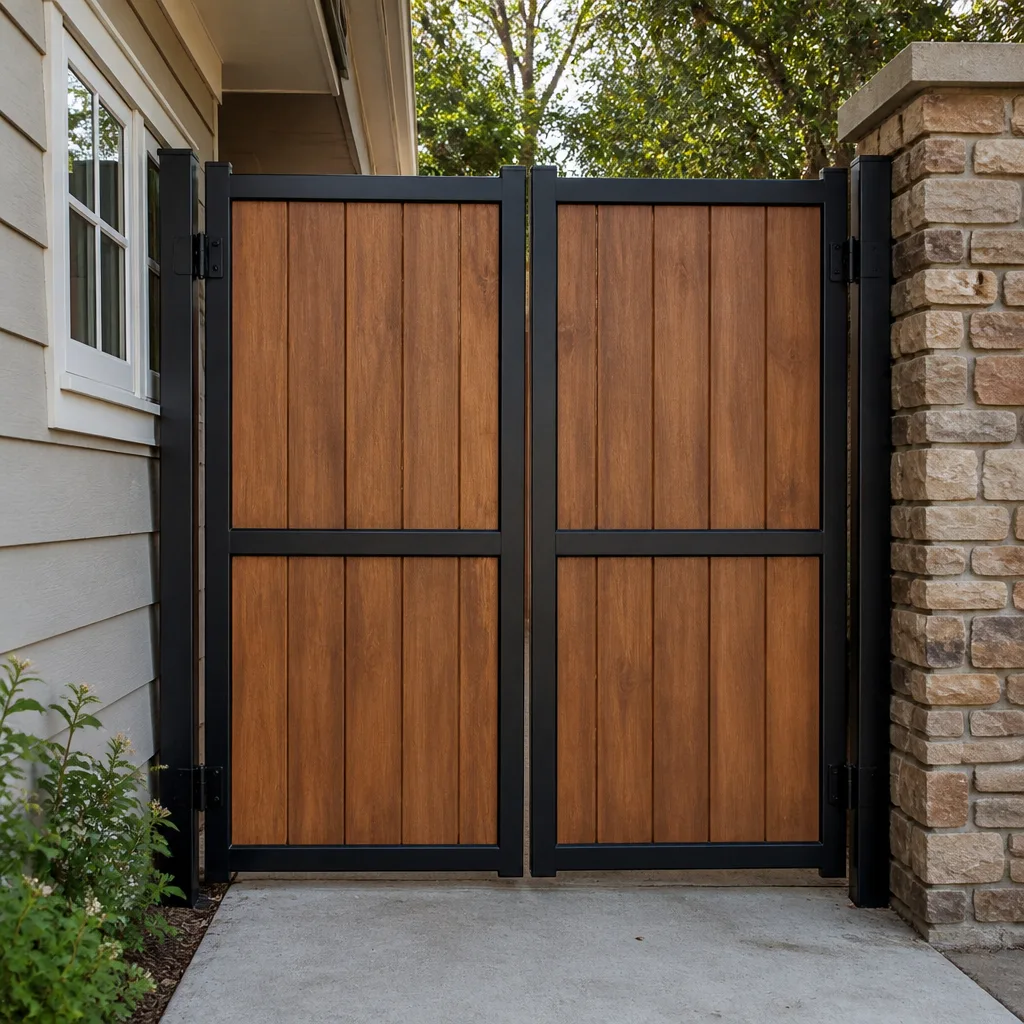 Wood & steel frame
 Farm & ranch
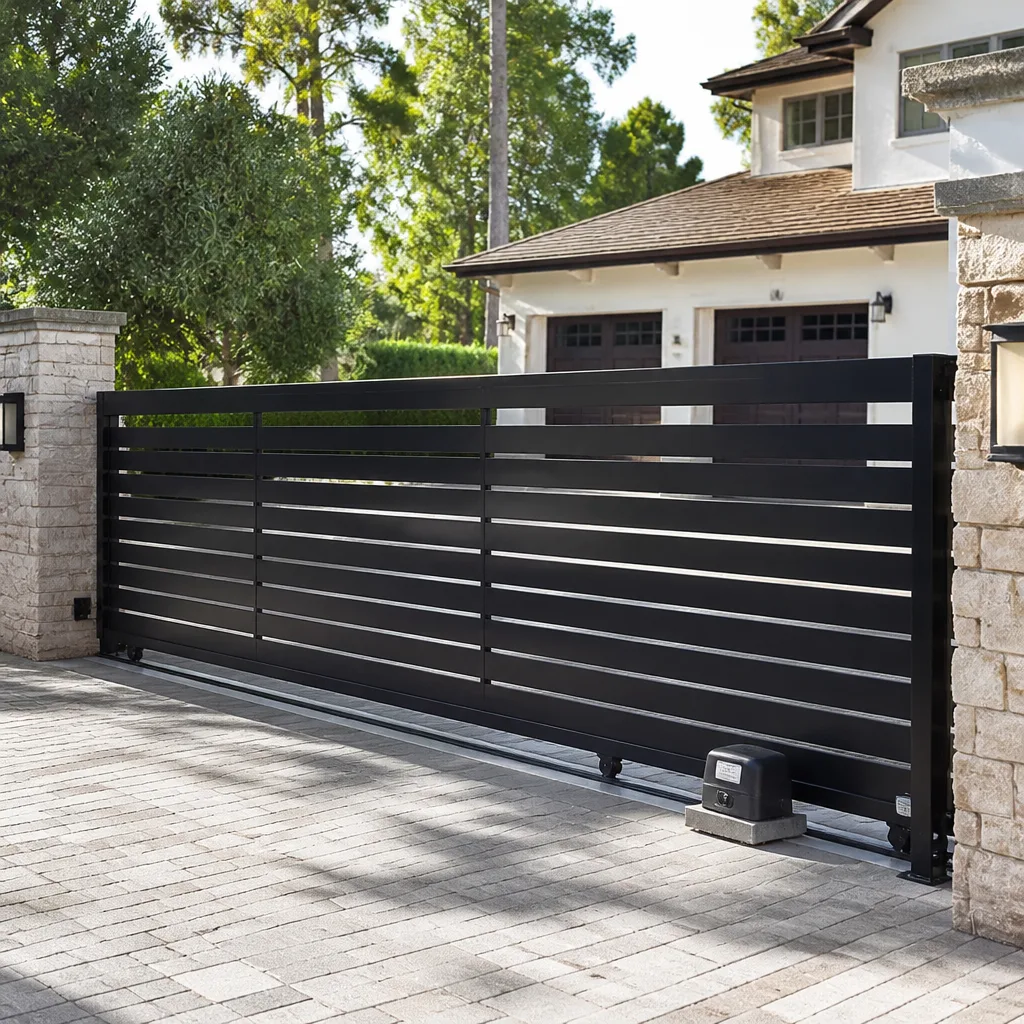 Sliding driveway gates
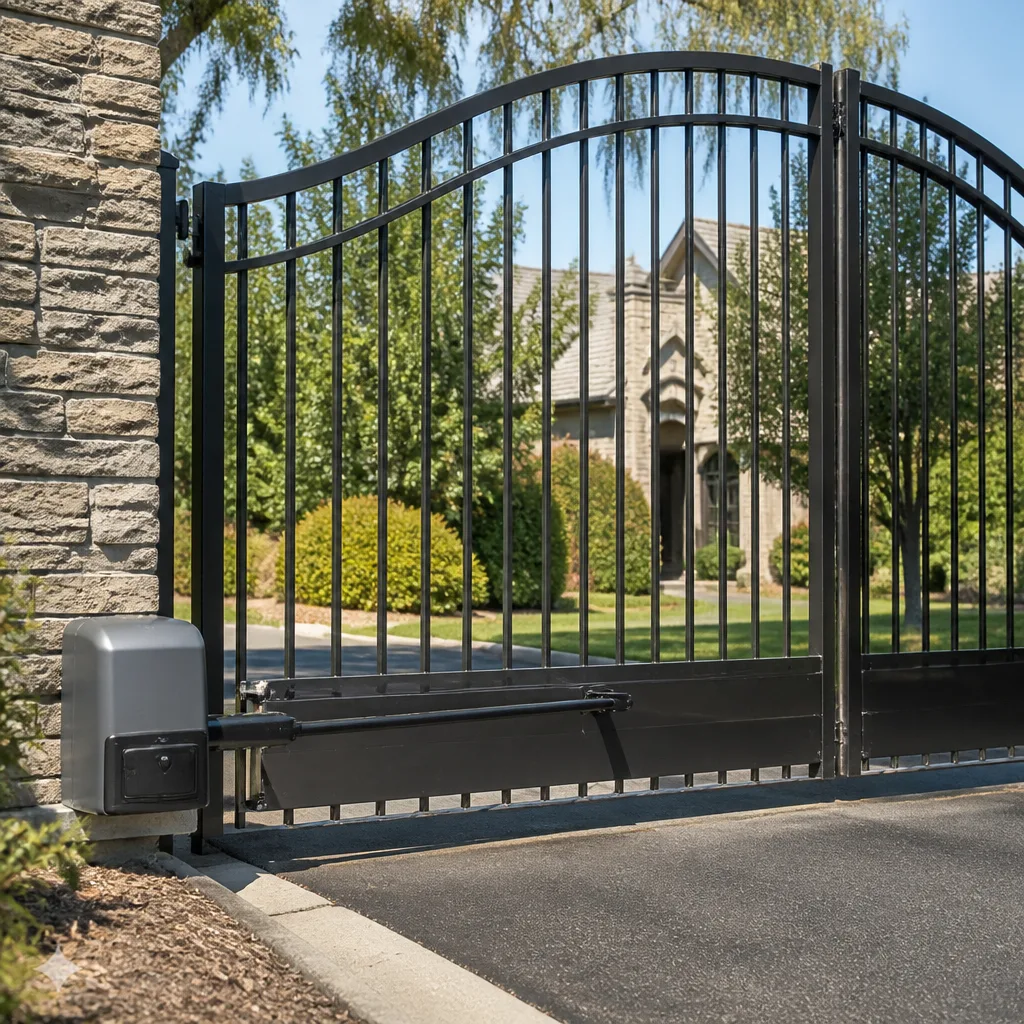 LiftMaster operators
Free on-site gate assessment - hinges, posts, and your LiftMaster or Nice gate operator checked before anything is quoted
The assessment is free and the quote is the invoice.
Get your free estimateThe Complete Guide to Gate Repair in Tracy
A gate that reverses after two inches of travel and a gate that won’t open at all get treated the same way by most homeowners: they call someone, describe the symptom, and wait for a verdict. That’s usually where the money starts leaking. Those two symptoms belong to completely different failure chains, and the repair that fixes one will do nothing for the other. In our experience across Tracy, most “random” gate breakdowns trace back to one of four predictable chains – mechanical binding, electrical or sensor fault, operator board failure, or structural misalignment. Read the symptom correctly and you pay for the right fix. Read it wrong and you pay twice. This guide maps all four chains, explains why Tracy’s clay soil and inland heat change what fails and when, and shows you how to read your operator’s diagnostic light before you dial anyone.
Quick Answer
Gate repair in Tracy means identifying which of four failure chains is causing the fault – mechanical binding, electrical or sensor fault, operator board failure, or structural misalignment – before any part is replaced. A gate that moves partway then reverses is almost always a sensor or obstruction-logic issue, while a gate that hums but doesn’t move points to a mechanical bind or a failing operator. Because Tracy’s clay-heavy soil shifts and swells through the year, a large share of local gate failures start at the post base and the hinges, not inside the control box.
Styles & brands we work with
- Wrought iron
- Wood & steel frame
- Farm & ranch
- Sliding driveway gates
- LiftMaster operators
Table of Contents
- The Four Failure Chains Behind Nearly Every Gate Breakdown
- Why Tracy’s Clay Soil Changes What Fails on Your Gate
- How to Read Your Operator’s Fault Code Before You Call Anyone
- California Licensing: What’s Legally DIY and What Isn’t
- Why a LiftMaster Failure Looks Different From a FAAC or Elite Failure
- Swing Gates vs. Slide Gates: Different Repairs, Different Weak Points
- Repair or Replace? How to Decide Honestly
- Seasonal Gate Care in the Tracy Heat
The Four Failure Chains Behind Nearly Every Gate Breakdown
Everything we diagnose falls into one of four chains. Once you know which chain you’re in, the repair logic narrows fast.
1. Mechanical binding. The gate physically resists travel. Hinges sag, rollers wear flat, tracks accumulate grit, or the gate drags on the ground. The operator is fine – it’s fighting something. You’ll often hear strain, see the gate move slow in one direction, or feel a hard spot by hand.
2. Electrical or sensor fault. The operator gets a signal it doesn’t like. Safety edges trip, photo-eyes are misaligned or dirty, wiring has a loose connection, or the low-voltage run to the keypad has corroded. The gate may start and reverse, refuse to close, or open on its own.
3. Operator board failure. The control board is the brain of the operator. A surge, water intrusion, or component failure scrambles logic, throws repeated fault codes, or leaves the operator dead with power present. Replacing the board is sometimes the fix – but only after the first two chains are ruled out.
4. Structural misalignment. The gate itself has shifted relative to the post, the track, or the operator. Posts drop, pads crack, the gate racks. This is the chain Tracy homeowners miss most often, because the symptom looks electrical.
Each chain has a distinct repair path. Mixing them up – replacing a control board when the gate is binding – is how a $200 fix becomes a $900 one.
Why Tracy’s Clay Soil Changes What Fails on Your Gate
Tracy sits on clay-heavy ground that swells when wet and shrinks when dry. That cycle repeats through the year, and every gate post in the ground is subtly working against it. In sandier California markets, a post goes in and stays put for a decade. Here, movement is normal, and the failure chain that starts at the base is the one we see most often in Tracy.
What that looks like in practice:
- Hinge sag. As the post shifts, hinge alignment drifts. The gate no longer swings true, and the operator fights the drag.
- Post base cracking. Concrete pads crack as the soil moves, allowing posts to drop or rotate a fraction of an inch. That fraction is enough to trip a safety edge or stall a slide gate.
- Slide-gate track settling. A track that was level when poured can develop a low spot. The gate binds, the wheels wear unevenly, and the operator strains every cycle.
- Repeated sensor trips. A gate that has shifted can block its own photo-eye line. The operator reads an obstruction that isn’t there and reverses.
This is why we check the base, hinges, and alignment before we touch the control board on any gate repair call in Tracy. The board is often innocent. The soil moved.
How to Read Your Operator’s Fault Code Before You Call Anyone
Most gate operators give you a diagnostic light or a small LED display that tells you what the operator thinks is wrong. Reading it takes a minute and saves you a diagnostic call. Here’s the general process:
- Find the diagnostic indicator. It’s usually on the control board inside the operator housing – a small LED that blinks in patterns.
- Count the blinks. Most brands use a counting pattern. A set number of blinks followed by a pause maps to a specific code in the owner’s manual.
- Match the code to the manual. LiftMaster, FAAC, and Elite all use blink codes, but the codes don’t translate between brands. Pull the manual for your specific operator.
- Note what you changed last. A new keypad, a new remote, or a recent power outage is diagnostic gold. It tells you which chain is most likely.
- Check the obvious first. Trip the safety edges by hand. Look at the photo-eyes for dirt or a knocked lens. Confirm the manual release isn’t engaged.
- Leave the panel closed. Once you’ve read the light, close it up. Line voltage and low-voltage wiring inside the operator are dangerous to probe without training.
That fault code is the single most useful thing you can hand a technician. It tells us which chain to start with instead of starting from zero. We answer 24/7, and a fault code in hand means the first conversation gets somewhere.
California Licensing: What’s Legally DIY and What Isn’t
California draws a fairly clean line between what a homeowner can legitimately do and what requires a licensed contractor. The line matters here because gate repair sits right on it.
True DIY territory:
- Cleaning and clearing the track or swing path
- Wiping photo-eye lenses
- Replacing batteries in remotes and keypads
- Lubricating hinges and rollers with the right product
- Resetting a tripped breaker at the panel (safely, if you know your panel)
Licensed-contractor territory:
- Any work on line voltage wiring or the electrical feed to the operator
- Adding new circuits or running power to a gate that never had it
- Structural work on posts, footings, or gate frames
- Operator and control board replacement
- Anything involving the safety edges, photo-eyes, or access control wiring, because a miswired safety system is a crush hazard
On the electrical side, this isn’t a place to experiment. Gate operators run on line voltage, and a shock from an operator capacitor or a live feed can seriously injure you. If the repair touches wiring or the operator internals, that belongs with a trained professional. Before starting any structural or electrical work, ask the City of Tracy’s building department about permits – most gate and post work in the city does require one, and the answer is always worth confirming rather than assuming.
Why a LiftMaster Failure Looks Different From a FAAC or Elite Failure
Here’s a thing most generalists miss: the same symptom on two different brands often points to completely different underlying faults. We work on electric gate repair across nine brands – LiftMaster, FAAC, BFT, Linear, Viking, Ghost Controls, DoorKing, Elite, and Mighty Mule – and the brand tells us where to look first.
- LiftMaster. Residential swing and slide operators with strong diagnostic logic. A LiftMaster that reverses usually reports the reason via blink code. When a LiftMaster actually fails on the board, it’s often a surge or moisture event.
- FAAC. European commercial-grade operators. FAAC boards are robust but sensitive to voltage sag and grounding issues – faults often trace back to the supply side, not the board itself.
- Elite. Common on residential slide gates. Elite failures frequently point to limit switches or the encoder, so a “won’t stop at the right spot” symptom reads differently than on a LiftMaster.
- Mighty Mule. DIY-installed residential operators. Mighty Mule units are usually fried by power surges or killed by a swelling battery on the control board, and the fix is often a battery or board, not a motor.
That’s four brands out of nine, and the differences matter on every call. A brand-fluent technician walks up already knowing which chain is likely; that’s the whole argument for hiring an electric gate specialist instead of a generalist.
Swing Gates vs. Slide Gates: Different Repairs, Different Weak Points
Swing and slide gates fail in different places, and the failure chains rank differently between them.
Swing gates carry their load on hinges and the operator arm. The most common failure chain is mechanical binding – sagging hinges, a post that has drifted, an arm that no longer lines up. The operator usually isn’t the problem; the geometry is. Safety edges on swing gates are also a frequent source of false trips because a post shift changes where the gate meets the edge.
Slide gates add a rail and a set of wheels to the equation. The track is the weak point. Clay soil settles the rail, wheels wear flat, and the operator fights the drag every cycle. Slide gates also have a specific danger: a gate can come off the track, and a heavy panel off the rail is a crush hazard. If your slide gate has popped off the rail or is dragging badly, stop operating it and get a technician out. Don’t try to force it back.
On both styles, the operator’s safety system – edges, photo-eyes, and obstruction detection – deserves the same caution. A bypassed safety edge on a heavy gate can injure someone. If a safety device stays tripped, that’s a professional call, not a “disconnect it and move on” moment.
Repair or Replace? How to Decide Honestly
This is where we see the most money spent badly, in both directions. Some gates get replaced that needed a hinge. Some operators get repaired long past the point where a new one would have cost less.
Here’s the honest framework we use:
- Age and brand of the operator. A modern operator (LiftMaster, FAAC, BFT, Elite) with a single point failure is usually worth repairing. An older DIY unit with a dead board may not be.
- Parts availability. If the board or motor for your model is on backorder or discontinued, replacement becomes the practical choice.
- Condition of the gate and posts. A solid gate on failing posts is a repair. A rusted frame on good posts is often a repair. A gate and posts both failing is a replacement conversation.
- Frequency of failure. One repair in a season is normal. Three in six months means the gate is telling you something.
- Safety compliance. If the gate can’t be brought to a safe, reliable state within a reasonable repair, replacement is the responsible answer.
We’ll tell you which one makes sense. That’s the whole point of doing a proper diagnosis before quoting. If you’re planning a first install or a full replacement, we also handle new gate installation from assessment through to a working gate – one company, no handoff.
Seasonal Gate Care in the Tracy Heat
Tracy’s summers get hot, and heat does specific things to gate hardware. Metal expands. Lubricants thin out and cook off. Batteries in the control board age faster. Photo-eye lenses haze. Wiring insulation cracks in the sun over time.
What to keep an eye on through the warm months:
- Lubricant on hinges and rollers. A dry hinge in July binds and drags. Use a product rated for the heat and reapply when it looks dry.
- Control board batteries. Backup batteries (common on Mighty Mule and LiftMaster units) fail faster in heat. If your gate behaves oddly after a power flicker, suspect the battery first.
- Photo-eye lenses. Dust and sun-haze them. A dirty lens reads as an obstruction.
- Post bases after the first rains. Clay soil swells when wet. Check for new cracks around the pads and posts after the first significant rain of the season.
- Track and wheels on slide gates. Grit and heat-warped rails bind the gate. Clear the track and look for low spots.
Winters here are mild enough that freeze damage isn’t the concern it is elsewhere. Heat, dust, and soil movement are the local stressors, and a little attention in the shoulder months prevents most of the misdiagnosed repairs we see.
Common Mistakes to Avoid
- Replacing the control board before checking the hinges. A binding gate makes the operator throw faults. Replace the board and the gate still binds, and it’s the operator’s fault again next month. Check the mechanical chain first.
- Bypassing a safety edge to “just get it working.” A heavy gate panel without a working safety edge is a crush hazard. If the edge keeps tripping, that’s a repair, not something to defeat.
- Ignoring post movement in clay soil. Tracy’s soil shifts, and a small post drift goes unnoticed until it stalls the gate. Check base and hinges during wet and dry seasons.
- Greasing the track instead of clearing it. On a slide gate, grease traps grit and makes the binding worse. Clear the track, then use the right lubricant on the wheels.
- Trying to fix line-voltage wiring yourself. The operator feed and the control board internals are not a homeowner job. A shock from an operator can seriously hurt you.
- Buying a replacement operator based on price alone. A brand-fluent replacement that fits your gate is cheaper long-term than a mismatched unit that fights your gate’s geometry.
- Skipping the permit question. Structural and electrical work on a gate often needs a permit in Tracy. Confirm with the City of Tracy’s building department before you commit.
See the difference
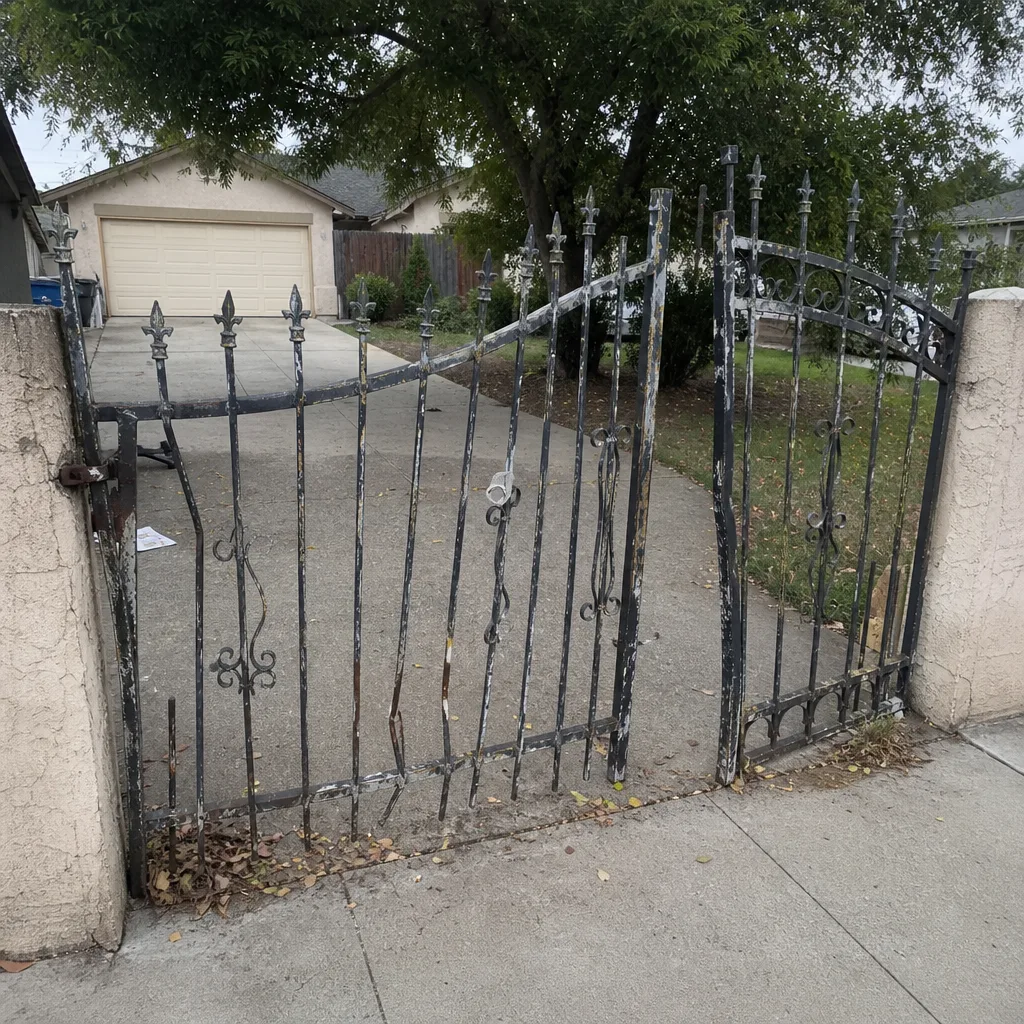 Before
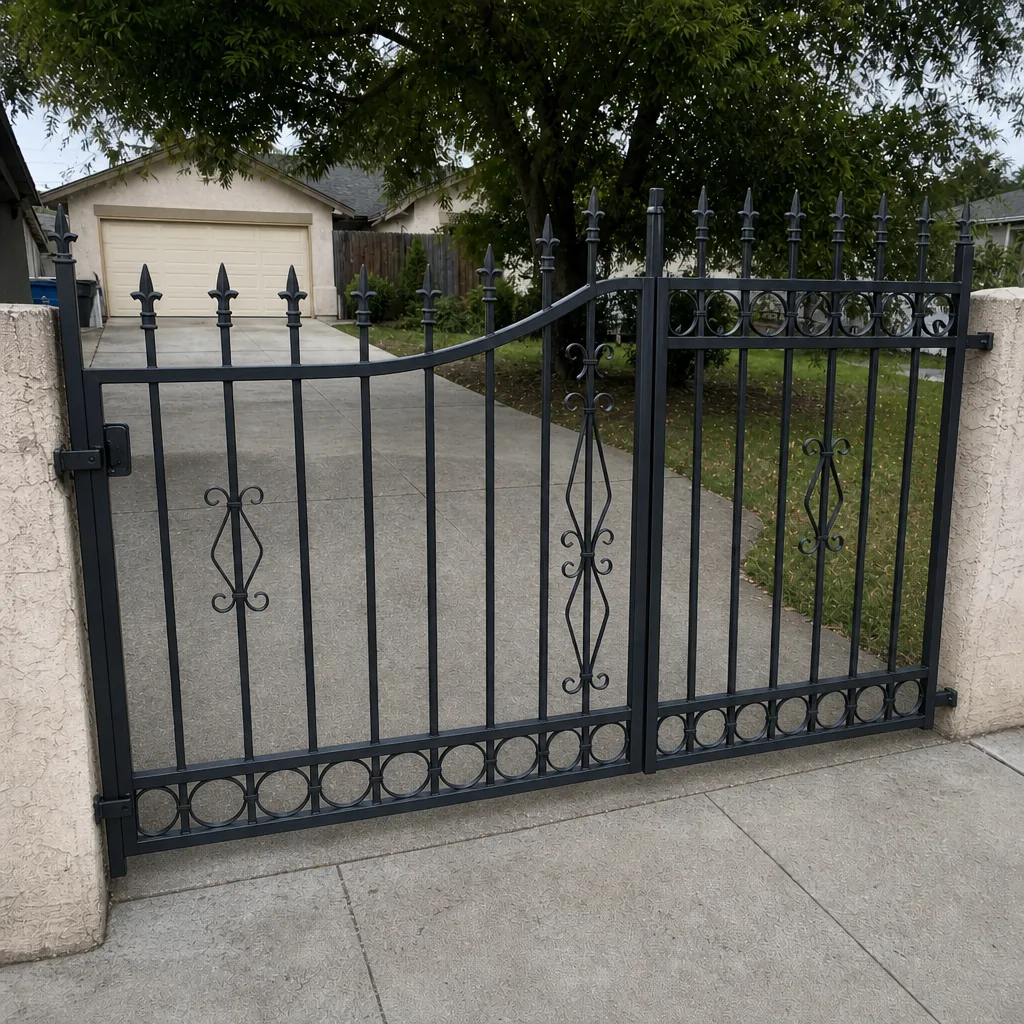 After
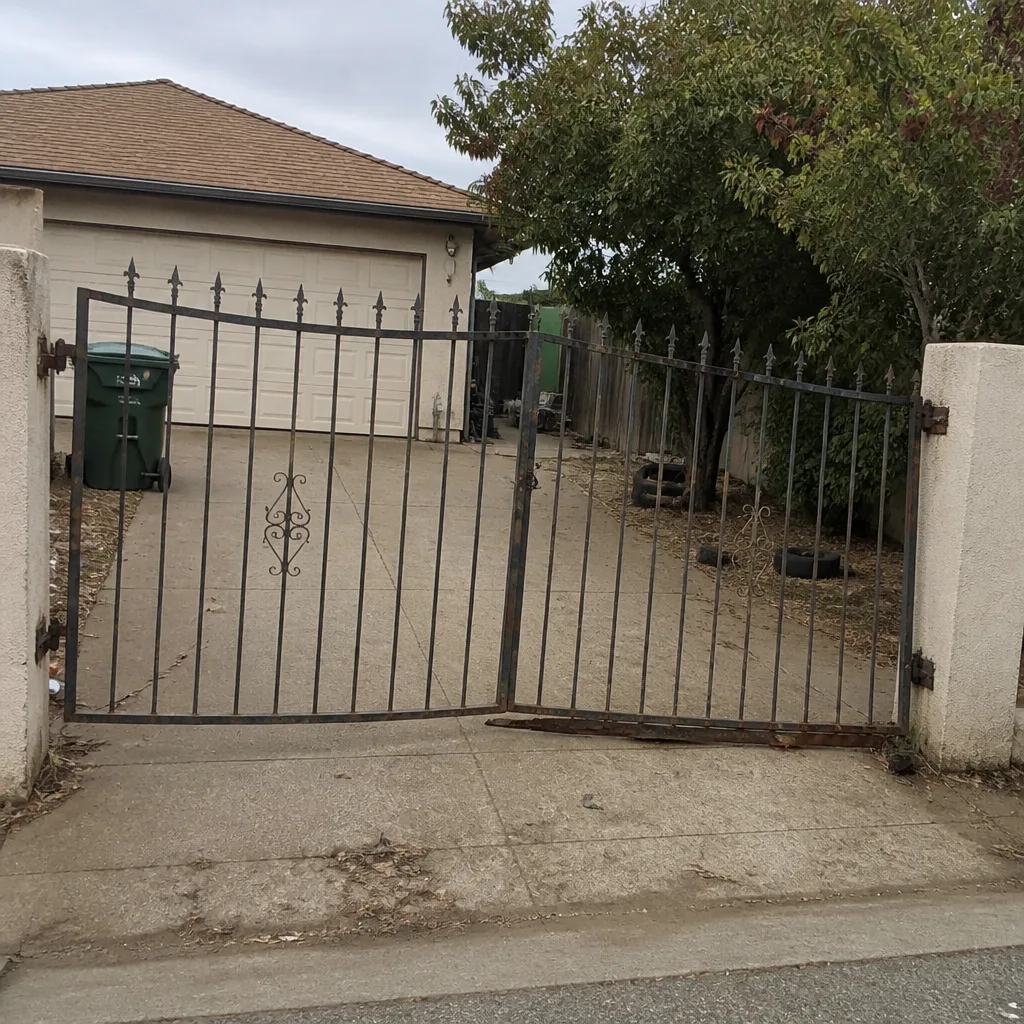 Before
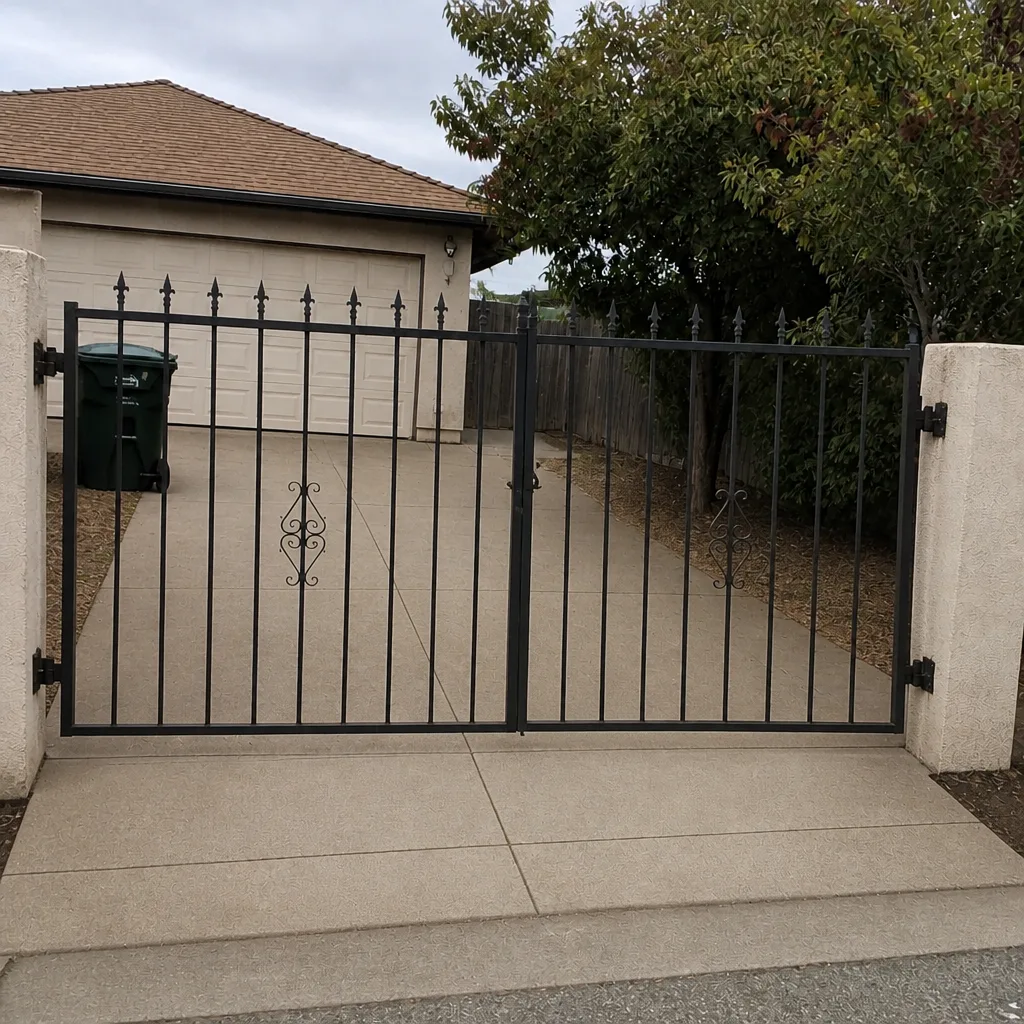 After
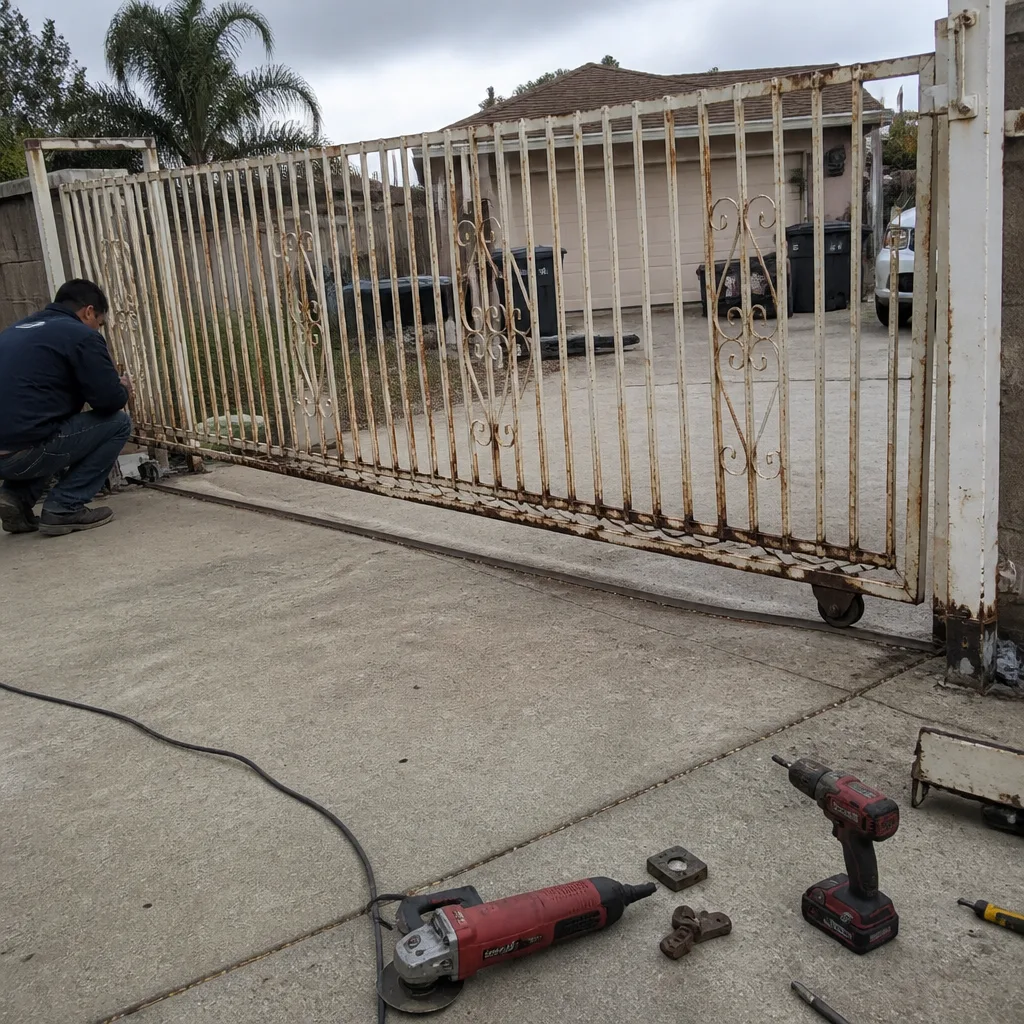 Before
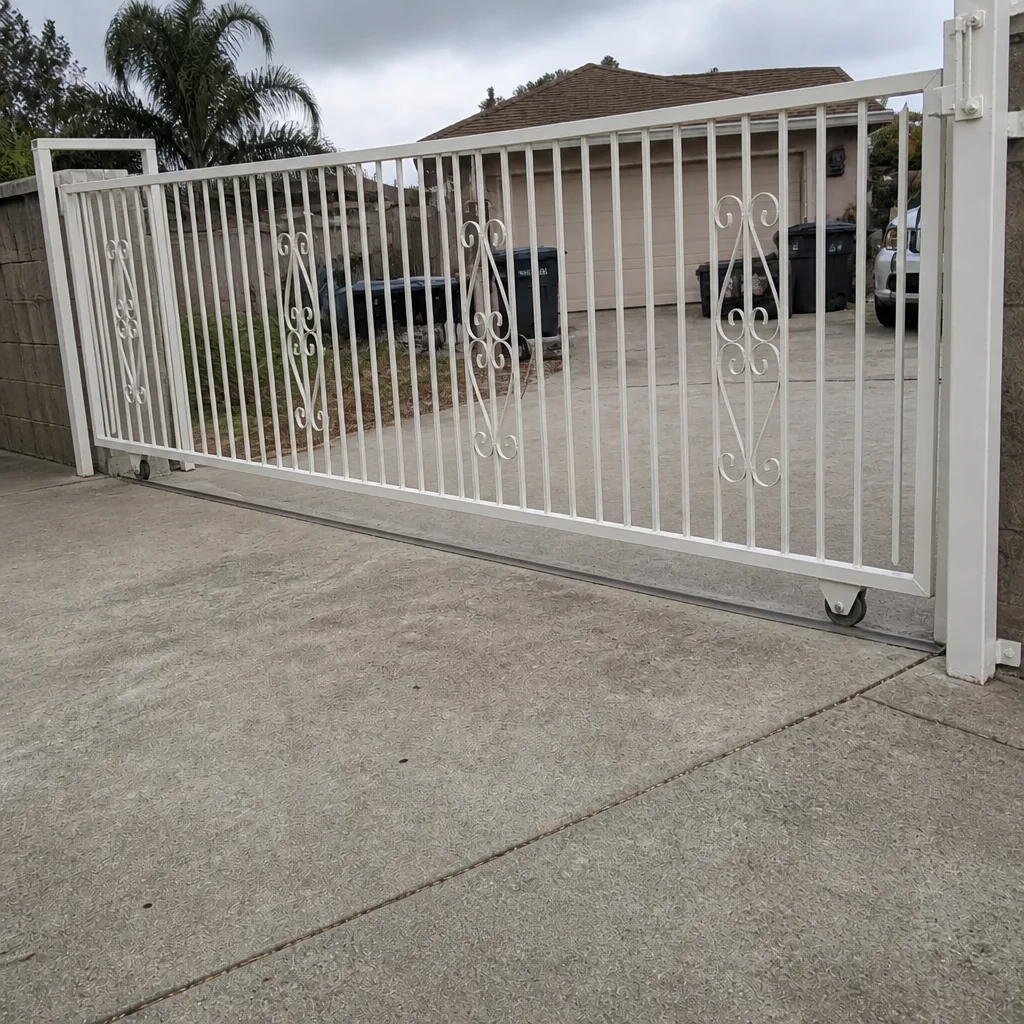 After
When to Call a Professional
Call a professional when the gate touches line voltage – operator wiring, control board, keypad feed, access control. Call when the gate has shifted on its posts or the track has settled. Call when the safety edge stays tripped or the photo-eyes won’t stay aligned. Call when you’ve already replaced a part and the fault came back. And call when the operator hums but doesn’t move, because that’s usually a mechanical bind that will burn out the motor if you keep running it. These are the situations where a proper diagnosis saves you a second repair. Gate repair in Tracy with a single-trade gate specialist means the person on the phone already knows the four chains. Gate Repair Tracy offers free estimates in Tracy – call (844) 834-1771.
Frequently Asked Questions
A gate that reverses after a short travel is usually in the electrical or sensor fault chain – a tripped safety edge, a misaligned photo-eye, or a wiring fault at the keypad. A post shift can also block the photo-eye line, which reads as an obstruction. Check and clean the lenses first, then confirm the safety edges aren’t stuck. We answer 24/7 – call (844) 834-1771 – and a fault code from the operator’s diagnostic light gets the diagnosis moving before we arrive.
Gate repair in Tracy is priced per job by a written estimate, and that estimate is free. What the job involves – a hinge adjustment, a sensor alignment, a control board swap, or a post-base repair – sets the price more than anything else. Structural and electrical work costs more than a simple adjustment, and we quote it before any work starts so there are no surprises on the invoice. Call (844) 834-1771 for an exact quote.
Same-day service is often possible for straightforward repairs, and we dispatch crews with fast dispatch from 7am to 7pm, Sunday through Friday. We answer 24/7, and a call outside dispatch hours is booked into the next opening. Faults that require a part or a structural repair may need a scheduled return – we’ll tell you up front which one you’re in. Call (844) 834-1771 for the current availability.
Most Tracy gate failures trace back to the clay-heavy soil that swells and shrinks through the year, shifting posts and settling slide tracks. That movement causes hinge sag, sensor misalignment, and stalling operators, which then throw faults that look electrical. Checking the base, hinges, and alignment first is why Tracy gate repairs often turn out cheaper than the symptom suggests. Call (844) 834-1771 for a free estimate.
Yes – we work on LiftMaster, FAAC, and Elite systems regularly, along with the full range of brands from Mighty Mule to FAAC. Each brand has its own fault logic, so we read the diagnostic code in the context of that brand rather than guessing. Brand fluency is the whole reason to hire an electric gate specialist. Call (844) 834-1771 for a free estimate.
Gate repair covers the physical gate – hinges, posts, frames, tracks, alignment, and mechanical binding. Electric gate repair covers the automation side – operators, control boards, wiring, safety edges, photo-eyes, and access hardware. Many failures cross both, and diagnosing the right chain saves the wrong part from being replaced. Call (844) 834-1771 to describe the symptom and get a starting direction.
The Bottom Line
Most gate failures in Tracy trace back to four failure chains: mechanical binding, electrical or sensor fault, operator board failure, and structural misalignment. Read the symptom right and you fix the actual problem once. Read it wrong and the wrong part gets replaced. Tracy’s clay soil makes hinge and post-base failures the local specialty, so check the base before the board. Get the fault code before you call. And know where the DIY line is, because line-voltage wiring and safety systems are not a homeowner project. Bring a brand-fluent specialist the symptom and the code, and your gate gets moving again without paying twice.
Call (844) 834-1771 for a free estimate. We answer 24/7. Fast dispatch from 7am to 7pm, Sunday through Friday. Our technicians have up to 15 years of experience, and we work on every brand from Mighty Mule to FAAC – repair, electric gate repair, and new installation, one company from assessment to a working gate.
Written by the team at Gate Repair Tracy.