
Last updated November 15, 2026
 Wrought iron
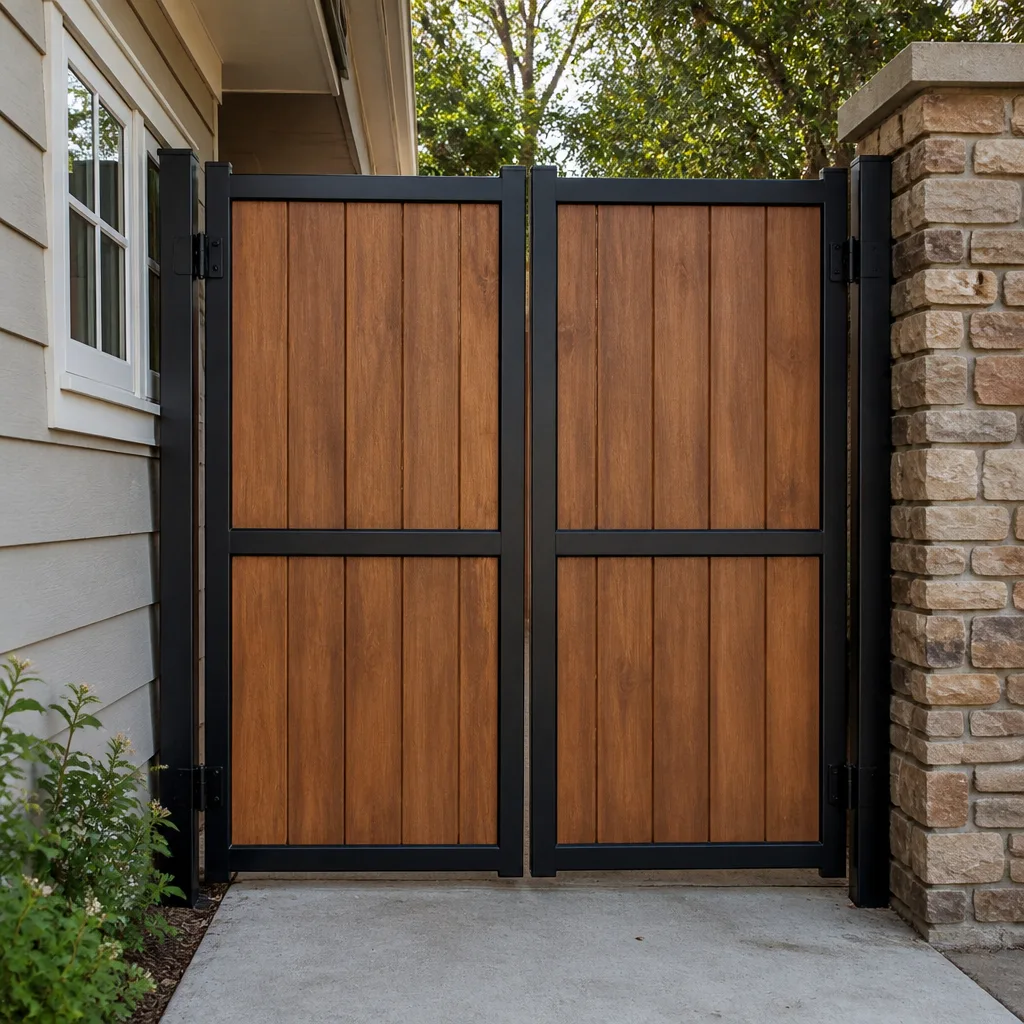 Wood & steel frame
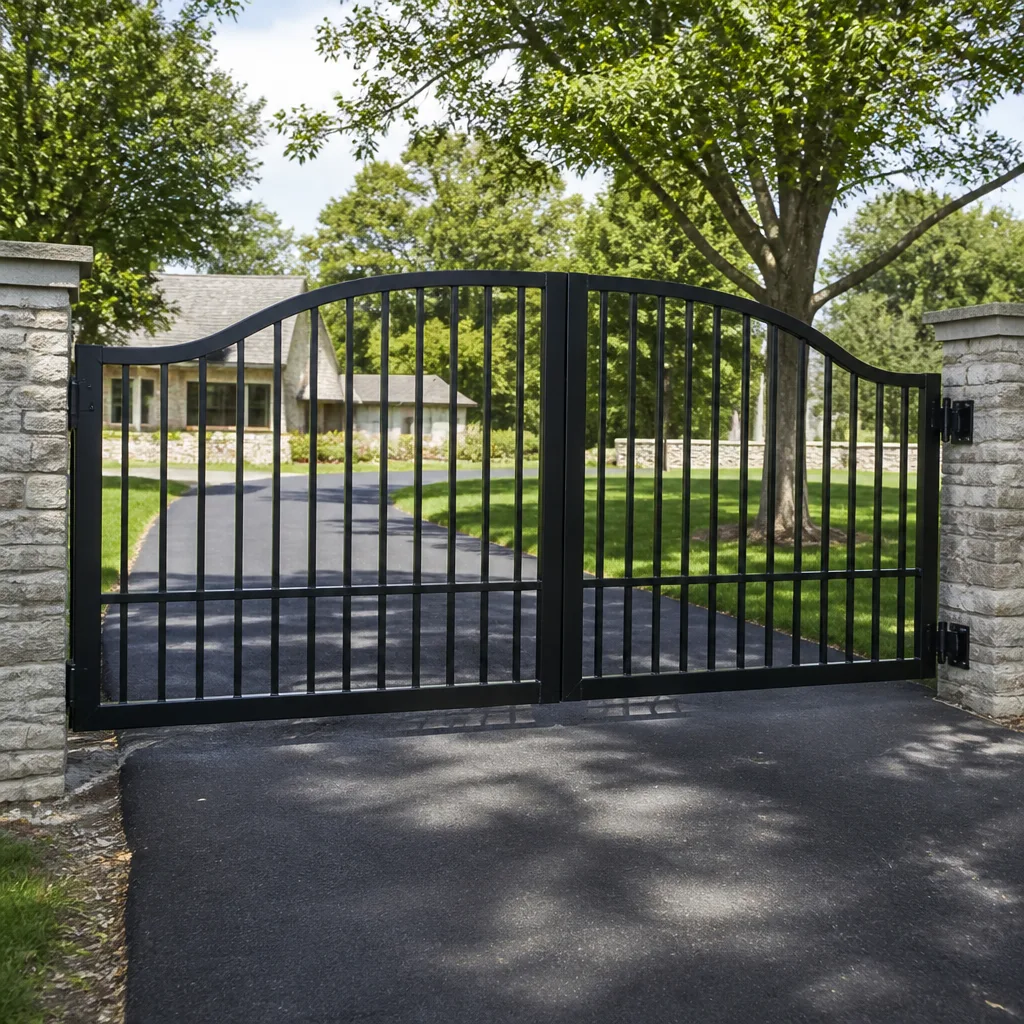 Farm & ranch
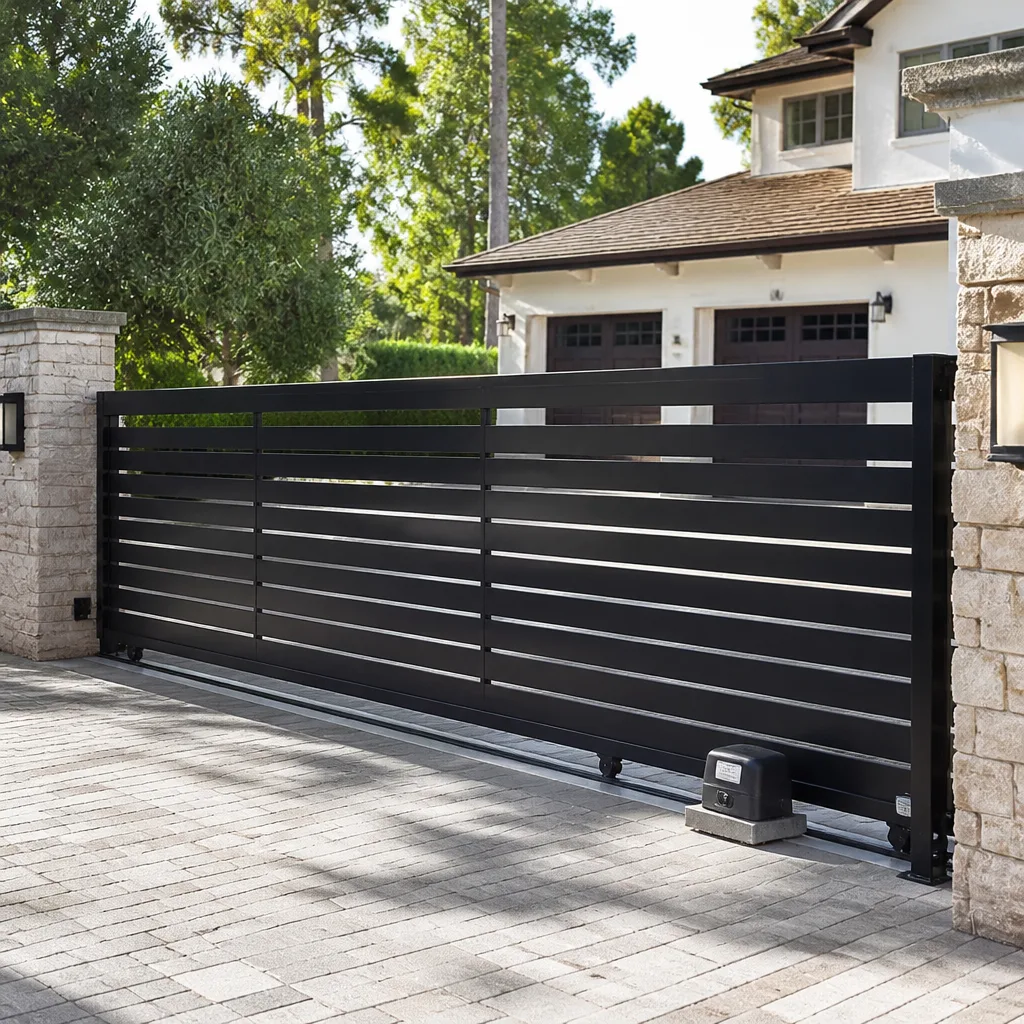 Sliding driveway gates
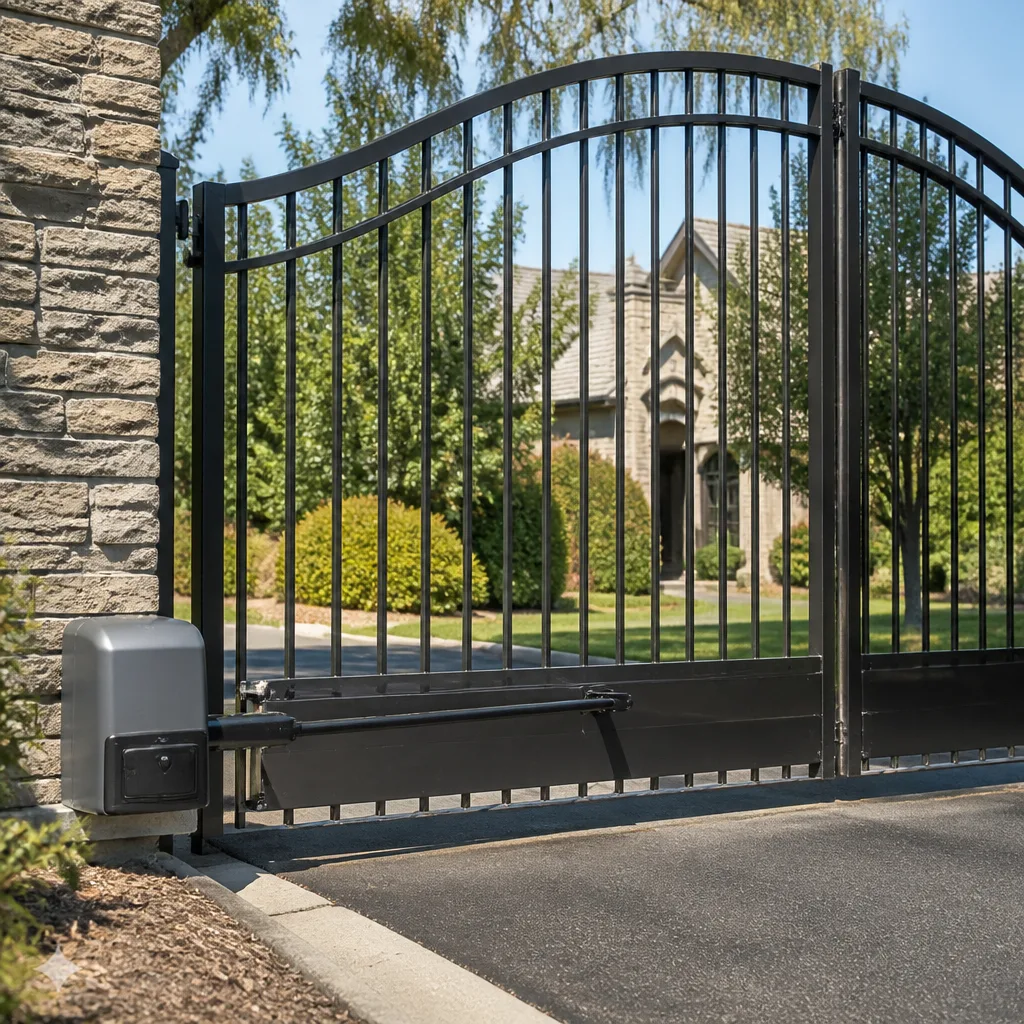 LiftMaster operators
Free on-site gate assessment - hinges, posts, and your LiftMaster or Nice gate operator checked before anything is quoted
The assessment is free and the quote is the invoice.
Get your free estimateGate Repair Emergency Preparedness Guide for Tracy Homes
A gate stuck closed at 11 PM isn’t a repair emergency. It’s a manual release procedure. Most automatic operators have one built in, and most homeowners have never been shown where it is or how it works. That’s the gap this guide closes. What follows is the 20 minutes of education that turns a panic moment into a short, controlled task: where the release lives on each major brand (LiftMaster, FAAC, Linear, Viking, Elite and others), how to secure a gate stuck open, what your battery backup will and won’t do in a power outage, and the one question that decides whether you wait for a morning service call or pick up the phone. If you live in Tracy, this is the prep work worth doing before anything breaks.
Quick Answer
Every automatic gate has a manual release that lets you move the gate by hand during a failure or power outage, and knowing that release – and safely securing a gate stuck open – is the core of gate emergency preparedness. The right move is almost always: release the gate to a closed and locked position, restore perimeter security, then call for electric gate repair during normal hours. True emergencies that justify an immediate call are a gate stuck open with livestock or a security perimeter at risk, a vehicle trapped, or smells of burning and sparking at the operator’s power. For anything else, a documented morning call is the calmer, cheaper path.
Styles & brands we work with
- Wrought iron
- Wood & steel frame
- Farm & ranch
- Sliding driveway gates
- LiftMaster operators
Table of Contents
- Manual Release Locations and Procedures by Brand
- Securing a Gate Stuck in the Open Position
- Power Outage Protocol and Battery Backup Behavior
- Emergency Call vs. Morning Service Call: How to Decide
- Pre-Emerson Prep: What to Document Before Anything Breaks
- Slide Gates vs. Swing Gates: What Fails Differently
- Safety Rules You Don’t Bend
- Common Mistakes to Avoid
Manual Release Locations and Procedures by Brand
The manual release is the single most important part of your gate you probably haven’t looked at. On a slide gate it’s usually a key-operated lever near the operator housing that disengages the pinion from the rack. On a swing gate it’s a separate release arm or a keyed release on the operator itself. The location varies by brand, and this is exactly where our experience across nine systems – from Mighty Mule to FAAC – saves homeowners hours of guessing. Here’s how the release is typically laid out, by brand, so you know where to look:
- LiftMaster operators usually use a keyed manual release on the operator housing with a lever or handle you turn to disengage the drive. On swing models, look for the release mechanism near where the arm connects to the gate.
- FAAC units commonly have a keyed release cylinder on the operator cover. Insert the key, turn to release the drive, then move the gate by hand.
- Linear operators often use a release lever or a keyed release at the drive housing. Some slide models release with a manual override that disengages the drive gear.
- Viking operators typically use a keyed release at the operator, with the release arm on the drive side of the gate.
- Elite units generally follow the same keyed-release pattern at the operator housing.
Two rules apply to all of them. First, find your release now, while the gate is working, so you know it exists before you need it. Second, release only when the operator is off or the gate is stopped – never force a gate that’s still being driven. Our technicians have up to 15 years of experience, and the most common call we get after a manual release fails is from a homeowner who forced the mechanism against a live drive. Don’t be that call. If you can’t find or work the release, stop and book a visit; a professional should show you how your specific operator releases before you ever need it under pressure.
Securing a Gate Stuck in the Open Position
A gate stuck open is a perimeter security problem, not just an inconvenience. The priority is closing the opening, not restoring automation. Here’s the sequence we recommend, in order:
- Stop the operator. If the gate is stuck open but the operator is still trying to drive, cut power at the breaker or the disconnect before doing anything else. A gate that’s fighting you is dangerous.
- Release the drive by hand. Use the manual release procedure for your brand to disconnect the drive.
- Walk the gate closed. Move the gate by hand to its closed position. On a slide gate, make sure it seats fully in the receiver post; on a swing gate, close it flat against the stop.
- Lock it physically. Use the gate’s own latch, a padlock through the latch, a heavy chain through the frame, or a portable barrier. The goal is that no one walks or drives through the opening while the automation is down.
- Restore perimeter. If the gate is your property line, consider a temporary secondary barrier – a vehicle, a portable fence panel, or a posted notice – until the repair is complete.
- Photograph the setup. A quick photo of how you left it helps the technician understand the failure and speeds the repair.
For properties in Tracy – especially larger lots on the edges of town where the gate is the first line of defense – this five-minute sequence is what stands between a stuck gate and an exposed property. Get it done, then call for repair.
Power Outage Protocol and Battery Backup Behavior
What your gate does when the power goes out depends on its operator type. Battery backup is common on residential operators but not universal, and behavior when the battery depletes varies. Here’s what to expect:
- Operators with battery backup: the gate should continue to open and close for a limited number of cycles. The exact number depends on the operator and battery condition. Once the battery depletes, the gate typically stops where it is, and the manual release is your only way to move it.
- Operators without battery backup: the gate stops immediately when power is cut. The manual release is your only option.
- Solar and low-voltage systems: some residential operators, including Mighty Mule and Ghost Controls models, run on solar or low-voltage power. A panel that’s shaded or dirty can cause intermittent operation even without a grid outage – check the panel before assuming the operator failed.
- Commercial-grade operators: FAAC and BFT systems often include battery backup, but the cycle count and behavior can differ from residential units. Confirm the backup behavior with a technician once, and write it on the panel.
During a power outage, the correct sequence is: confirm the outage is real (check a light inside the house), check the operator’s battery indicator if it has one, and if the gate is stuck, use the manual release and secure the gate. Leave the automation alone until power is restored, then test the gate once. If it doesn’t restore cleanly, that’s a service call – not something to keep cycling. In Tracy, outages are usually short, but the few hours without power are exactly when the manual release knowledge matters most.
Emergency Call vs. Morning Service Call: How to Decide
Not every gate failure is an emergency, and treating every failure like one costs you money and stress. Here’s the honest decision framework we use:
Call now:
- The gate is stuck open and the property perimeter is compromised (livestock, security risk, exposed driveway).
- A vehicle is trapped or the gate is blocking access for emergency services.
- You smell burning, see sparking, or the operator’s housing is hot to the touch – that’s an electrical safety issue, not a repair scheduling issue.
- The gate has come off its track or a heavy panel is hanging and could fall.
Secure it and wait for a scheduled visit:
- The gate is stuck closed but you can manually release it.
- The operator is clicking or humming but the gate won’t move, and there’s no burning smell or heat.
- A remote or keypad stopped working but the gate moves fine with a manual release.
- The gate is stuck open but the property is safely securable with a physical lock.
If you’re in the wait category, secure the gate, note the symptoms, and call for a normal service visit. If you’re in the call-now category, that’s what we’re here for. Call (844) 834-1771. We answer 24/7. Fast dispatch from 7am to 7pm, Sunday through Friday. A call outside dispatch hours is booked into the next opening, Sunday through Friday, 7am to 7pm. Same-day repair is available for many failures, and estimates are free.
Pre-Emerson Prep: What to Document Before Anything Breaks
The best gate emergency is one you never have. Twenty minutes of prep now saves hours of confusion later. Here’s what we recommend every Tracy homeowner document about their gate system and keep in an envelope or a folder on their phone:
- Brand and model. Note the brand (LiftMaster, FAAC, Linear, BFT, Viking, Elite, Mighty Mule, Ghost Controls, DoorKing) and the model number from the operator’s label.
- Operating type. Slide or swing, single or double, and whether it has battery backup.
- Manual release location and procedure. Photograph the release and write down how it works – or better, have a technician show you once and take notes.
- Control inputs. Note every way the gate opens: remotes and how many, keypad, phone app, intercom, loop sensors. Document the model of each accessory.
- Power source. Where the operator is powered from, whether there’s a dedicated breaker, and whether it’s solar or low-voltage.
- Gate geometry. The gate’s width, weight class, and travel – helpful for any repair or replacement.
- Service history. Any past repairs, part replacements, or operator swaps, with rough dates.
- Safety devices. Note the type and location of safety edges, photo eyes, and reversing sensors.
If you can’t find any of this, a service visit to help you document it is a worthwhile investment – especially for older operators where the manual release procedure isn’t obvious. When you’re ready to talk it through, our gate repair team can walk you through the specifics of your setup.
Slide Gates vs. Swing Gates: What Fails Differently
The failure patterns differ enough between slide and swing gates that it’s worth knowing what to expect from each, because the emergency response changes.
Slide gates run on a tracked rail with a rack-and-pinion drive. Common failures: the gate jumps the track after a wheel or roller wears out, the rack strips at the pinion, or the operator loses its limit and drives past the stop. A slide gate that comes off the track is a genuine emergency – a heavy panel is now moving uncontrolled and could fall. If you see the gate off the track, stop the operator, keep people away, and call.
Swing gates use an arm or underground operator to swing one or two leaves. Common failures: the arm disengages from the gate, the hinge binds, the operator loses its closed limit, or a leaf sags from hinge wear. A swing gate stuck closed can usually be manually released and walked open; a swing gate stuck open is simpler to secure than a slide gate because it often just needs to be closed and locked by hand.
In Tracy, our mild climate is gentle on gate hardware compared to regions with hard freezes or coastal salt exposure, but dry summer heat and dust still wear tracks, hinges, and rollers. If your gate operates several times a day – common on larger lots – expect wear parts to fail eventually, and know that the failure pattern for your type of gate dictates whether you call now or wait. When the time comes, an electric gate repair visit will diagnose the specific failure and tell you honestly whether repair or replacement makes sense.
Safety Rules You Don’t Bend
Gates are heavy, motorized, and often on the edge of a property. A few safety rules are non-negotiable, even during an emergency:
- Never put your hands or body between a moving gate and a fixed post. If the gate is moving unexpectedly, stay clear and cut power.
- Never force the manual release against a live drive. If the operator is still trying to move, kill power first.
- Never bypass a safety edge or photo eye “just for now”. Those devices exist to prevent injury, and a gate that’s forced to close on an obstacle can seriously hurt someone.
- Treat burning smells, sparking, or a hot operator housing as an electrical emergency. Cut power at the breaker and call. Don’t open the operator housing and reach inside.
- Don’t cable-tie, chain, or prop a gate that’s off its track. A heavy panel resting on a temporary fix can drop. Keep people away and call for a technician.
- Never let children or pets near a gate during any failure. Even a released gate can move unexpectedly if the operator is still powered.
These rules apply on every gate, every brand, every time. If you’re ever unsure whether something is safe, stop and call. A professional on the phone can often tell you in two minutes whether to secure and wait, or dispatch.
Common Mistakes to Avoid
- Never learning the manual release. The single biggest mistake is not knowing where the release is or how it works before the gate fails. Find it today, while the gate is working.
- Forcing the release while the operator is live. If the drive is still engaged, forcing the release can damage the mechanism or the gate. Cut power first, then release.
- Leaving a stuck-open gate unsecured. A gate stuck open during a power outage is an exposed perimeter. Close and lock it manually before doing anything else.
- Assuming battery backup will last. Backup batteries deplete, and once they do, the gate stops where it is. Check the battery indicator and know your cycle count.
- Ignoring a burning smell or heat from the operator. In Tracy, dry summer afternoons can push an operator hard, and a hot housing is a warning, not a normal state. Cut power and call.
- Calling every minor issue an emergency. A stuck-closed gate you can manually release is not an emergency – it’s a scheduled repair. Save the urgency call for a real perimeter risk.
- Not documenting the system. Without the brand, model, and release procedure on record, you’ll be guessing in the dark when the gate fails.
See the difference
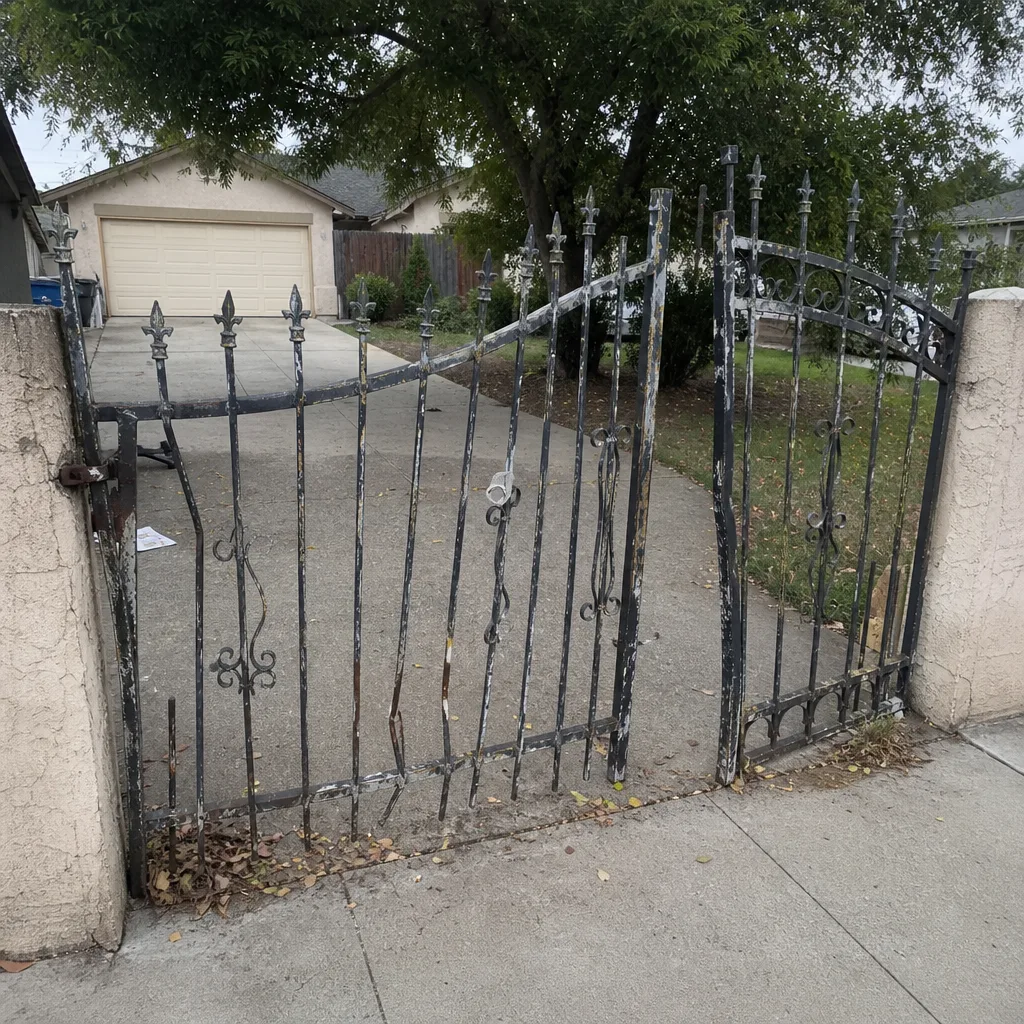 Before
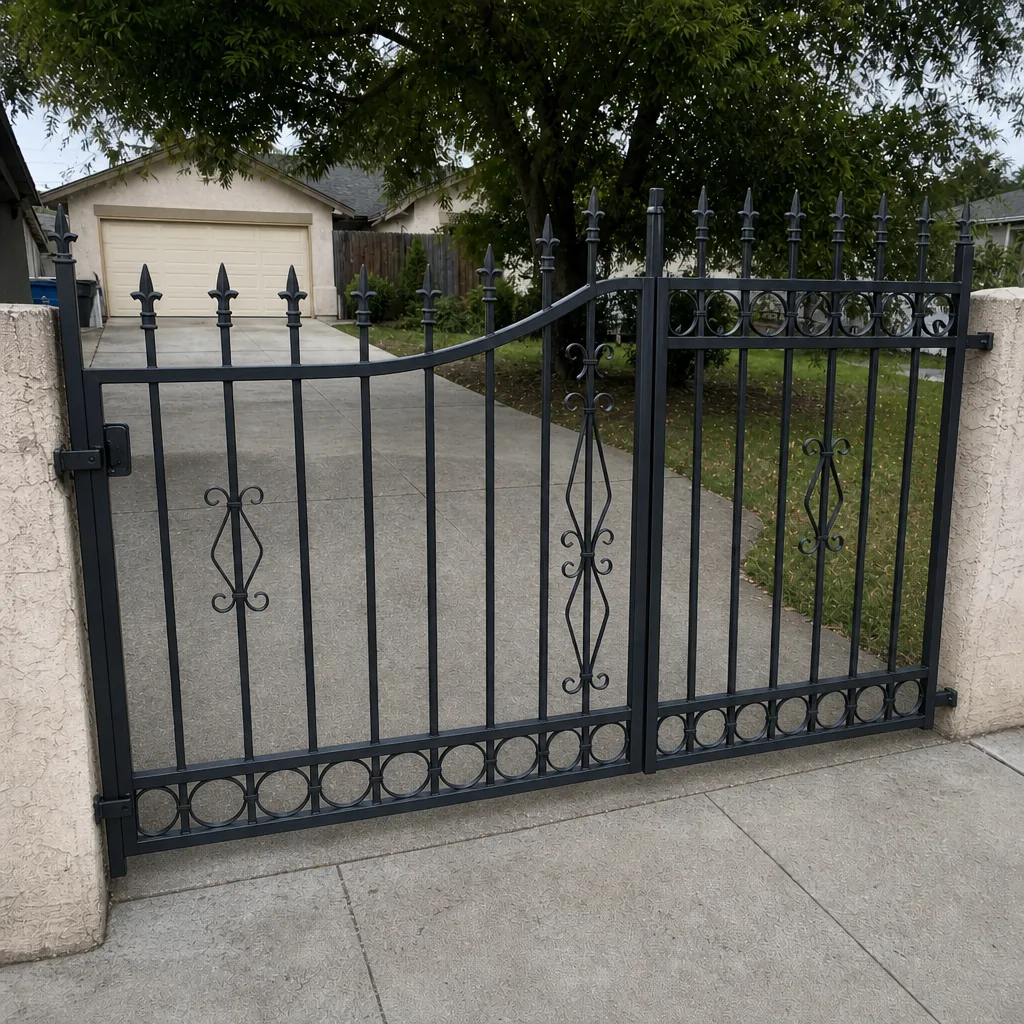 After
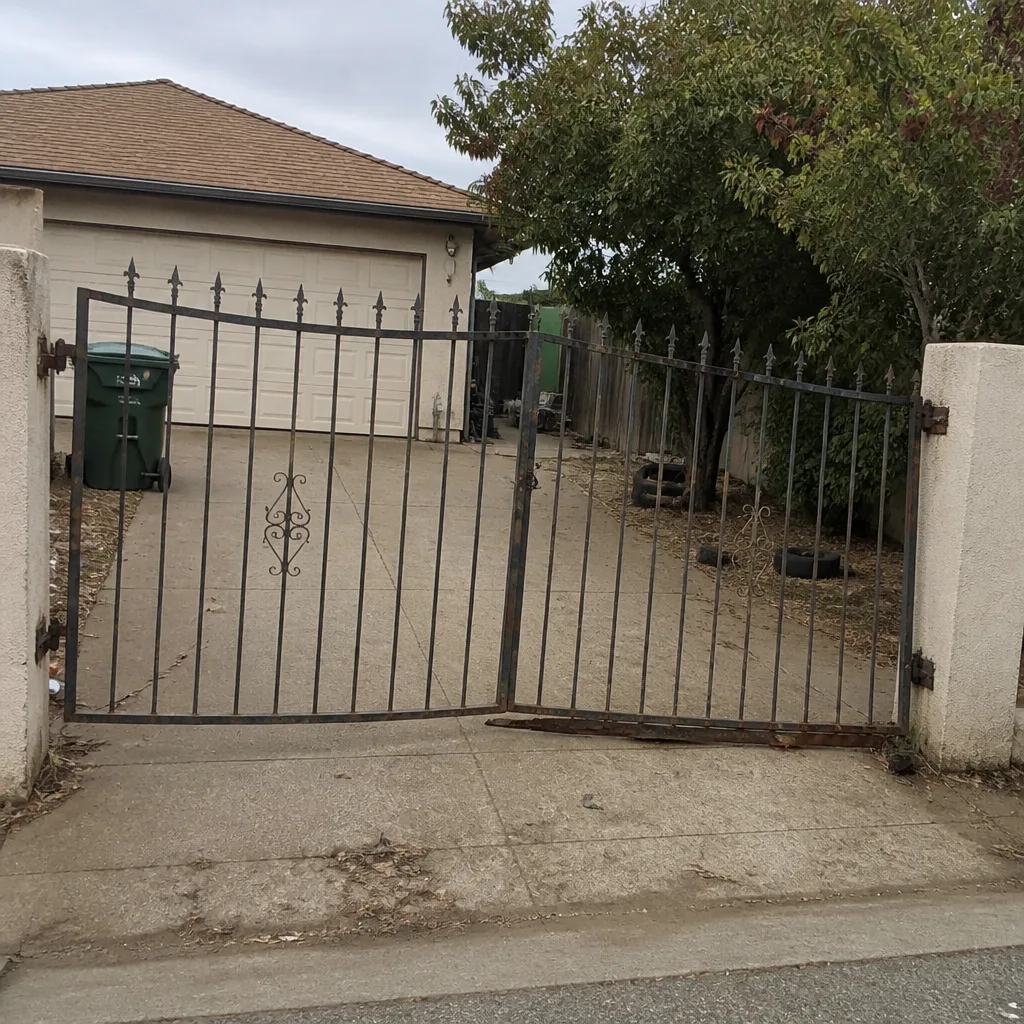 Before
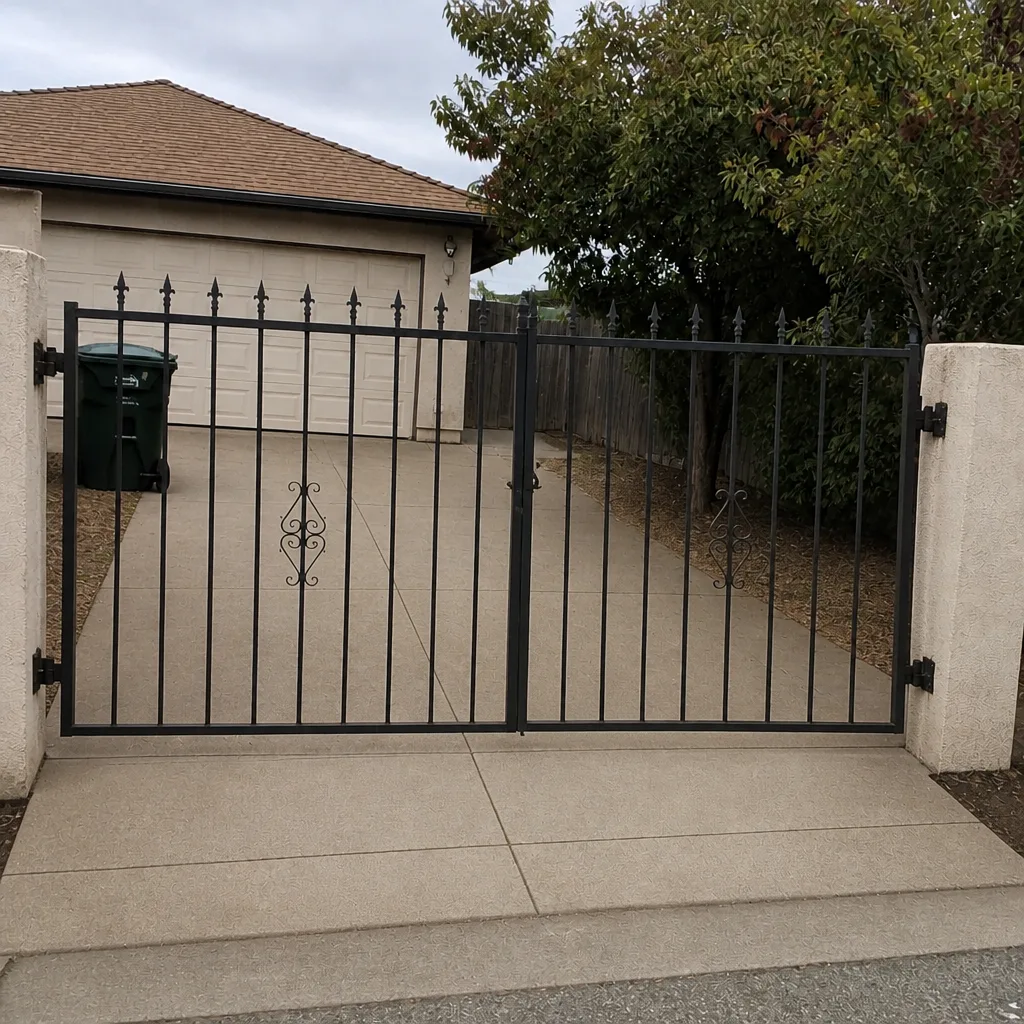 After
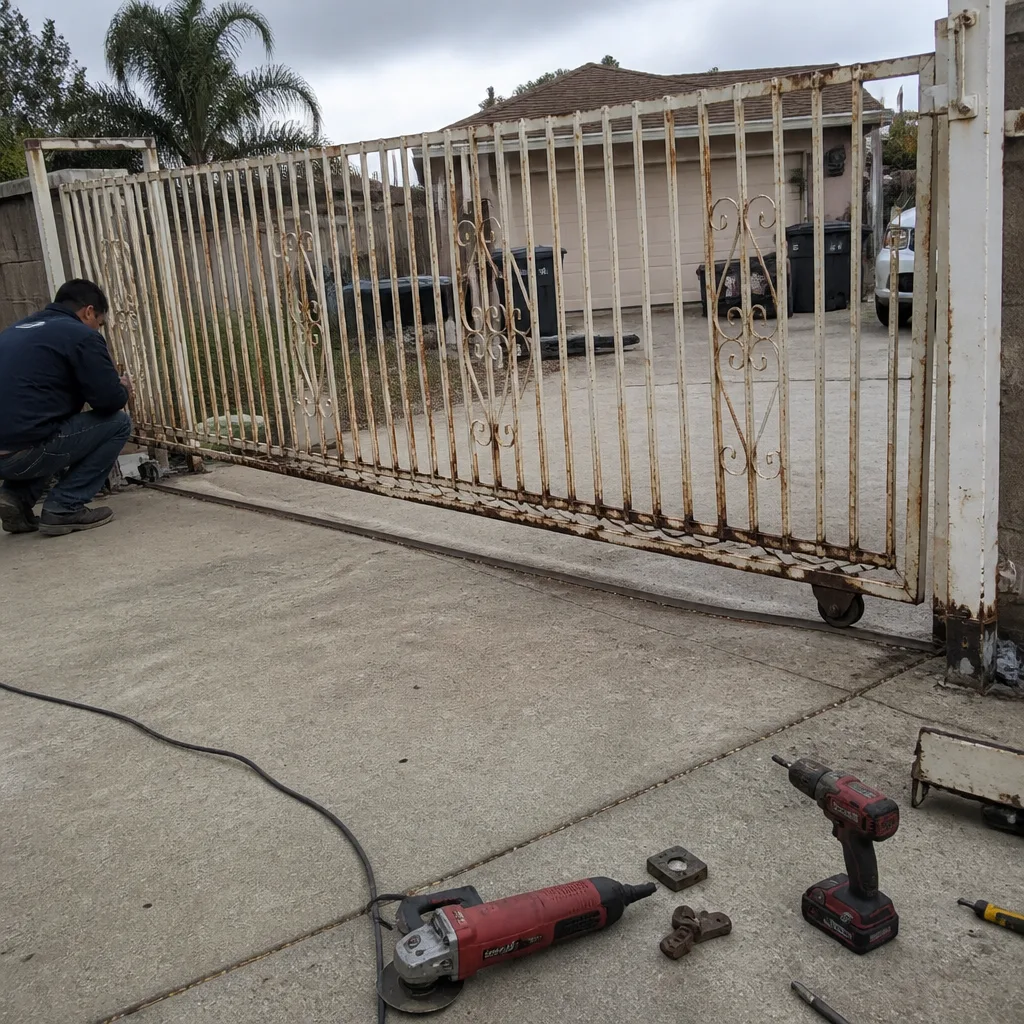 Before
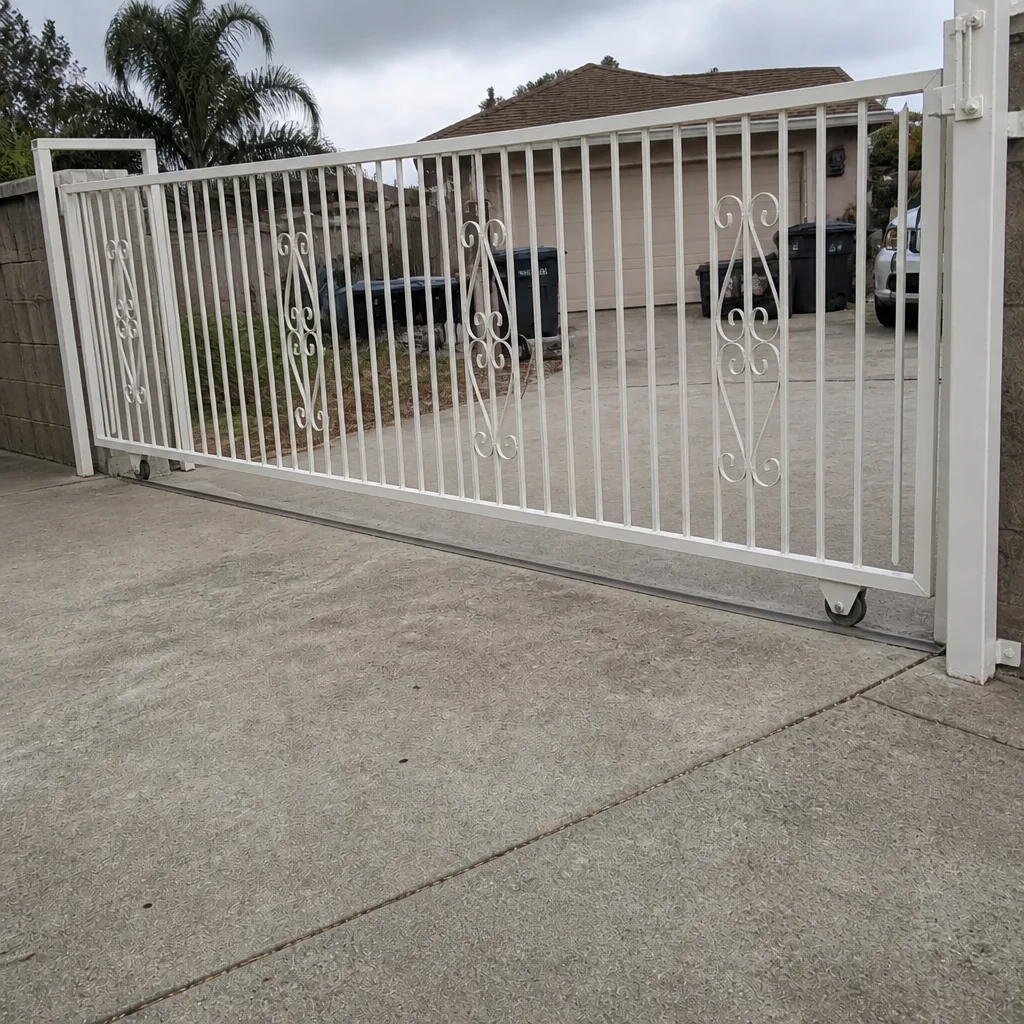 After
When to Call a Professional
A professional should be called whenever the failure involves anything outside a manual release and a physical lock: an operator that won’t respond to a command, a burning smell or heat at the housing, a gate off its track, a swing panel hanging, a control board that’s clicking without moving the gate, or a safety edge or photo eye that’s not working. Those are not tasks for a homeowner – they’re electric gate repair calls. For the safe cases, secure the gate and book a normal visit. For the dangerous ones, call now. Gate Repair Tracy offers free estimates in Tracy – call (844) 834-1771. We answer 24/7. Fast dispatch from 7am to 7pm, Sunday through Friday. A call outside dispatch hours is booked into the next opening, Sunday through Friday, 7am to 7pm. Same-day service is available for many failures.
Frequently Asked Questions
The manual release is brand-specific: on LiftMaster, FAAC, Linear, Viking, and Elite operators it’s usually a keyed release or a release lever at the operator housing that disengages the drive so you can move the gate by hand. Cut power first, then release, then walk the gate to its closed and locked position.
Treat it as a security priority before a repair emergency. Use the manual release to close and physically lock the gate, then wait for a scheduled repair unless there’s a burning smell, sparking, or a gate off its track. If the property perimeter is compromised, that’s when to call.
It depends on the operator. Battery backup systems give you a limited number of cycles, then the gate stops where it is, and the manual release is your only way to move it. Operators without backup stop immediately. Check your backup behavior once and write it down.
Many failures can be diagnosed and repaired the same day, especially common ones like a limit that’s lost, a dead remote, or a stuck release. More complex failures – control boards, operator motors, wiring faults – may require a scheduled visit and a written estimate before work starts.
Call now if the gate is stuck open and the perimeter is exposed, a vehicle is trapped, there’s burning or sparking at the operator, or the gate is off its track or hanging. Book a scheduled visit if you can safely release the gate, secure it, and there’s no safety or perimeter risk.
Write down the brand and model, slide or swing, whether it has battery backup, the manual release procedure, every control input (remotes, keypad, app, sensors), the power source, gate dimensions, and any past service. That record is worth more than any emergency checklist.
Yes. We work on nine major brands – LiftMaster, FAAC, BFT, Linear, Viking, Ghost Controls, DoorKing, Elite, and Mighty Mule – and handle both residential systems and commercial-grade operators like FAAC and BFT. Electric gate repair is a core service, not a side job.
The Bottom Line
Gate emergencies are rarely about the gate. They’re about the gap between the failure and your knowledge of the release, the battery behavior, and the right call to make. Get those three things settled now – find and operate the manual release while the gate is working, document your brand, model, and backup behavior, and keep this guide’s call-or-wait framework handy. A gate stuck closed is a procedure; a gate stuck open is a perimeter to secure; a burning smell is a call. Everything else is a scheduled repair. For anything beyond a manual release, call (844) 834-1771 for a free estimate, and get your gate moving again.
Written by the team at Gate Repair Tracy.